Strengthening India-Israel Ties: A Value-Based Alternative to China's BRI
Synopsis
Explore how PM Modi's visit to Israel signifies a pivotal moment for India-Israel relations and the strategic implications of the IMEC initiative as a counter to China's Belt and Road Initiative.
Key Takeaways
Prime Minister Modi’s visit strengthens India-Israel relations.
The IMEC offers a values-based alternative to the BRI .
Strategic autonomy is a key goal for India.
China's influence in Eurasia presents significant challenges.
Dependable corridors require stable anchor states like Israel.
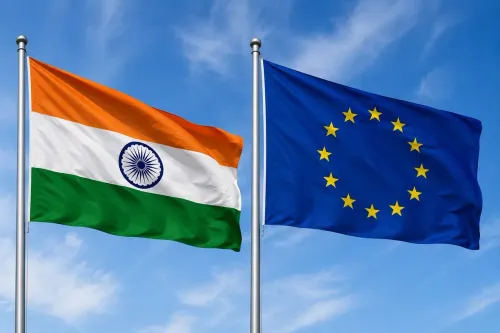
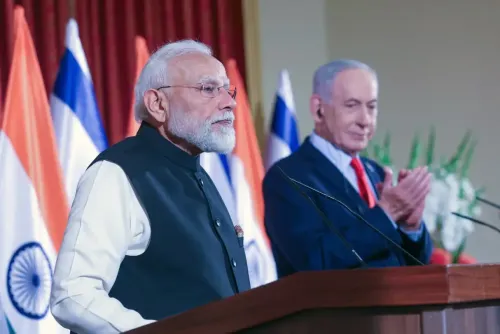
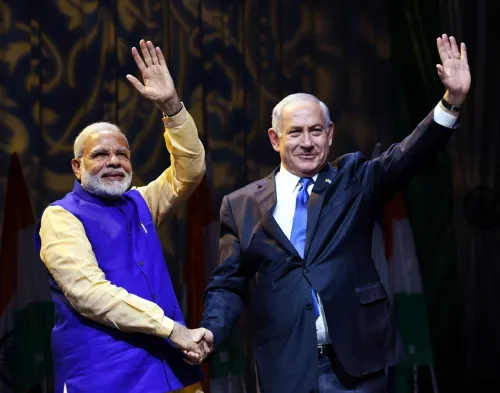
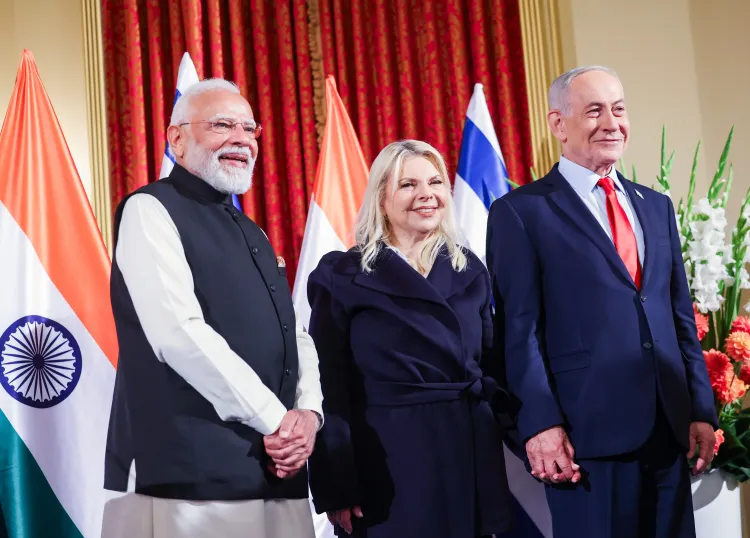
New Delhi, March 25 (NationPress) The recent state visit of Prime Minister Narendra Modi to Israel has significantly bolstered the bilateral relations between the two nations, described as a part of a "sophisticated geo-economic strategy," as noted in an article from The Jerusalem Strategic Tribune.
The piece emphasizes that PM Modi’s address to the Knesset articulated his administration’s broader strategic vision and outlined Israel’s pivotal role within it. His statements indicated a commitment to establishing a regional framework aimed at integrating India further into trade and connectivity with its western partners, particularly with Israel as a central figure.
This initiative is primarily fueled by New Delhi’s quest for strategic independence, aiming to reduce its reliance on China’s expanding influence in the Indo-Pacific region. Moving away from its Cold War-era non-alignment policy, India is now focusing on forming issue-based alliances with countries that have stable and predictable strategic trajectories. This approach favors nations whose survival and prosperity are linked to the stability of the rules-based international order, as highlighted in the article.
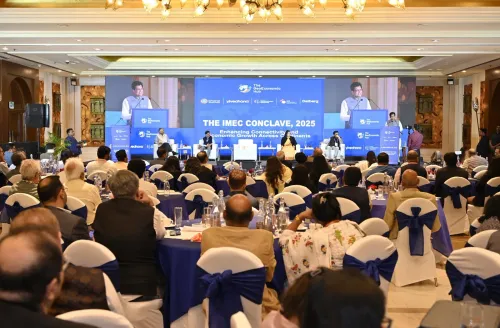
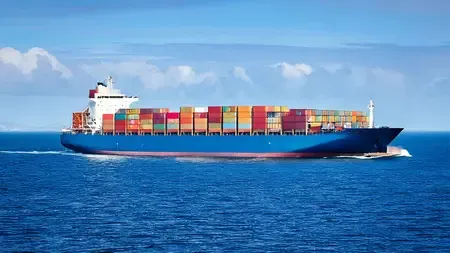
Central to India’s aspirations in the Eastern Mediterranean is the India-Middle East-Europe Economic Corridor (IMEC). More than just a trade route, IMEC aims to provide India’s global partners with a "values-driven" alternative to China’s Belt and Road Initiative (BRI), thus diminishing Beijing’s influence over Eurasian trade and energy channels, according to the article.
Over the last ten years, China has capitalized on extensive investments in transportation, energy, and telecommunications to forge a strong foothold across the Middle East, South Asia, and Europe. This has resulted in a structural interdependence where economic ties are closely intertwined with Chinese strategic interests.
Strategically, IMEC aims to disrupt this monopoly by serving as a normative counterbalance to China’s state-centric control and hierarchical financing. It envisions a more agile and adaptable framework where the economic and political interests of partners, although not identical, converge in their mutual desire to counteract Chinese unilateralism.
For India, a dependable corridor necessitates anchor nations such as Israel and Greece, which provide institutional stability and technological sophistication. While alternative routes may offer geographical advantages, they lack the normative reliability and security predictability essential for India’s long-term strategic investments.
Nonetheless, China’s structural advantages remain formidable. The BRI is built on a foundation of pre-existing projects and established logistical frameworks, such as the China-Pakistan Economic Corridor (CPEC) and the strategically significant Port of Gwadar. Moreover, China’s influence is further bolstered by its deep diplomatic relations with Iran and the Gulf states, along with its control over critical infrastructure elements, including subsea communication cables.
Consequently, the challenge for IMEC transcends merely proposing a technical alternative; it must also establish institutional credibility and long-term resilience.
For New Delhi and its partners, the corridor’s success hinges on its capacity to create a risk-mitigated ecosystem that emphasizes transparency and distributed governance rather than dependence and centralized control, as the article concludes.
Point of View
The strengthening of India-Israel relations underlines a strategic pivot aimed at enhancing regional stability and economic collaboration, fostering a collective approach to counterbalance external influences.
NationPress
24 Sept 2026
Frequently Asked Questions
What is the significance of PM Modi's visit to Israel?
PM Modi's visit underscores the deepening bilateral relations and strategic cooperation between India and Israel, particularly in trade and connectivity.
How does IMEC differ from China's BRI?
IMEC emphasizes transparency, distributed governance, and a normative framework, contrasting with China's state-centric control model.
Why is Israel a crucial partner for India?
Israel offers institutional stability and technological maturity, making it a vital anchor state for India’s strategic interests in the region.
What challenges does IMEC face?
IMEC must establish institutional credibility and resilience to effectively counter China's structural advantages in the region.