India-Israel ties expand into regional strategic network via Greece, UAE
Synopsis
What began as a buyer-seller arms relationship between India and Israel is quietly being recast as a four-node strategic network stretching from the Indian Ocean to the Eastern Mediterranean — with Israel's defence chief Amir Baram as the architect and Greece and Cyprus as the western anchors. The framework's intersection with IMEC gives it an economic spine that most security analyses have overlooked.
Key Takeaways
India-Israel defence ties are evolving into a broader strategic network linking India , the UAE , Greece , and Cyprus , according to a Greek City Times report.
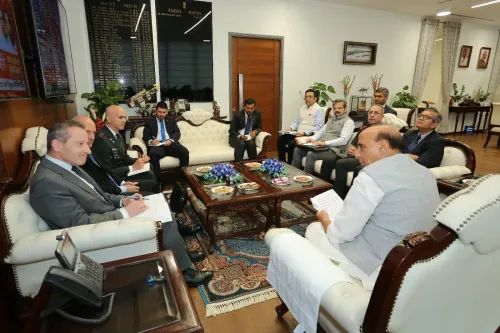
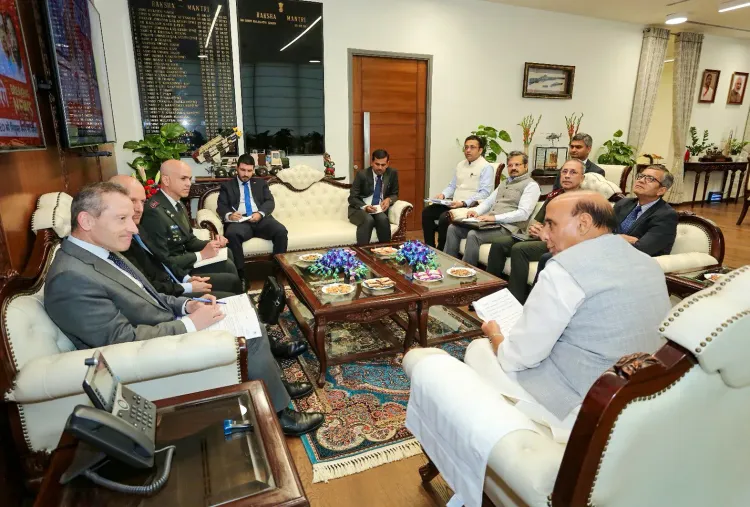
Amir Baram , Director General of Israel's Ministry of Defence , visited New Delhi in June 2026 and held talks with Defence Minister Rajnath Singh and top Indian military officials.
Baram publicly called for a regional security framework extending ‘from India, through the UAE, to Greece and Cyprus’ at the Herzliya Conference .
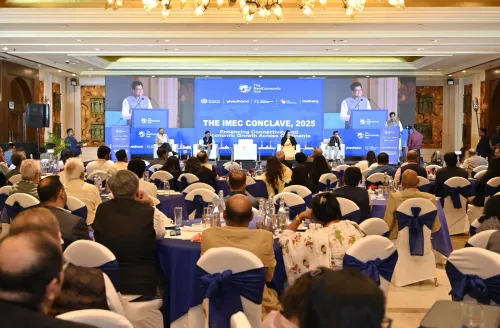
The network intersects with the India–Middle East–Europe Economic Corridor (IMEC) , covering trade, energy, digital infrastructure, and supply chains.
Shared concerns over Iran's regional activities and maritime security threats are cited as key drivers of the emerging alignment.
Greece and Cyprus stand to gain enhanced deterrence capabilities and a stronger role as strategic bridges between Europe, the Middle East, and Asia.
India-Israel defence ties have evolved well beyond a bilateral buyer-seller arrangement into a broader, interest-driven strategic architecture that links geographically distant but complementary partners across the Indo-Pacific and Eastern Mediterranean, according to a report published by Greek City Times. The trajectory of this emerging network is already clear, the report states, even as political will and shifting regional dynamics will determine whether it crystallises into a formal grouping or remains a flexible coalition.
The Architecture Taking Shape
At the heart of this evolving framework is a four-node strategic vision spanning India, the United Arab Emirates, Greece, and Cyprus. The concept was publicly articulated by Amir Baram, Director General of Israel's Ministry of Defence, who is widely regarded as the chief architect of Israel's deepening defence relationship with India. Speaking at the Herzliya Conference in Israel, Baram called for a new regional security framework extending “from India, through the United Arab Emirates, to Greece and Cyprus.” He emphasised that such an arrangement would complement — not replace — Israel's longstanding alliance with the United States.
Baram's New Delhi Visit and What It Signalled
In June 2026, Baram led an official Israeli delegation to New Delhi, holding high-level talks with Defence Minister Rajnath Singh, the Defence Secretary, the Chief of Defence Staff, and other senior Indian officials. The discussions, according to the report, focused on moving the relationship beyond traditional arms transfers toward joint development, technology sharing, and sustained strategic cooperation. This marks a structural shift in how both sides frame the partnership — from transactional to transformational.
Why Each Partner Brings Unique Weight
The report lays out the strategic logic with precision. Israel contributes combat-proven defence technology, missile-defence expertise, and advanced cyber capabilities. India brings growing naval reach across the Indian Ocean, an expanding domestic defence industry, and significant geopolitical weight as a non-aligned swing state. The UAE adds financial resources, logistics infrastructure, and diplomatic connectivity across the Gulf. Greece provides a NATO foothold in the southeastern Mediterranean and control of key maritime approaches, alongside deepening partnerships with the US, France, and Israel. Cyprus occupies a critical crossroads between Europe, the Levant, and major global shipping lanes.
IMEC and the Broader Economic Dimension
The strategic network intersects with the India–Middle East–Europe Economic Corridor (IMEC), which seeks to strengthen connectivity across trade, energy, digital infrastructure, and supply chains. Shared concerns over Iran's regional activities and threats to maritime routes have added urgency to the framework. For Greece and Cyprus, deeper integration into this architecture promises stronger deterrence, greater access to advanced capabilities, and a more prominent role as strategic bridges between Europe, the Middle East, and Asia.
What Comes Next
Whether this network hardens into a formal security grouping or remains a flexible, interest-based alignment will depend on political will in each capital and the pace of geopolitical competition in the region. For now, the report suggests the foundations are being quietly but deliberately laid — one bilateral agreement and one high-level visit at a time.
Point of View
But the Baram visit and the Herzliya Conference remarks make clear that Israel is now actively seeking to institutionalise what has been an informal alignment. The inclusion of Greece and Cyprus is strategically shrewd — it gives the network a NATO anchor without triggering the formal alliance commitments that would complicate India's non-aligned posture. What mainstream coverage misses is the IMEC dimension: if the economic corridor and the security framework mature in parallel, the result is not just a defence club but a connectivity-plus-security architecture that could reshape how the Indo-Pacific and Eastern Mediterranean interact. The critical unknown is whether India's political establishment is willing to move from strategic ambiguity to strategic architecture — a step it has historically resisted.
NationPress
23 Sept 2026
Frequently Asked Questions
What is the India-Israel regional strategic network described in the report?
It is an emerging, interest-driven security and economic framework linking India, Israel, the UAE, Greece, and Cyprus, aimed at deepening defence cooperation, technology sharing, and connectivity across the Indo-Pacific and Eastern Mediterranean. The concept was articulated by Amir Baram, Director General of Israel's Ministry of Defence, at the Herzliya Conference in Israel.
Who is Amir Baram and what role is he playing?
Amir Baram is the Director General of Israel's Ministry of Defence and is regarded as the chief architect of Israel's defence relationship with India. He visited New Delhi in June 2026, held talks with Defence Minister Rajnath Singh and other senior Indian officials, and publicly called for a regional security framework stretching from India through the UAE to Greece and Cyprus.
How does IMEC connect to this strategic network?
The India–Middle East–Europe Economic Corridor (IMEC) provides an economic backbone to the emerging security framework, covering trade, energy, digital infrastructure, and supply chains. The convergence of IMEC and the defence network means the arrangement has both economic and security dimensions, making it more durable than a purely military alignment.
What does Greece and Cyprus gain from this arrangement?
According to the report, Greece and Cyprus stand to benefit from stronger deterrence, greater access to advanced defence capabilities, enhanced interoperability, and a more prominent role as strategic bridges between Europe, the Middle East, and Asia. Greece also contributes a NATO foothold in the southeastern Mediterranean to the network.
Will this become a formal alliance or remain an informal network?
The report states that political will and regional dynamics will determine whether the arrangement formalises into a structured grouping or remains a flexible, interest-based network. For now, the foundations are being built through bilateral agreements and high-level visits rather than a formal treaty framework.