India's strategic edge as US-Israel defence tech ties deepen: Report
Synopsis
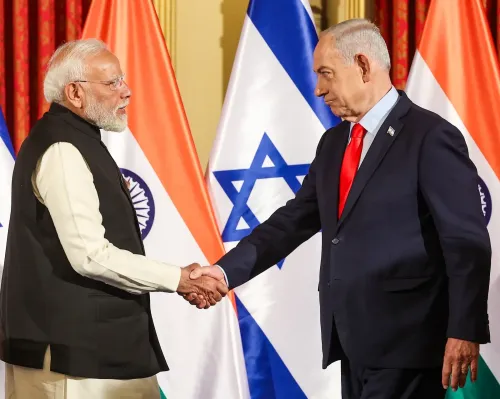
As the US deepens its defence innovation ties with Israel, India stands out as one of the few nations with advanced technology frameworks with both Washington and Jerusalem — from iCET and INDUS-X to the I4F fund. An analysis in the Times of Israel argues this triangular positioning gives New Delhi a compounding strategic edge that few capitals can replicate.
Key Takeaways
India is identified as holding a rare strategic advantage at the intersection of US and Israeli defence innovation ecosystems, according to an analysis in the Times of Israel .
New Delhi has purchased more than $10 billion in Israeli defence equipment over two decades, including Heron drones , Harop loitering munitions , and Barak missile systems .
The Initiative on Critical and Emerging Technology (iCET) , launched by PM Modi and President Biden in 2023 , covers AI, semiconductors, quantum computing, and defence innovation.
The INDUS-X initiative links Indian and US startups, investors, and defence firms for joint development and co-production.
India and Israel collaborate through the India-Israel Industrial R&D and Technological Innovation Fund (I4F) and under their respective National Security Advisors .
Analyst Saurav Dutt argues the new US-Israel legislation builds a defence innovation ecosystem — not a military alliance — and that India is positioned to benefit from the resulting technological acceleration.
India occupies a uniquely advantageous position as the United States reshapes its security partnership with Israel around advanced technologies rather than conventional arms transfers, according to an analysis published in the Times of Israel. The report argues that New Delhi sits at the intersection of both US and Israeli defence innovation ecosystems — a vantage point few nations can claim.
What the US-Israel Legislation Actually Does
The analysis, authored by Saurav Dutt, a writer and global affairs commentator, cautions against reading the latest American defence legislation as a move toward a unified military command or a NATO-style alliance with Israel. 'The legislation is not creating a unified military command or a NATO-style alliance. Instead, it lays the foundation for something arguably more significant: a deeply integrated defence innovation ecosystem. For India, that distinction matters enormously,' Dutt wrote.
According to Dutt, the legislation's real significance lies in accelerating Israeli technological development through larger American research budgets, deeper industrial collaboration, and greater access to US laboratories — enabling Israel to develop more advanced defence capabilities than it could independently.
India's Deep Defence Ties with Israel
The report highlights that India has quietly become one of Israel's closest defence partners over the past two decades. New Delhi has purchased more than $10 billion in Israeli defence equipment, encompassing airborne early warning aircraft, Barak missile systems, advanced radar networks, Heron drones, Harop loitering munitions, and sophisticated electronic warfare systems. Israel has consistently ranked among India's largest defence suppliers, according to the analysis.
This positions India to eventually benefit from the next generation of Israeli technologies that US investment is expected to catalyse — through its own expanding strategic partnerships with both countries.
The US-India Technology Framework
The report draws attention to a parallel architecture Washington has been building with New Delhi. The Initiative on Critical and Emerging Technology (iCET), launched by Prime Minister Narendra Modi and then-US President Joe Biden in 2023, established cooperation across artificial intelligence, semiconductors, quantum computing, telecommunications, space, and defence innovation.
The INDUS-X initiative followed, connecting startups, investors, defence companies, and governments to encourage joint development and co-production. Dutt described this as one of the most overlooked dimensions of the broader US-Israel-India strategic picture.
India-Israel Technology Collaboration
Separately, India has deepened its own technology cooperation with Israel through the India-Israel Industrial R&D and Technological Innovation Fund (I4F). Both countries have also expanded collaboration on critical and emerging technologies under the framework of their respective National Security Advisors.
The report notes that few nations maintain advanced technology partnerships with both Washington and Jerusalem simultaneously, giving New Delhi a compounding strategic advantage that is difficult for other capitals to replicate.
What This Means Going Forward
As US investment accelerates Israeli defence innovation, India's pre-existing relationships with both partners could translate into preferential access to next-generation systems — from AI-enabled defence platforms to advanced drone technologies. Whether New Delhi can convert this structural advantage into concrete co-development agreements will be the defining test of its triangular strategic positioning.
Point of View
But the more consequential story — India's triangular positioning — has gone largely unreported. New Delhi has spent two decades quietly building bilateral defence depth with both Washington and Jerusalem, and the iCET and INDUS-X frameworks are not peripheral: they are structural. The risk is complacency. Strategic adjacency is not the same as guaranteed access; India will need to convert relationship capital into concrete co-development agreements before the next generation of US-Israeli defence technologies is locked into exclusive arrangements. The I4F fund and NSA-level tech dialogues are promising architecture, but the real test is whether India can move from buyer to co-creator in this emerging innovation triangle.
NationPress
16 Sept 2026
Frequently Asked Questions
Why does India hold a strategic advantage in the US-Israel defence partnership?
India is one of the few nations with active advanced technology frameworks with both the United States and Israel simultaneously. Through iCET and INDUS-X with Washington, and the I4F fund and NSA-level dialogues with Jerusalem, New Delhi sits at the intersection of both defence innovation ecosystems — a position that could yield preferential access to next-generation technologies.
How much has India spent on Israeli defence equipment?
India has purchased more than $10 billion in Israeli defence equipment over the past two decades, according to the Times of Israel analysis. Acquisitions include Heron drones, Harop loitering munitions, Barak missile systems, airborne early warning aircraft, advanced radar networks, and electronic warfare systems.
What is the iCET initiative between India and the US?
The Initiative on Critical and Emerging Technology (iCET) was launched by Prime Minister Narendra Modi and then-US President Joe Biden in 2023. It establishes cooperation across artificial intelligence, semiconductors, quantum computing, telecommunications, space, and defence innovation, and is complemented by the INDUS-X initiative for startup and industry collaboration.
What is the India-Israel I4F fund?
The India-Israel Industrial R&D and Technological Innovation Fund (I4F) is a bilateral mechanism supporting joint research and development between Indian and Israeli industries and institutions. It forms part of a broader technology cooperation framework that also includes collaboration under both countries' National Security Advisors.
Does the new US-Israel defence legislation create a military alliance?
According to analyst Saurav Dutt's assessment in the Times of Israel, the legislation does not create a unified military command or a NATO-style alliance. Instead, it builds a deeply integrated defence innovation ecosystem — a distinction he argues is more consequential in the long run, and one that carries significant implications for India's own strategic positioning.