US-India defence ties strong but government relations at low point, says expert
Synopsis
A US Army academic panel has put a sharp frame on the India-US relationship: defence cooperation is flourishing, but executive-level political ties are quietly strained. With India straddling the Quad and BRICS simultaneously, Washington's bet on New Delhi as its South Asia anchor is both its best strategic option and its most complex diplomatic challenge.
Key Takeaways
Dr Philip Hultquist of the University of New Mexico told a US Army Command and General Staff College panel that US-India defence ties are 'really strong and growing' but executive-level relations are 'at a bit of a low point'.
Washington has adopted a hub-and-spoke South Asia strategy with India at the centre, trading access to smaller regional states for the prospect of a deeper India partnership.
China's Belt and Road Initiative has expanded Beijing's influence among smaller South Asian nations, complicating US regional partnership efforts.
BRICS now represents a collective GDP of more than $31 trillion , or approximately 27% of global GDP, and is increasingly positioning itself as a counterweight to US-led financial dominance, according to Dr Mahir Ibrahimov .
India remains a member of both the Quad and BRICS , reflecting its strategic autonomy doctrine of engaging multiple major powers simultaneously.
Jason LeVay said Southeast Asian states prioritise sovereign choice, arguing the US must remain 'a partner they repeatedly choose' rather than demand alignment.
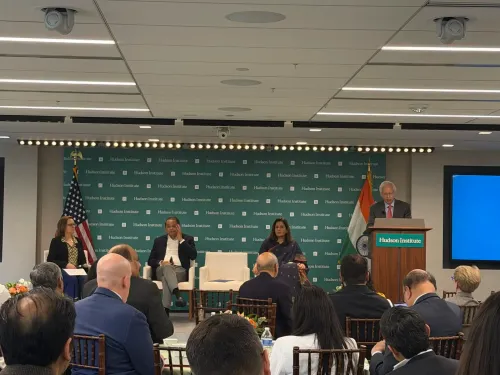
US-India defence cooperation is described as 'really strong and growing', yet executive-level relations between the two governments are at 'a bit of a low point', according to an expert assessment presented at the US Army Command and General Staff College in Fort Leavenworth, Kansas, on 1 October 2026. The evaluation came during a broader discussion on how Washington can sustain alliances as strategic competition intensifies across the Indo-Pacific.
Expert Assessment: Defence Strong, Diplomacy Strained
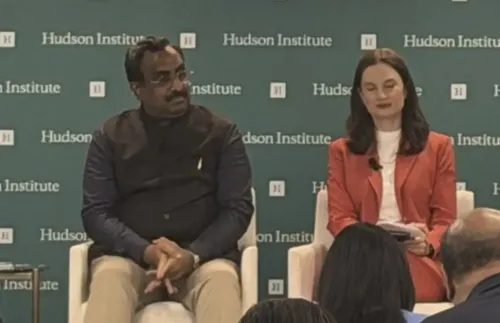
Dr Philip Hultquist, director of the Global and National Security Policy Institute at the University of New Mexico, placed India at the centre of South Asia's strategic landscape during a panel organised by the college's Cultural and Area Studies Office. 'The defence-to-defence ties are really strong and growing, but the executive-to-executive ties are at a bit of a low point,' he said, according to details of the meeting released by the US Army.
Hultquist noted the structural constraint this creates: 'The military instrument for competition is really important, and it's really the only one that's working well. But you can't replace all of the instruments of national power.' The remark underscores a widening gap between robust bilateral military engagement and comparatively subdued political dialogue.
Washington's Hub-and-Spoke Strategy for South Asia
According to Hultquist, the United States has adopted a hub-and-spoke model for South Asia, with India at its centre, aimed at cultivating a long-term, values-based partnership. 'The US has dealt with this by deciding to trade access to the smaller states in the region for a chance at an India partnership,' he said. The strategy positions New Delhi as Washington's 'strategic counterweight' to China in the Indo-Pacific.
This comes amid China's deepening economic footprint in smaller South Asian nations through its Belt and Road Initiative (BRI), which analysts say complicates US efforts to build regional partnerships. Despite this, the panel noted that US-India ties have 'begun to thaw' over recent decades, evidenced by a steady increase in joint military exercises and growing collaboration between the two countries' defence industrial bases.
BRICS as a Counterweight to US Financial Dominance
Dr Mahir Ibrahimov, director of the Cultural and Area Studies Office, highlighted the growing economic clout of the BRICS grouping following its expansion. 'BRICS represents a collective GDP of more than $31 trillion, accounting for approximately 27 per cent of global GDP, according to recent estimates. This substantial share makes BRICS one of the most influential economic groups in the world,' he said.
Ibrahimov cautioned, however, that the bloc's internal coherence remains uncertain: 'Although some experts note that this organisation might not be unified and efficient in achieving its stated results, however, it's very important to note that BRICS is increasingly attempting to position itself as a counterweight to US-led financial dominance, and the petrodollar sits at the centre of that shift.' Notably, India is a member of both the Quad — alongside the US, Japan, and Australia — and BRICS, embodying its doctrine of strategic autonomy.
Southeast Asia: Sovereign Choice Over Forced Alignment
Lt. Col. Jason LeVay, an instructor at the Command and General Staff College, said Southeast Asian governments place a premium on preserving their freedom of choice. 'The important point from a Southeast Asian perspective is that either relationship becomes problematic when it begins to reduce sovereign choice,' he said. 'The United States does not necessarily need Southeast Asian states to choose America. It needs to remain a partner they repeatedly choose,' he added.
The panel also examined the roles of Japan and the Association of Southeast Asian Nations (ASEAN) as Washington and Beijing compete for influence across the region.
India's Balancing Act: Quad, BRICS and Strategic Autonomy
India and the US have significantly expanded defence cooperation over the past two decades through more frequent military exercises, defence technology initiatives, and interoperability agreements. Yet New Delhi has simultaneously maintained its emphasis on strategic autonomy, engaging multiple major powers rather than anchoring exclusively to a US-led alliance structure. How Washington navigates this nuance — deepening military ties while reviving political engagement — will likely define the trajectory of one of the Indo-Pacific's most consequential bilateral relationships.
Point of View
DTTI, interoperability agreements — has never been sturdier, yet the political bandwidth to convert that into a genuine strategic partnership remains constrained. Washington's decision to 'trade' smaller South Asian states for an India relationship is a high-stakes bet on a partner that explicitly refuses to be anchored. India's simultaneous Quad and BRICS membership is not diplomatic confusion — it is a deliberate hedge, and any US strategy that ignores that calculus will continue to find military instruments doing the heavy lifting that only political engagement can ultimately sustain.
NationPress
1 Oct 2026
Frequently Asked Questions
What did the US Army expert say about US-India relations?
Dr Philip Hultquist said that while US-India defence-to-defence ties are 'really strong and growing', executive-level political relations between the two governments are 'at a bit of a low point'. He made the remarks at a panel hosted by the US Army Command and General Staff College in Fort Leavenworth, Kansas.
What is Washington's strategic approach to India in South Asia?
According to the panel, the US has adopted a hub-and-spoke model for South Asia with India at the centre, aiming to develop New Delhi as a long-term, values-based partner and a 'strategic counterweight' to China. Washington has reportedly traded deeper engagement with smaller South Asian states in exchange for the prospect of a closer India partnership.
How does India's BRICS membership affect its relationship with the US?
India is a member of both the Quad — alongside the US, Japan, and Australia — and BRICS, which experts say reflects New Delhi's doctrine of strategic autonomy. BRICS is increasingly positioning itself as a counterweight to US-led financial dominance, representing a collective GDP of more than $31 trillion, or about 27% of global GDP.
Why is China's Belt and Road Initiative a concern for the US in South Asia?
China's Belt and Road Initiative has expanded Beijing's economic influence among smaller South Asian nations, which the panel said complicates US efforts to build and sustain regional partnerships. This growing Chinese footprint makes Washington's reliance on India as its South Asia anchor even more strategically consequential.
What was the panel's view on Southeast Asia's stance between the US and China?
Lt. Col. Jason LeVay said Southeast Asian governments prioritise maintaining their sovereign freedom of choice over aligning with either the US or China. He argued that the US does not need these states to choose America outright — it needs to remain 'a partner they repeatedly choose'.