India Must Lead US Strategy, Not Pakistan: Hudson Institute Debate
Synopsis
At Washington's Hudson Institute, former US Deputy Secretary of State Kurt Campbell declared India is the cornerstone of American strategy — 'in capital letters' — while Pakistan 'doesn't even appear in the paragraph.' The rare public clarity from a senior US voice marks a defining moment in South Asia's geopolitical pecking order.
Key Takeaways
Kurt Campbell , former US Deputy Secretary of State , declared at the Hudson Institute on April 24 that all American strategic interests lie with India , not Pakistan .
Ram Madhav criticised the persistent US tendency to "hyphenate" India and Pakistan in foreign policy, calling it a flawed and outdated approach.
Analyst Elizabeth Threlkeld argued the US can maintain ties with both Islamabad and New Delhi without treating the relationships as mutually exclusive.
Campbell warned that strategic ambiguity in Washington 's current policy direction risks eroding confidence among key partners, including India .
Panelists agreed that the long-term trajectory of US Indo-Pacific strategy will be defined by its partnership with India , regardless of tactical engagement with Pakistan .
The debate comes amid broader geopolitical shifts, including US-China tensions , the Middle East conflict , and evolving Indo-Pacific alliance structures .
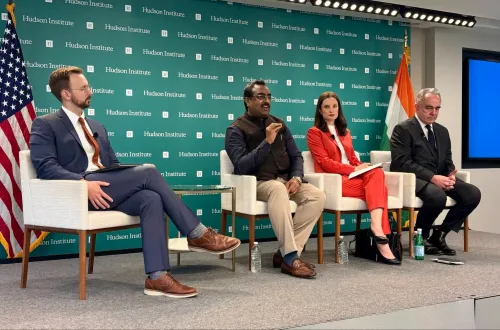
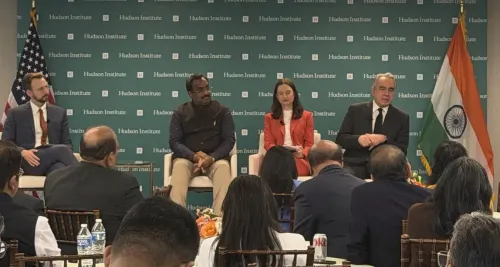
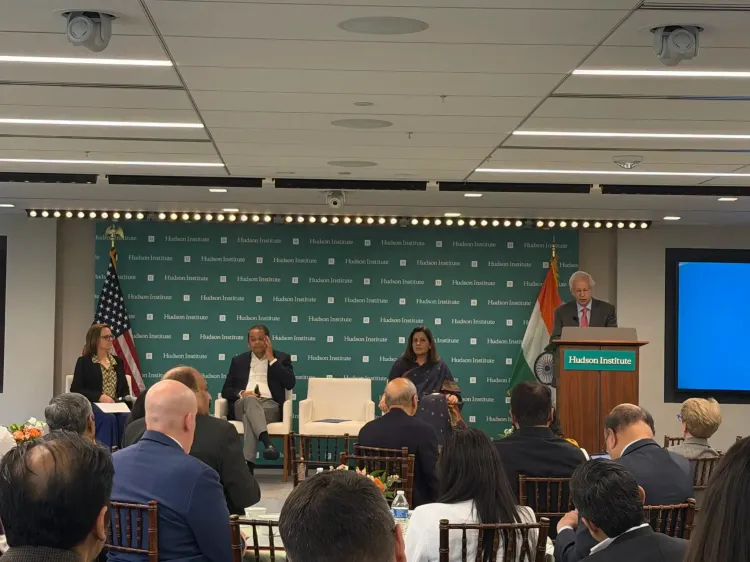
Washington, April 24 — A sharp policy debate over US strategic priorities in South Asia erupted at the Hudson Institute, with senior officials and analysts clashing over whether Washington can meaningfully engage Pakistan without undermining its deeper, more consequential partnership with India. The discussion, held during the New India Conference, brought together top voices to assess India's expanding global role at a moment of significant geopolitical flux.
Campbell's Unambiguous Stand: India in Capital Letters
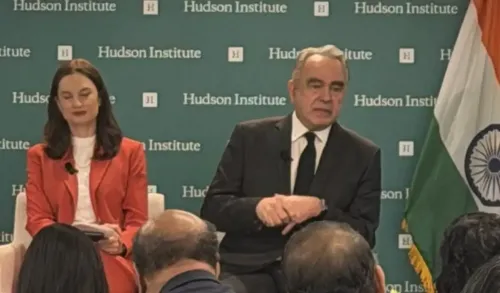
Kurt Campbell, former US Deputy Secretary of State, delivered the most direct assessment of the evening. He argued that American strategic interests must be unequivocally anchored in New Delhi, not split between competing South Asian capitals.
"Peace and stability are reinforced… by a closer relationship between the United States and India, and an absolute clarity that all our strategic interests lie in Delhi," Campbell said.
He went further, drawing a stark contrast in how Washington should perceive the two relationships: "The India relationship is in capital letters and Pakistan really doesn't even appear in the paragraph." This framing was notable coming from a former senior State Department official who shaped much of the Biden administration's Indo-Pacific policy.
Ram Madhav Pushes Back Against 'Hyphenation' of India-Pakistan
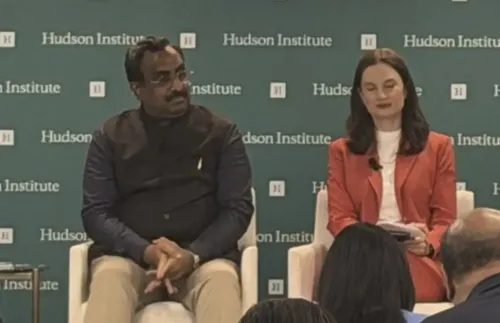
Ram Madhav, a senior figure associated with India's strategic policy community, echoed frustration over the persistent tendency in Washington to treat India and Pakistan as a paired unit in foreign policy calculations — a practice known as "hyphenation."
"India's relationship is much bigger, much wider… that one should not make," Madhav said, stressing that the two bilateral ties operate at fundamentally different levels of strategic depth, economic weight, and democratic alignment.
This argument is not new — India has long resisted being bracketed with Pakistan in US policy frameworks, particularly since the Civil Nuclear Agreement of 2008 which marked a decisive shift in the US-India relationship. Yet the old reflex persists in some corners of Washington's foreign policy establishment.
Threlkeld Argues for a Non-Zero-Sum Approach
Elizabeth Threlkeld, a South Asia policy analyst, offered a more calibrated counterpoint. She argued that engaging Islamabad does not necessarily come at New Delhi's expense, particularly given Pakistan's potential utility in managing regional crises.
"I genuinely think that there is room for a relationship with both Islamabad and New Delhi," she said, pointing to Pakistan's geographic and diplomatic leverage in ongoing regional flashpoints.
"If Pakistan can leverage the relationships that it has… I think all the better," Threlkeld added, noting that escalation risks in South Asia make managing both bilateral ties a practical necessity rather than a strategic contradiction.
Strategic Ambiguity in Washington Raises Alarm
Campbell acknowledged a deeper concern: that the current uncertainty in Washington's strategic direction — marked by shifting positions on China policy, Middle East dynamics, and Indo-Pacific alliances — is generating anxiety among key partners, including India.
"There are many elements… that are not clear," he said, describing a policy environment defined by "ambiguity" and competing internal views within the US government. This admission is significant — it suggests that even advocates of a strong US-India partnership are concerned that institutional incoherence in Washington could erode the strategic trust New Delhi has placed in the relationship.
The panel also flagged the Middle East conflict and its spillover effects on global supply chains and security calculations as a complicating factor in how Washington allocates diplomatic bandwidth across regions.
Long-Term US Strategy Still Hinges on India
Despite the debate, panelists broadly agreed that the long-term trajectory of US strategy in the Indo-Pacific will be shaped primarily by its partnership with India — not by tactical engagements with Pakistan.
This consensus reflects a structural shift that has been building for over two decades. Since the US-India Civil Nuclear Deal, the Quad's revival in 2017, and the signing of foundational defence agreements like BECA and COMCASA, Washington has systematically deepened its strategic, technological, and defence ties with New Delhi.
Meanwhile, US-Pakistan relations have been repeatedly strained — by Osama bin Laden's discovery in Abbottabad in 2011, by allegations of ISI support for Taliban factions, and most recently by Islamabad's ambiguous posture on Russia's war in Ukraine. The trust deficit is structural, not incidental.
As India prepares to assume greater roles in multilateral frameworks — from the Quad to G20 leadership — the outcome of this debate in Washington will directly shape how much diplomatic capital New Delhi can extract from its partnership with the United States in the years ahead.
Point of View
But that former Deputy Secretary Campbell felt compelled to state the obvious so bluntly — suggesting that within US policy circles, the old Pakistan lobby still needs to be pushed back against. India should take note: strategic clarity from American officials is valuable, but it is India's own economic weight, democratic credibility, and military modernisation that will ultimately make the hyphenation argument obsolete — not speeches at think tanks.
NationPress
18 Sept 2026
Frequently Asked Questions
What did Kurt Campbell say about US strategy toward India and Pakistan?
Kurt Campbell, former US Deputy Secretary of State, said all American strategic interests lie with India, not Pakistan. He stated the US-India relationship is 'in capital letters' while Pakistan 'doesn't even appear in the paragraph.'
What is the 'hyphenation' problem in US foreign policy toward India?
Hyphenation refers to the tendency of US policymakers to treat India and Pakistan as a paired unit in South Asia strategy, rather than recognising them as fundamentally different partners. India has long opposed this framing, arguing its relationship with the US operates at a far greater strategic depth than the US-Pakistan tie.
What was the New India Conference at the Hudson Institute?
The New India Conference is a forum convened by the Hudson Institute that brings together senior officials and analysts to assess India's global role and its evolving strategic partnerships. The April 2025 edition focused heavily on US-India-Pakistan dynamics.
Why does the US still engage with Pakistan despite tensions?
Analysts like Elizabeth Threlkeld argue Pakistan retains geographic and diplomatic leverage in regional crises, making some level of US engagement practically necessary. However, critics argue this tactical engagement should not dilute Washington's primary strategic focus on India.
How has US-India relations evolved over the past two decades?
The US-India relationship has deepened significantly since the 2008 Civil Nuclear Agreement, with both nations signing key defence pacts like BECA and COMCASA, and reviving the Quad alliance. India's growing economic and military weight has made it Washington's most important Indo-Pacific partner.