Are US Experts Concerned About the Future of the India-US Partnership?
Synopsis
As tensions rise, experts warn of significant challenges in the US-India strategic partnership. This crucial alliance, seen as vital for Indo-Pacific stability, faces tariff disputes and geopolitical shifts. Discover how these factors could reshape the future of relations between these two powers.
Key Takeaways
US-India strategic partnership faces significant challenges.
Tariffs and trade disputes are straining relations.
Both nations seek to counter China's influence in the Indo-Pacific.
India is increasingly leaning towards the US in defense and technology.
Cooperation persists in defense, space, and energy sectors despite political tensions.
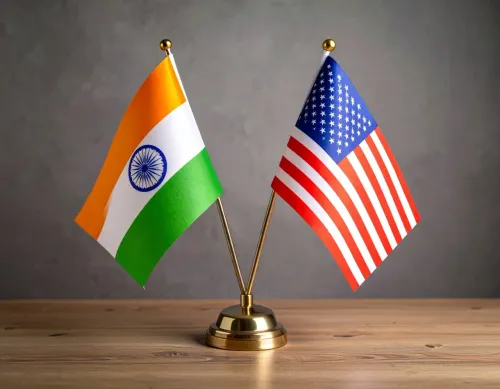
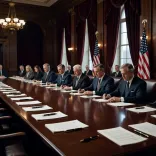
Washington, Dec 10 (NationPress) The strategic alliance between the US and India -- long considered a pillar for stability in the Indo-Pacific region -- is now facing unprecedented scrutiny. Leading analysts have alerted lawmakers that the relationship is confronting its most significant political and economic challenges in years.
In statements prepared for a Congressional committee ahead of a hearing on India scheduled for Wednesday, three experts on India informed the House Foreign Affairs Committee’s Subcommittee on South and Central Asia that while collaboration in defense, technology, and maritime domains continues to strengthen, the partnership has been disrupted by tariffs, trade disputes, and the Trump administration's renewed high-level engagement with Pakistan's military leadership.
Sameer Lalwani of the German Marshall Fund noted that the United States regards India as 'a significant power -- one of the most influential in the 21st century -- due to our shared interests, democratic values, and visions of global order.' He stated that India is 'set to emerge as a pivotal player in the international arena,' providing the US with strategic economic opportunities, technological advancements, and expanding military capabilities.
Regarding the Indo-Pacific, he emphasized that both nations 'aspire to a multipolar Asia that counters China's pacing challenge, as well as its attempts at coercion, military aggression, or geopolitical dominance.' India's proactive stance along the Line of Actual Control, he explained, demonstrates its commitment 'to safeguard its borders and deter further Chinese aggression or incremental incursions.'
Lalwani cautioned that relations between India and China remain 'predominantly adversarial,' influenced by 'economic coercion,' 'violent border clashes in 2020,' and 'recent military collaboration with Pakistan's military against India.'
He pointed out that India's relations with Russia are becoming increasingly limited to 'hydrocarbons, nuclear energy, and conventional weaponry,' with New Delhi 'decisively leaning towards America' in maritime security and emerging technologies.
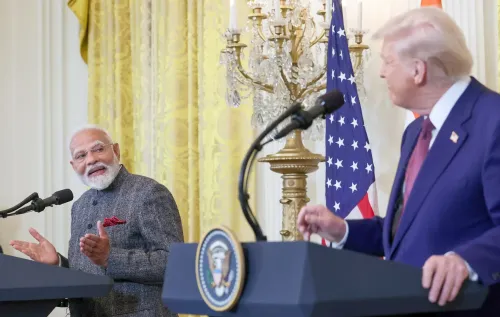
Jeff Smith from the Heritage Foundation characterized the India-US partnership as 'a lasting success' amidst two decades of fluctuations in American foreign policy but noted that 2025 has posed 'challenges' for bilateral relations. He traced the downturn to the administration's tariff measures, an India-Pakistan clash in May, and the political repercussions from Washington's rapport with Pakistan Army chief Asim Munir.
Smith remarked that expectations were elevated following Prime Minister Modi's visit to Washington in February, but 'three incidents subsequently disrupted this positive trajectory.' These included '25 percent liberation day tariffs,' India's Operation Sindoor against Pakistan-based terrorists, and a US intervention that was portrayed domestically as equating India with Pakistan. Following a second tariff related to Russian oil, he stated, pro-American voices in New Delhi found themselves on the defensive.
Dhruva Jaishankar from ORF America testified that bilateral progress is currently 'at a political impasse,' primarily due to 'disagreements over (i) trade and tariffs and (ii) renewed US engagement with Pakistan's military leadership.' He warned that this atmosphere 'threatens mutually beneficial cooperation on... trade, technology, energy, and defense collaboration,' which was previously outlined by President Trump and Prime Minister Modi.
On the tariff matter, he observed that 'India was subjected to a 25 percent tariff that took effect on August 7,' followed by another 25 percent linked to Russian oil purchases. With a Bilateral Trade Agreement mostly negotiated but not announced, India now faces 'some of the highest' tariffs imposed on any major US partner -- a condition he described as 'hindering further opportunities to expand and deepen the economic partnership.'
Nevertheless, Jaishankar highlighted that cooperation has not ground to a halt entirely. He referenced the new '10-Year Defense Framework Agreement,' recent approvals for Javelin missiles and Excalibur munitions, and significant military exercises ranging from Diego Garcia to Alaska. Collaborative efforts in space, AI, and energy have also progressed despite the political strains.
Point of View
I emphasize the importance of the India-US partnership as a stabilizing force in the Indo-Pacific. While current challenges are noteworthy, the resilience and strategic interests shared by both nations indicate potential pathways for overcoming these obstacles. We must stay informed and engaged in this pivotal relationship.
NationPress
30 Sept 2026
Frequently Asked Questions
What are the main challenges facing the US-India partnership?
The US-India partnership is currently facing challenges such as tariff disputes, trade disagreements, and renewed engagement between the US and Pakistan's military leadership.
How does the US view India in terms of global power?
The US views India as a significant player in the 21st century, essential for a multipolar international order, and a key partner in defense and technology.
What impact do tariffs have on US-India relations?
Tariffs have strained the economic relationship, making India face some of the highest tariffs imposed on any major US partner, complicating further cooperation.
What is the significance of the Indo-Pacific region in this partnership?
The Indo-Pacific region is vital for both the US and India, as they seek to counter China's influence and ensure a balanced geopolitical landscape.
Are there any positive developments in US-India cooperation?
Yes, cooperation continues in areas like defense, space, AI, and energy, with significant agreements and joint exercises taking place despite political tensions.