US-India Ties at Inflection Point: Hudson Institute Conference
Synopsis
At Washington's Hudson Institute, former US Ambassador Kenneth Juster warned that India's strategic autonomy doctrine limits how closely New Delhi can align with America — even as India's $4.15 trillion economy and China tensions draw the two closer. Trade friction, tariff disputes, and diaspora politics add new fault lines to a partnership both sides still call indispensable.
Key Takeaways
Kenneth Juster , former US Ambassador to India , said India's strategic autonomy doctrine prevents it from aligning too closely with the United States , even amid shared concerns over China .
India's GDP stands at approximately $4.15 trillion , ranking it fourth globally , with projections to become the third-largest economy soon.
Former Indian MP Priyanka Chaturvedi criticised the 18 per cent tariff imposed on India during ongoing US-India trade negotiations and questioned the feasibility of the $500 billion bilateral trade target.
BJP's Vijay Chauthaiwale noted that internet usage in India has grown to over 1 billion users , driving digital economy integration and reshaping India's global image.
The conference identified political transitions in Bangladesh and Nepal as opportunities for India to reset and strengthen its neighbourhood diplomacy.
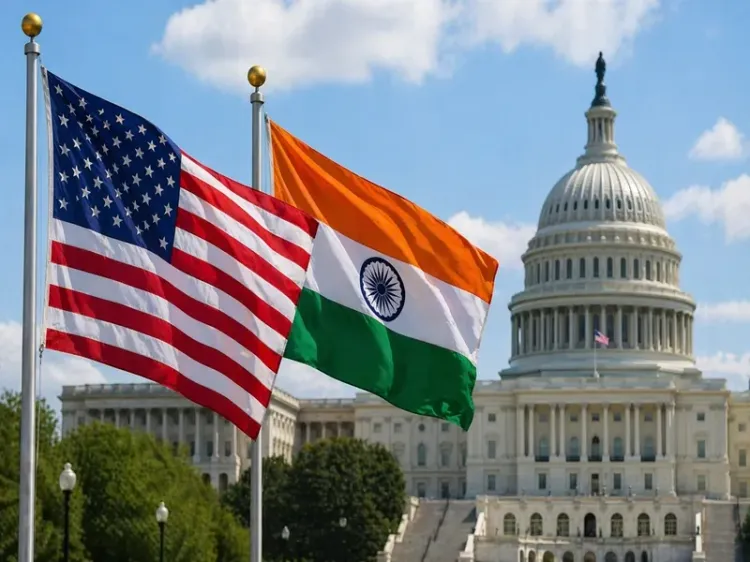
The Hudson Institute's New India Conference described the current moment as an " inflection point " in US-India relations , with both cooperation and strain coexisting in the bilateral partnership.
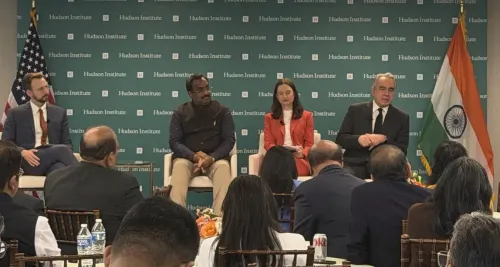
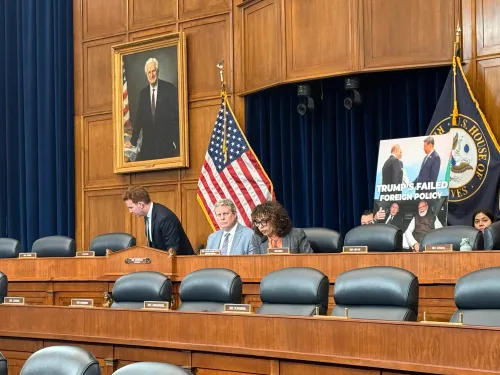
Washington, April 23 — Senior policymakers, diplomats, and strategic analysts gathered at the Hudson Institute's New India Conference in Washington D.C. to assess the shifting contours of US-India relations, concluding that India's foreign policy is increasingly defined by strategic autonomy, rapid economic ascent, and a partnership with the United States that — while fundamentally strong — is navigating visible turbulence under the second Trump administration.
India's Strategic Autonomy: A Non-Negotiable Pillar
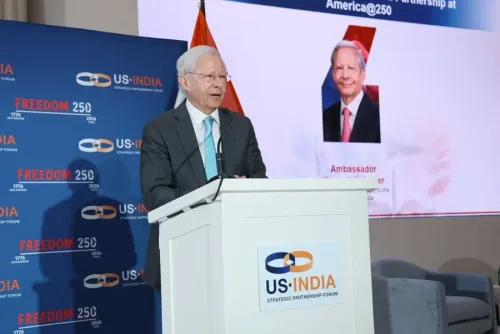
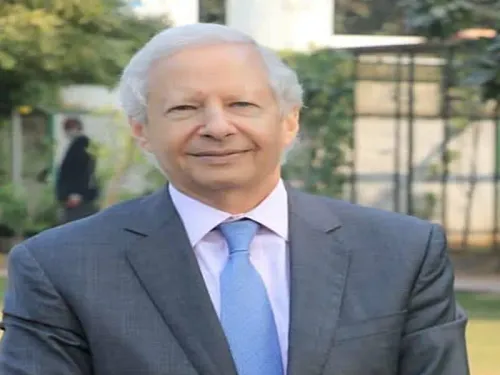
Kenneth Juster, former US Ambassador to India, offered one of the most candid assessments of India's global posture, describing it as the product of a long evolution from Cold War non-alignment to a more agile, multi-directional engagement strategy.
"India remains committed to the principle of strategic autonomy — working with others without surrendering its independence of judgment and action — as well as committed to a multipolar world," Juster said.
He acknowledged that India has drawn closer to Washington in response to mounting tensions with China, but cautioned that this very dynamic also limits how tightly New Delhi can align with American positions. In other words, the China factor simultaneously pushes India toward the US and restrains the depth of that embrace.
This tension is not new. India's abstention on UN Security Council votes related to Russia's invasion of Ukraine and its continued purchase of discounted Russian oil drew sharp criticism from Western capitals — yet New Delhi held firm, citing sovereign economic interests. The Hudson Institute conference underscored that such positions are not aberrations but deliberate expressions of a doctrine India has no intention of abandoning.
India's Economic Rise Reshaping Its Global Clout
Juster placed India's foreign policy ambitions in clear economic context: "Today, India's GDP is approximately $4.15 trillion. It ranks fourth in the world and is expected to soon become the third-largest economy."
Vijay Chauthaiwale, head of the Department of Foreign Affairs of the Bharatiya Janata Party (BJP), reinforced this narrative, saying India is now perceived globally as "a land of opportunities rather than a land of despair." He pointed to digital penetration as a key driver, noting internet usage has surged to "approximately 1 billion and above", integrating hundreds of millions into the formal digital economy.
This economic transformation is not merely statistical — it is geopolitical. A $4+ trillion economy commands a different seat at the table than the $500 billion economy India had two decades ago. It gives New Delhi the leverage to negotiate on its own terms, resist pressure, and pursue what Juster described as "multi-alignment in accordance with its vision of a multipolar world" — deepening cooperation with the United States in defence, technology, and energy, while simultaneously engaging Russia, the Gulf, and the Global South.
Trade Tensions and Tariff Disputes Cloud the Partnership
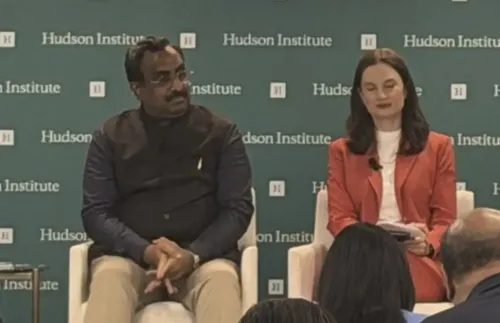
The conference did not shy away from friction points. Priyanka Chaturvedi, former Indian Member of Parliament, offered a pointed critique of the ongoing US-India trade negotiations, particularly around tariff structures.
"We were negotiating on a tariff which was imposed on us… and it has come to 18 per cent," Chaturvedi said, questioning the asymmetry of the negotiating dynamic. She also challenged the ambitious bilateral trade target of $500 billion, asking bluntly: "$500 billion… where would it come from?"
Her concerns extended to agriculture and dairy sectors — areas where India has historically resisted liberalisation due to the political and livelihood sensitivities of its vast farming population. Any trade deal that forces open these sectors would face fierce domestic opposition, making the $500 billion target a politically complex — not merely economic — challenge.
Notably, India and the US have been engaged in on-and-off trade negotiations for years, with disputes over price controls on medical devices, data localisation norms, and market access for American agricultural products repeatedly stalling progress. The current tariff friction under the Trump administration adds a new layer of complexity to a relationship that both sides publicly describe as a "comprehensive global and strategic partnership."
Diaspora, Regional Outreach, and the Bigger Picture
Chauthaiwale addressed the role of the Indian-American diaspora — estimated at over 4 million — in shaping perceptions of US-India ties. He cautioned against treating this community as monolithic, noting that Indian-Americans "are not a homogenous entity" and engage with US policy through varied lenses including immigration reform, H-1B visa policies, and bilateral trade concerns.
On India's regional strategy, Chauthaiwale pointed to renewed engagement with neighbouring countries, identifying political transitions in Bangladesh and Nepal as opportunities to reset diplomatic ties that had grown complicated in recent years. India's neighbourhood-first policy, while longstanding in rhetoric, has faced practical setbacks — making these openings strategically significant.
Juster closed with a sweeping assessment of India's historical trajectory: "Its rise will be one of the most significant geopolitical stories of this century," he said, adding that it is in the interest of both nations "for America to be a positive part of that story."
What Comes Next for US-India Relations
The Hudson Institute conference arrives at a moment when the US-India partnership — built painstakingly over two decades through frameworks like the Quad, the iCET (Initiative on Critical and Emerging Technologies), and deepening defence co-production agreements — is being stress-tested by transactional pressures from Washington and strategic recalibrations from New Delhi.
With India holding the G20 Presidency legacy and deepening its role in the Indo-Pacific security architecture, the bilateral relationship remains too consequential for either side to allow it to drift. However, the era of unconditional goodwill — if it ever existed — is clearly over. Both nations are now negotiating as equals, with distinct interests, and that dynamic will define the next chapter of one of the world's most watched partnerships.
Upcoming trade negotiation rounds between New Delhi and Washington, expected in the coming months, will be a key test of whether the two sides can bridge their differences on tariffs and market access — or whether economic nationalism on both ends deepens the strain.
Point of View
Non-aligned, globally connected — also makes it an unpredictable one. Washington wants a counterweight to China; New Delhi wants options, not obligations. The $500 billion trade target sounds visionary until you factor in India's politically untouchable agriculture sector and America's transactional tariff instincts under Trump. What mainstream coverage misses is this: India is no longer the junior partner asking for a seat at the table — it is negotiating as a $4 trillion economy with the leverage to walk away, and both sides know it.
NationPress
29 Sept 2026
Frequently Asked Questions
What was discussed at the Hudson Institute's New India Conference in Washington?
The Hudson Institute's New India Conference in Washington brought together senior policymakers, diplomats, and analysts to assess US-India relations. Key topics included India's strategic autonomy doctrine, its $4.15 trillion economy, trade tariff disputes, and regional diplomacy with neighbours like Bangladesh and Nepal.
What did former US Ambassador Kenneth Juster say about US-India relations?
Former US Ambassador to India Kenneth Juster said India remains committed to strategic autonomy and a multipolar world, limiting how closely it can align with the United States. He acknowledged strains in the relationship under the second Trump administration but expressed confidence that strong US-India ties would endure.
Why are US-India trade negotiations facing tensions in 2025?
Former Indian MP Priyanka Chaturvedi highlighted that India is negotiating under a tariff rate of 18 percent imposed by the US, raising questions about fairness. Sensitive sectors like agriculture and dairy, along with the ambitious $500 billion bilateral trade target, are creating significant friction in ongoing negotiations.
What is India's strategic autonomy policy and why does it matter?
India's strategic autonomy policy means engaging with multiple global powers — including the US, Russia, and China — without formally aligning with any single bloc. It allows India to pursue its national interests independently, which is why New Delhi has maintained ties with Russia even as it deepens defence and technology cooperation with Washington.
How significant is the Indian-American diaspora in US-India relations?
The Indian-American diaspora, estimated at over 4 million people, plays a growing role in shaping bilateral perceptions and policy. BJP's Vijay Chauthaiwale noted at the conference that Indian-Americans are not a homogenous group and engage with US policy through diverse lenses including immigration, H-1B visas, and trade concerns.