Kenneth Juster: India-US Ties Strong Despite Trump-Era Strains
Synopsis
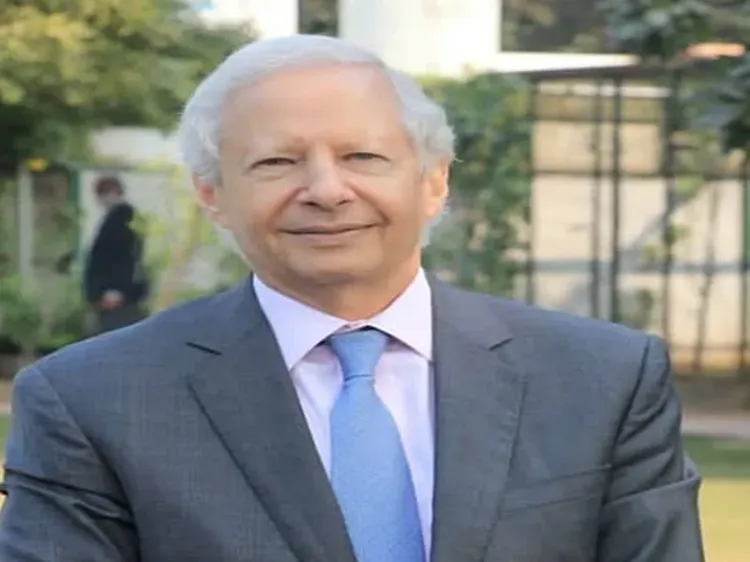
Former US Ambassador Kenneth Juster told the Hudson Institute that India-US ties remain strong despite Trump-era strains, citing China's aggression as the key driver of bilateral convergence. His candid critique of Washington's confrontational trade rhetoric and India's Russia energy ties signals the complex fault lines shaping one of the world's most consequential partnerships.
Key Takeaways
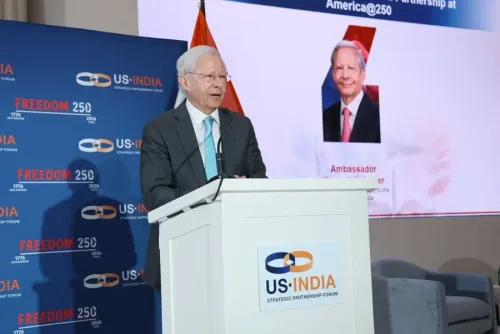
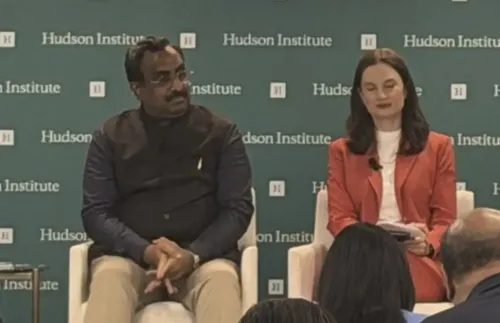
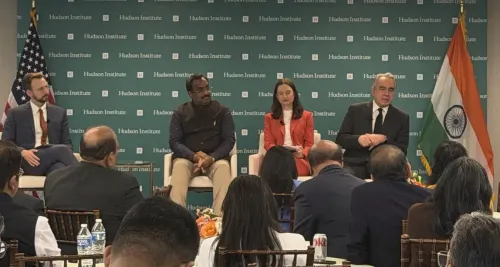
Kenneth Juster , former US Ambassador to India during Trump's first term , spoke at the Hudson Institute's New India Conference in Washington on April 23 .
India's strategic autonomy doctrine prevents formal alliances with the US , even as bilateral defence and technology cooperation deepens under the Quad framework.
China's border aggression — including the 2020 Galwan Valley clash that killed 20 Indian soldiers — has been the primary driver of closer India-US alignment.
India's GDP is approximately $4.15 trillion , ranking it 4th globally , with projections placing it as the world's 3rd-largest economy in the near term.
Juster cautioned the Trump administration against using derogatory language to pressure India on trade, advocating for quiet diplomatic negotiations instead.
India's rising energy imports from Russia remain a concern for Washington , though Juster suggested market forces may gradually reduce this dependence.
Washington, April 23 — The India-US strategic partnership is experiencing notable friction but retains its foundational strength, former US Ambassador to India Kenneth Juster declared at the Hudson Institute's New India Conference on Wednesday. Juster, who served as Washington's envoy to New Delhi during President Donald Trump's first term, offered a candid assessment of bilateral ties — acknowledging present-day tensions while underscoring the relationship's long-term durability.
Strategic Autonomy and the China Factor
Juster traced the arc of India's foreign policy evolution over the past two decades, emphasising that New Delhi's gradual alignment with Washington has been driven largely by China's growing assertiveness — particularly along the disputed Himalayan border. He stated plainly that India's ties with the United States have strengthened as its problems with China have worsened — a direct acknowledgment of how geopolitical threat perception shapes diplomatic behaviour.
At the same time, Juster was careful to note that India remains wedded to its doctrine of strategic autonomy. India remains committed to working with others without surrendering its independence of judgment and action, as well as committed to a multipolar world, he said. This posture deliberately prevents New Delhi from entering formal alliances — including one with Washington — even as operational cooperation deepens.
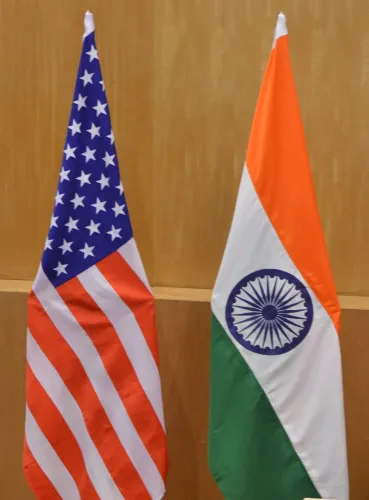
This is not a new tension. India declined to join US-led coalitions in Iraq and Afghanistan, abstained on UN votes concerning Russia's invasion of Ukraine, and has consistently resisted pressure to pick sides in great-power rivalries. The Quad — grouping India, the US, Australia, and Japan — represents perhaps the furthest New Delhi has gone toward institutionalised security alignment.
Strains Under the Second Trump Administration
Juster did not shy away from addressing current bilateral friction. The strain in the US-India relationship that has arisen during the second Trump administration has raised genuine concerns in India, he acknowledged. These strains span multiple domains — trade tariffs, market access disputes, and Washington's occasionally blunt public pressure on New Delhi.
On trade, Juster noted a long-standing view in Washington that India's market has been somewhat more closed than it should be — a sentiment that has resurfaced sharply under the Trump administration's aggressive tariff posture. However, he cautioned against confrontational rhetoric, saying it is not helpful to use derogatory language or to appear as though you are trying to pressure countries, advocating for quiet diplomacy over public ultimatums.
This is a pointed, if implicit, critique of the Trump administration's style of trade negotiation — one that has unsettled not just India but allies across Europe and Asia. Washington's transactional approach to alliances under Trump has forced partners like India to recalibrate how much they can rely on US commitments.
Energy, Russia, and the Dependency Dilemma
Juster also flagged India's surging energy imports from Russia as a point of concern for Washington. Since Russia's 2022 invasion of Ukraine, India has dramatically scaled up purchases of discounted Russian crude oil, becoming one of Moscow's top energy clients. This has created an awkward dynamic: India is simultaneously deepening defence and technology ties with the US while providing an economic lifeline to Russia through energy trade.
However, Juster suggested that New Delhi may organically reduce this dependence as global energy market conditions shift — implying a preference for market-driven realignment over coercive pressure from Washington.
India's Economic Rise and the Growth Paradox
Juster placed India's economic trajectory at the centre of his analysis. India's GDP stands at approximately $4.15 trillion, ranking it fourth in the world, with projections placing it as the third-largest economy in the near future. This economic ascent is reshaping India's global leverage, its bargaining power with Washington, and its ability to project influence across the Indo-Pacific, Middle East, and Europe.
Yet Juster cautioned about what he called a growth paradox — the challenge of reconciling India's global ambitions with the domestic imperatives of a nation with a vast population and relatively low per capita income. This paradox partly explains why New Delhi resists trade liberalisation that could benefit consumers but threaten domestic industries and employment.
Crisis Coordination and the Road Ahead
Reflecting on his own tenure, Juster pointed to moments of genuine crisis solidarity as evidence of the partnership's depth. He cited close coordination during the 2019 Pulwama terror attack — which killed 40 Indian paramilitary personnel — and the 2020 Galwan Valley border clash with China, which resulted in the deaths of 20 Indian soldiers. The US was there for India and consulted closely with New Delhi during both crises, he said.
Looking forward, Juster framed India's rise as one of the defining geopolitical narratives of this century, adding that it is in both nations' interests for America to be a positive part of that story. As India and the US navigate tariff negotiations, defence procurement deals, and the evolving Quad framework in 2025, the trajectory of this partnership will have consequences far beyond bilateral relations — shaping the balance of power across the entire Indo-Pacific.
Point of View
Meanwhile, is playing a masterclass in strategic ambiguity — buying Russian oil, joining the Quad, and negotiating with Washington from a position of growing economic strength. The partnership will endure, but its shape in 2025 and beyond will be defined less by shared values and more by hard-nosed mutual interest.
NationPress
19 Sept 2026
Frequently Asked Questions
What did former US Ambassador Kenneth Juster say about India-US relations in 2025?
Kenneth Juster said the India-US relationship is under strain during Trump's second term but remains fundamentally strong, driven by shared strategic interests and concerns over China. He highlighted cooperation in defence, trade, technology, and energy security as enduring pillars of the partnership.
Why is India cautious about aligning too closely with the United States?
India adheres to a doctrine of strategic autonomy, meaning it cooperates with partners without entering formal alliances or surrendering independent judgment. This posture allows New Delhi to engage with the US, Russia, and others simultaneously without being bound by bloc politics.
How has China's aggression affected India-US ties?
According to Juster, India's relationship with the US has strengthened in direct proportion to its worsening problems with China, particularly along the disputed Himalayan border. Events like the 2020 Galwan Valley clash accelerated India's strategic convergence with Washington.
What are the trade tensions between India and the US under Trump?
Washington has long viewed India's market as relatively closed, and the Trump administration has applied tariff pressure to address this. Juster cautioned against derogatory language or public pressure tactics, saying quiet diplomatic negotiations are more effective.
What is India's current GDP ranking and economic outlook?
India's GDP stands at approximately $4.15 trillion, making it the world's fourth-largest economy. It is projected to become the third-largest economy in the near future, though Juster noted a growth paradox between global ambitions and domestic development needs.