People-to-people ties 'secret sauce' of India-US bond: Ex-envoy Juster
Synopsis
Former US Ambassador Kenneth Juster used a Washington summit to argue that 5 million Indian Americans — not defence deals or trade figures — are the real glue of the India-US relationship. With bilateral trade having grown from $19 billion in 2001 to nearly $250 billion today, and a $500 billion target on the horizon, the people dimension may be the partnership's most durable asset.
Key Takeaways
Former US Ambassador Kenneth I.
Juster called people-to-people ties the 'secret sauce' of the India-US relationship at the USISPF Leadership Summit in Washington.
The US opened diplomatic missions in India as early as 1792 (Calcutta) and 1794 (Madras) , among its first overseas posts.
Bilateral trade in goods and services has grown from $19 billion in 2001 to nearly $250 billion today, with a $500 billion target by end of decade.
More than 5 million Indian Americans are credited with having an 'immeasurable' impact on the US economy and society.
USISPF launched We the People: 250 Voices That Have Shaped the U.S.-India Relationship , honouring individuals across centuries of bilateral ties.
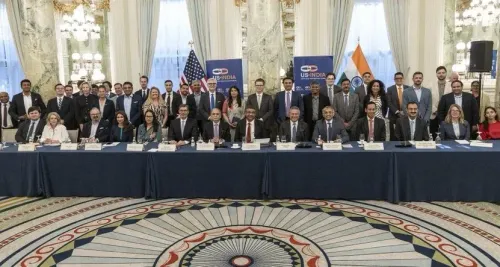
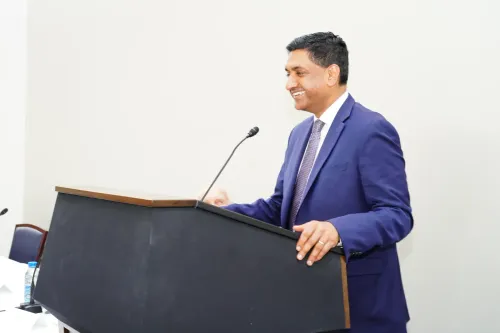
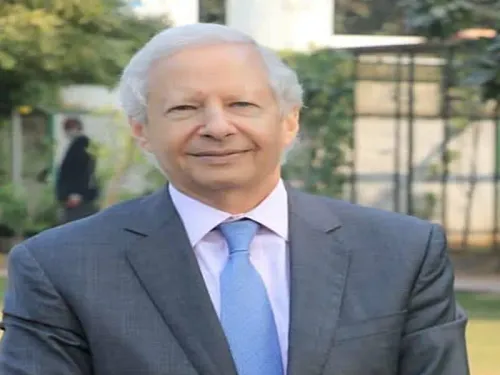
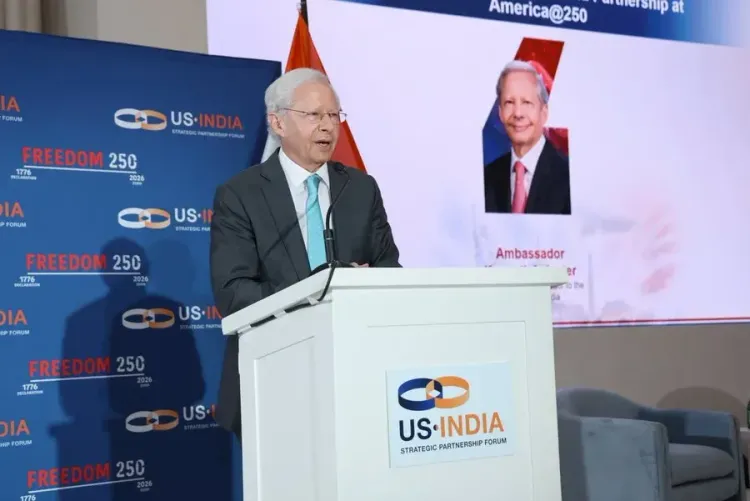
Former US Ambassador to India Kenneth I. Juster on 30 June described people-to-people ties as the 'secret sauce' that has held the India-US relationship together through diplomatic turbulence, tracing bilateral connections from early American consulates on Indian soil to today's comprehensive global strategic partnership. Juster was speaking at the US-India Strategic Partnership Forum (USISPF) Leadership Summit in Washington.
A Relationship Older Than the Modern Alliance
Juster argued that the two nations had been meaningfully connected long before the term 'strategic partnership' entered diplomatic vocabulary. He noted that the United States established two of its earliest overseas diplomatic missions in India — in Calcutta in 1792 and Madras in 1794 — only a few years after opening its mission in Paris.
He also recalled that President Franklin D. Roosevelt had pressed Britain on Indian independence, and that Washington established relations with India's interim government in September 1946, more than 11 months before India formally became independent. 'No two nations so far apart geographically have been so closely connected as the United States and India,' Juster said.
Key Milestones in the Bilateral Journey
Juster traced the post-Cold War trajectory: the relationship gathered pace after India's 1991 economic reforms but hit a wall following India's 1998 nuclear tests. The subsequent diplomatic channel opened by US Deputy Secretary of State Strobe Talbott and Indian External Affairs Minister Jaswant Singh helped repair ties and laid the groundwork for President Bill Clinton's landmark 2000 visit to India.
President George W. Bush then sought to recast the relationship between what he called 'the world's oldest democracy' and 'the world's largest democracy', with high technology and the civil nuclear agreement becoming central pillars. Subsequent administrations built on that foundation — President Barack Obama designated India a major defence partner, the first Trump administration launched the 2+2 ministerial dialogue and revived the Quad at ministerial level, and President Joe Biden elevated Quad meetings to the leaders' level.
Juster noted that the second Trump administration has continued to advance defence cooperation and energy security with India while working toward a first-ever bilateral trade agreement.
Trade Growth and the $500 Billion Target
On the economic front, Juster pointed to a striking trajectory: bilateral trade in goods and services stood at $19 billion in 2001, when he served as Under Secretary of Commerce, and has since grown to nearly $250 billion. Both sides are now aspiring to reach $500 billion by the end of the decade. 'Completing a trade deal would greatly facilitate this,' he said.
Juster said the partnership now spans 'almost every area of human endeavour' — from defence, non-proliferation, and counter-terrorism to trade, healthcare, space, and the oceans.
The People Factor and the USISPF Book Launch
Juster reserved particular emphasis for the human dimension of the relationship, citing the 'Howdy Modi' event in Houston in 2019 and the 'Namaste Trump' event in Ahmedabad in 2020 as vivid expressions of public goodwill. He called the impact of more than 5 million Indian Americans on US economy and society 'immeasurable'.
His remarks preceded the launch of USISPF's coffee table book, We the People: 250 Voices That Have Shaped the U.S.-India Relationship, which honours individuals across centuries — from diplomacy, medicine, business, academia, and the arts — who helped shape bilateral ties. The volume follows USISPF's earlier work, We the People: 75 Years of US-India Relations, released in 2022. The new book arrives as the United States marks 250 years of independence and India deepens its global footprint.
As the bilateral trade target of $500 billion and a prospective trade agreement remain works in progress, the summit underlined that the India-US story is as much about its people as its governments.
Point of View
Visa restrictions on Indian professionals, and divergent positions on Russia-Ukraine — none of which people-to-people warmth has resolved. The $500 billion trade target is aspirational, but a bilateral trade deal remains unsigned despite years of negotiation. Celebrating the diaspora and citing 'Howdy Modi' optics risks obscuring the hard transactional work still ahead. The more honest read is that people-to-people ties provide political cover for governments to manage differences — they are a buffer, not a substitute for structural alignment.
NationPress
29 Sept 2026
Frequently Asked Questions
What did former US Ambassador Kenneth Juster say about India-US ties?
Kenneth Juster, former US Ambassador to India, described people-to-people connections as the 'secret sauce' binding the two countries through diplomatic ups and downs. He made the remarks at the USISPF Leadership Summit in Washington on 30 June, tracing the relationship from early American consulates in India in the 1790s to the present-day strategic partnership.
How much has India-US bilateral trade grown?
Bilateral trade in goods and services has grown from $19 billion in 2001 to nearly $250 billion today. Both countries are targeting $500 billion in trade by the end of the decade, with Juster noting that a bilateral trade agreement would significantly accelerate that goal.
What is the USISPF book launched at the summit?
USISPF launched a coffee table book titled We the People: 250 Voices That Have Shaped the U.S.-India Relationship, honouring 250 individuals across centuries from fields including diplomacy, medicine, business, academia, and the arts. It follows an earlier USISPF volume released in 2022 to mark 75 years of India-US diplomatic relations.
What are the key milestones in the India-US relationship highlighted by Juster?
Juster cited the US establishing diplomatic missions in India in 1792 and 1794, President Roosevelt's push for Indian independence, India's 1991 reforms reviving ties, the 1998 nuclear tests causing a setback, the 2000 Clinton visit, the civil nuclear agreement under Bush, India's major defence partner status under Obama, the 2+2 dialogue and Quad revival under the first Trump administration, and Quad elevation to leaders' level under Biden.
What role do Indian Americans play in the India-US relationship?
Juster described the impact of more than 5 million Indian Americans on the US economy and society as 'immeasurable'. He cited the 'Howdy Modi' event in Houston in 2019 and the 'Namaste Trump' event in Ahmedabad in 2020 as demonstrations of the depth of public goodwill between the two nations.