Richard Verma flags trade, visa strains in US-India ties at Capitol Hill Summit
Synopsis
A former US Ambassador to India has publicly warned that the US-India relationship — built over 25 years into a $200 billion trade partnership with the world’s deepest defence exercise programme — is now ‘flashing yellow’. The trigger: 50 per cent tariffs that exceed even China’s, visa curbs on Indian students, and 300 million views of anti-Indian hate posts on X. The warning carries weight precisely because it comes from an insider who helped build the relationship.
Key Takeaways
Richard Verma , former US Ambassador to India , warned at the Capitol Hill Summit 2026 on 19 May that the US-India relationship is ‘flashing yellow’.
A recent study cited by Verma found 300 million views across 24,000 posts on X carrying anti-Indian hate content.
Verma said India faces 50 per cent US tariffs — higher than China and any other country, according to him.
Bilateral trade has grown from near zero to more than $200 billion since 2000; India now conducts more joint military exercises with the US than any other country.
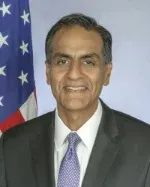
Verma served as US Ambassador to India from 2015 to 2017 and is currently chief legal officer at Mastercard .
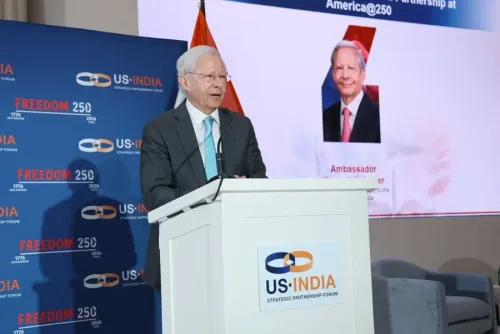
Former US Ambassador to India Richard Verma cautioned on 19 May 2026 that trade disputes, visa restrictions, and a surge in anti-Indian sentiment in the United States were placing new pressure on the US-India relationship, even as he called the partnership one of the most consequential in the world. Verma made the remarks at the Capitol Hill Summit 2026, organised by the US-India Friendship Council in Washington.
A Relationship Flashing Yellow
Verma, who also served as Deputy Secretary of State, described the bilateral relationship as having witnessed “exceptional growth” over the past 25 years, but warned that it was now entering a more uncertain phase. “I’d say the system is flashing a bit yellow,” he said. He noted that no other bilateral relationship had expanded as rapidly as US-India ties since 2000, adding: “It would be hard for me to think of another bilateral relationship between the year 2000 and the year 2025 that has grown as much and as deep as the US and India.”
How the Partnership Was Built
Tracing the arc of the relationship, Verma recalled that ties had hit a low point during the 1970s and again following India’s 1998 nuclear tests, before a dramatic reset began with President Bill Clinton’s visit to India in 2000. “It was President Clinton who in the year 2000 said, ‘I want a different relationship with India,’” Verma said. He identified four pillars that drove the partnership over two decades: people-to-people ties, security and defence, trade and economics, and clean energy. Bilateral trade, he noted, had expanded from virtually nothing to more than $200 billion, while defence cooperation deepened to the point where India now conducts more joint military exercises with the United States than any other country. “We went from not a single defence exercise to now India doing the most defence exercises with the United States,” he said.
Key Concerns: Tariffs, Visas, and Anti-Indian Hate
Verma flagged several recent developments as worrying signals. He cited restrictions affecting Indian students and a sharp rise in anti-Indian rhetoric online, referencing a recent study that found 300 million views across 24,000 posts on X carrying anti-Indian hate content. “That is a flashing light for me,” he said. On trade, Verma criticised tariff policies he said disproportionately penalised India. “India ends up with 50 per cent tariffs, higher than China, higher than any other country in the world,” he said. He also pointed to visa restrictions as a source of friction, particularly for the Indian student and professional community.
The 2008 Nuclear Deal as a Benchmark
Verma reflected on the 2008 US-India civil nuclear agreement as a defining moment that illustrated the depth of political will on both sides. He recalled that the deal required a rare classified session of the US Senate, given that India was not a signatory to the Nuclear Non-Proliferation Treaty (NPT). “It was the right thing to do,” he said. “And it showed how much we cared about this relationship.”
Cautious Optimism for the Long Term
Despite his concerns, Verma said he remained optimistic about the long-term trajectory of the partnership, citing deep institutional ties and the role of the Indian American community as a bridge. “We still care deeply about the relationship,” he said. “Continue to say it’s the most important and most consequential relationship we have.” Verma served as US Ambassador to India from 2015 to 2017 under President Barack Obama and later as Deputy Secretary of State for Management and Resources. He currently serves as chief legal officer and head of global public policy at Mastercard. How both governments respond to the current friction points will determine whether the relationship’s next chapter matches the ambition of its last 25 years.
Point of View
But because it is calibrated. A diplomat who helped architect the relationship’s modern phase is now publicly itemising its stress fractures — tariffs, visa curbs, and a measurable spike in online hate — which suggests these are not fringe concerns. The 50 per cent tariff figure, if accurate, represents a structural contradiction: the US cannot simultaneously call India its most consequential partner and subject it to its highest trade penalties. The Indian American community, long the relationship’s most effective lobby, is now also its most visible target online. If Washington does not address that asymmetry, the institutional goodwill Verma cites as a buffer will erode faster than either side expects.
NationPress
3 Oct 2026
Frequently Asked Questions
What did Richard Verma say about US-India relations at the Capitol Hill Summit 2026?
Verma warned that trade disputes, visa restrictions, and rising anti-Indian sentiment in the United States were creating new strains in the US-India relationship. He described the situation as ‘flashing a bit yellow,’ while still calling the partnership one of the most consequential in the world.
What tariff concern did Verma raise about India?
Verma said India faces 50 per cent US tariffs, which he described as higher than those imposed on China and higher than any other country in the world. He criticised these tariff policies as disproportionately affecting India.
What data did Verma cite on anti-Indian hate online?
Verma referenced a recent study that found 300 million views across 24,000 posts on X containing anti-Indian hate content, calling it ‘a flashing light’ for the bilateral relationship.
How has the US-India relationship grown since 2000?
According to Verma, bilateral trade expanded from virtually nothing to more than $200 billion, and India now conducts more joint military exercises with the United States than any other country. He identified four pillars of growth: people-to-people ties, security and defence, trade and economics, and clean energy.
Who is Richard Verma?
Richard Verma served as US Ambassador to India from 2015 to 2017 under President Barack Obama, and later as Deputy Secretary of State for Management and Resources. He currently serves as chief legal officer and head of global public policy at Mastercard.