How Does the New US National Security Strategy Highlight India's Role in the Indo-Pacific?

Synopsis
Discover how the latest National Security Strategy from the US emphasizes India's pivotal role in the Indo-Pacific region, as highlighted by expert Lisa Curtis. This comprehensive strategy outlines significant opportunities for enhancing US-India relations amidst global challenges.
Key Takeaways
US National Security Strategy reinforces India's role in the Indo-Pacific.
Bipartisan support for strong US-India strategic ties.
Concerns about technology security risks from Russia's outreach.
Goal to expand US-India trade to $500 billion by 2030 .
Future promises greater collaboration in emerging technologies .
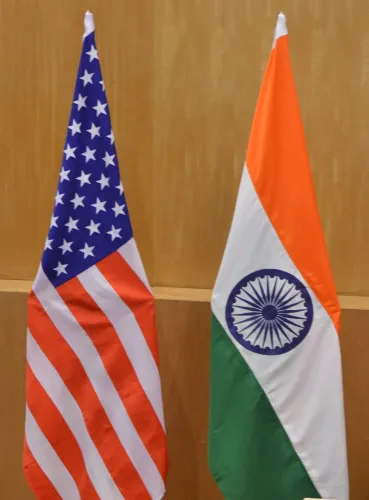
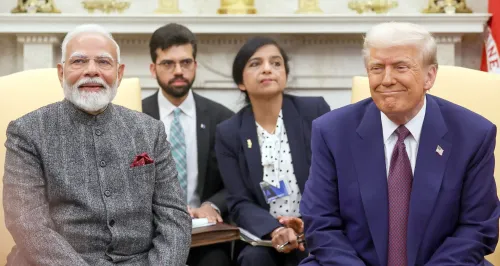
Washington, Dec 6 (NationPress) The recent National Security Strategy (NSS) released by the White House signals a consistent approach by Washington toward India, according to senior Indo-Pacific analyst Lisa Curtis. She emphasized that this document underscores India's significance in the Indo-Pacific and reaffirms bipartisan support for closer strategic ties.
Curtis, who previously served as a senior director for South Asia at the US National Security Council and is now a prominent voice at the Centre for a New American Security (CNAS), noted that the NSS’s numerous mentions of India reflect robust institutional support within the US government.
She highlighted the importance of the Quad, stating that the NSS indicates recognition of India’s value in a long-term partnership with the Trump administration.
Describing the NSS as a result of thorough interagency consensus, Curtis remarked, “The national security strategy is developed over time and requires significant thought and coordination among various government entities.” She believes this should reassure India regarding the Trump administration's perspective on its relationship with India.
Curtis connected the positive messaging about India to the overall trajectory of US-India relations, despite some recent challenges. She pointed out that India's economic and defense ties to the US maintain strategic importance, citing Washington's commitment to boost trade with India to “$500 billion by 2030,” in contrast to India-Russia trade ambitions, which illustrates the scale and aspiration of this bilateral relationship.
However, Curtis also highlighted concerns regarding technology security risks stemming from Russia’s engagement with India. She referenced reports claiming that “Russia is attempting to use India to establish a sovereign technology system independent of the West” and is looking to integrate into India's cybersecurity and IT networks, warning that this could be detrimental for India.
Additionally, she noted that “Russia has a very close relationship with China,” raising concerns about the potential flow of sensitive Indian technologies.
Curtis argued that India’s increasing role in the Indo-Pacific is crucial to the strategy's framework. She mentioned that India faces strategic choices about whether it “will gain more by collaborating with the US, particularly in the AI sector,” suggesting that the future holds greater promise for India in strengthening its ties with the United States.
She further indicated that the evolving strategic landscape influences how Washington perceives India’s diplomatic relations, including its connections with Russia. Despite recent friction over tariffs and policy differences, she expressed hope that “this will pass, leading to a future focused on enhancing the US-India relationship and solidifying the foundations of that partnership.”
National Security Strategies, which are submitted periodically to Congress, outline the overarching foreign policy doctrine of a US administration.
The 2025 strategy prioritizes competition with China, fortifying alliances, and ensuring a free and open Indo-Pacific—where India is increasingly viewed as a pivotal partner. Over the past decade, India-US strategic ties have expanded across defense, technology, maritime security, and critical and emerging technologies.
Point of View
We recognize the importance of the evolving US-India partnership, particularly in the context of the Indo-Pacific. The National Security Strategy represents a strategic alignment that may reshape global dynamics, reflecting a nuanced understanding of international relations. Our focus remains on fostering informed dialogue around these developments.
NationPress
29 Sept 2026
Frequently Asked Questions
What is the main focus of the new US National Security Strategy?
The new US National Security Strategy emphasizes competition with China, strengthening alliances, and ensuring a free and open Indo-Pacific, highlighting India's vital role within this framework.
How does the NSS reflect US-India relations?
The NSS showcases a commitment to closer strategic ties with India, as indicated by multiple mentions of India's significance and the goal of expanding trade to $500 billion by 2030.
What concerns are raised regarding technology security?
Concerns include potential technology security risks due to Russia's outreach to India, which may lead to the establishment of a technology system that could isolate India from Western influences.
What role does the Quad play in the NSS?
The Quad is highlighted in the NSS as a key component of US strategy in the Indo-Pacific, emphasizing the importance of cooperation among the US, India, Japan, and Australia.
What is Lisa Curtis's perspective on US-India relations?
Lisa Curtis believes that the NSS reinforces the importance of India's partnership with the US and offers reassurance about the long-term commitment of the Trump administration to this relationship.