Netanyahu's India pivot signals structural defence shift amid US tensions
Synopsis
Netanyahu didn't just name-drop India in a diplomatic interview — he used it as a rebuttal to US Vice-President JD Vance's claim that America is Israel's only real ally. Behind that rhetorical move is a reported negotiation to manufacture Iron Dome's Tamir interceptors on Indian soil, a development that would mark a fundamental upgrade in one of Asia's most consequential but least-discussed defence relationships.
Key Takeaways
Benjamin Netanyahu publicly cited India as a new alliance partner during an interview, directly rebutting US claims that Israel has no independent strategic standing.
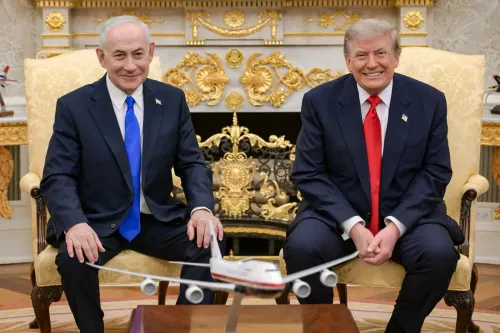
The remarks followed blunt pressure from US President Donald Trump and Vice-President JD Vance , who framed the US as Israel's only real ally.
Rafael Advanced Defence Systems is reportedly negotiating with Indian private-sector manufacturers to produce Iron Dome Tamir interceptors on Indian soil.
Israel is reportedly facing industrial production constraints on weapons, making India's manufacturing scale a material strategic asset.
Analysts describe India as uniquely valuable because it can co-produce at volume without conditioning cooperation on changes to Israel's regional posture.
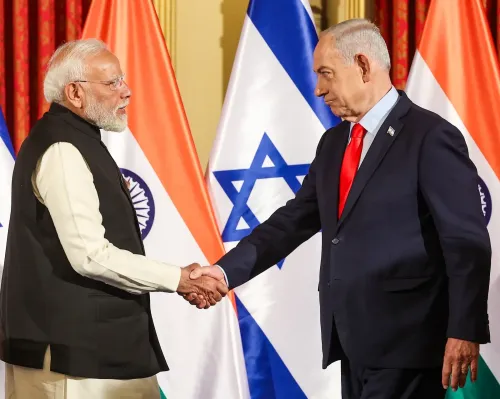
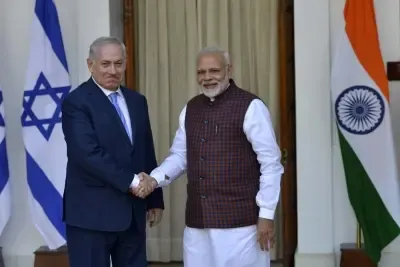
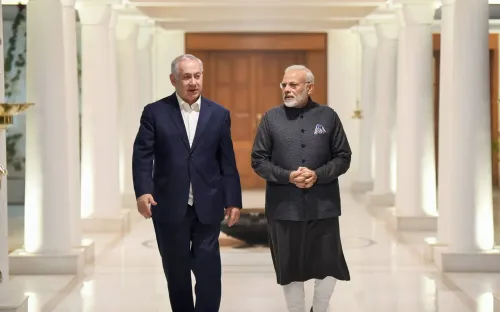
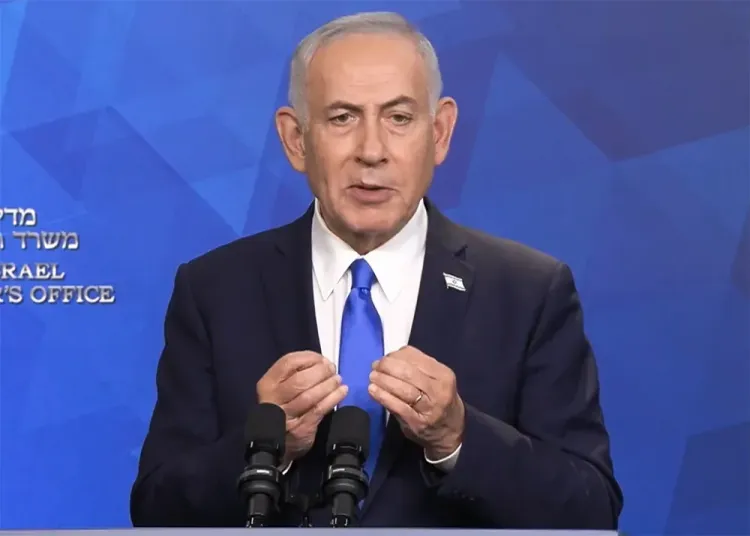
Israeli Prime Minister Benjamin Netanyahu has publicly identified India as a key strategic partner, with recent remarks pointing to a deepening defence relationship that analysts say reflects a structural realignment rather than diplomatic pleasantries. The comments, made during an interview, came at a moment of unusual friction between Israel and the United States, lending them considerably more weight than routine bilateral affirmations.
What Netanyahu Said and Why It Matters
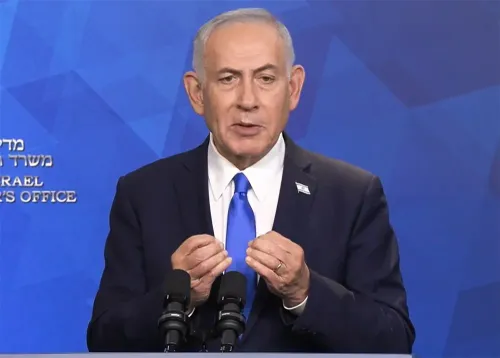
Speaking during the interview, Netanyahu stated: 'You have to build new alliances and develop new relationships. That's what I'm doing right now with India.' The remarks were a direct response to pointed pressure from Washington. According to a report by the Jerusalem Times, US President Donald Trump had told Netanyahu bluntly that American patience had run out and that Israel owed its very existence to US backing. US Vice-President JD Vance had gone further, publicly framing the United States as Israel's only real ally.
Netanyahu's invocation of India, analysts note, was not a rhetorical flourish — it was a rebuttal. As the report put it, 'A Prime Minister does not reach for an empty gesture when his strategic legitimacy is being questioned by his own patron. He reaches for the thing he can actually point to.'
The Iron Dome Connection
Underpinning Netanyahu's remarks is a reported defence negotiation of significant strategic consequence. According to multiple reports cited by the Jerusalem Times, Rafael Advanced Defence Systems is in discussions with Indian private-sector manufacturers to establish a production line for Iron Dome's Tamir interceptors on Indian soil. This is not a technology-transfer arrangement in the conventional sense — it is a proposal to manufacture the actual missile that Israel relies upon to intercept daily rocket, drone, and cruise-missile threats.
Israel is reportedly facing constraints in its own industrial production of weapons, making India's manufacturing depth and workforce scale a material solution rather than a symbolic gesture. Notably, this would be among the most operationally significant defence co-production agreements India has entered into with any partner.
Why India Is a Uniquely Attractive Partner for Israel
The report highlights a combination of factors that make India distinctively valuable to Israel at this moment. India's manufacturing capacity and scale allow for co-production at volume that few other countries can match. Equally important, India has no interest in conditioning defence cooperation on changes to Israel's regional posture — a sharp contrast to the transactional nature of a patron relationship.
India has also demonstrated, across decades, a capacity to maintain simultaneous ties with Washington, Moscow, the Gulf states, and Tehran without being absorbed into any single geopolitical bloc. As the report noted, 'Israel gains a partner without inheriting a new set of political conditions. That combination is genuinely rare.'
The Broader Strategic Context
This comes amid a wider recalibration in Israel's international positioning, as the Gaza conflict has strained its relationships with several traditional allies and partners. For India, a deeper defence partnership with Israel would build on an already substantial bilateral relationship that includes intelligence sharing, agricultural technology, and existing defence procurement.
India has historically been one of Israel's largest defence customers. A shift toward co-production — particularly of a system as critical as the Iron Dome — would mark a qualitative upgrade in that relationship. Whether the Tamir interceptor negotiations conclude successfully will be a key indicator of how far this structural shift actually extends.
Point of View
And that changes how it should be read. The Iron Dome co-production report, if it materialises, would be among the most operationally significant defence agreements in India's history, yet it has received a fraction of the coverage it warrants. India's strategic value here is structural: it offers Israel manufacturing depth, non-conditionality, and bloc-neutrality simultaneously — a combination no Western or Gulf partner can replicate. The mainstream framing of India-Israel ties as a buyer-seller relationship is increasingly inadequate for what appears to be emerging.
NationPress
11 Oct 2026
Frequently Asked Questions
What did Netanyahu say about India and why is it significant?
Netanyahu said 'You have to build new alliances and develop new relationships. That's what I'm doing right now with India' during an interview. The remark is significant because it was made in direct response to US pressure — specifically Vice-President JD Vance's claim that America is Israel's only real ally — making it a strategic statement rather than a routine diplomatic affirmation.
What is the reported Iron Dome deal between Israel and India?
Rafael Advanced Defence Systems is reportedly in negotiations with Indian private-sector manufacturers to establish a production line for Iron Dome's Tamir interceptors on Indian soil. This would go beyond technology transfer and involve manufacturing the actual missile Israel uses to intercept rockets, drones, and cruise missiles.
Why is India uniquely valuable to Israel as a defence partner?
India offers manufacturing depth and workforce scale sufficient for high-volume co-production, has no interest in conditioning defence cooperation on changes to Israel's regional posture, and has a decades-long track record of maintaining ties with Washington, Moscow, Gulf states, and Tehran simultaneously — meaning Israel gains a partner without inheriting new political conditions.
What is the current state of US-Israel relations that prompted Netanyahu's remarks?
According to reports, US President Donald Trump told Netanyahu that American patience had run out and that Israel owed its existence to US backing. Vice-President JD Vance publicly described the US as Israel's only real ally. Netanyahu's invocation of India was a direct rebuttal to this framing.
How does this fit into the broader India-Israel defence relationship?
India has historically been one of Israel's largest defence customers, with existing procurement covering a range of systems. A shift toward co-production of a system as operationally critical as the Iron Dome would represent a qualitative upgrade, moving the relationship from buyer-seller to strategic industrial partner.