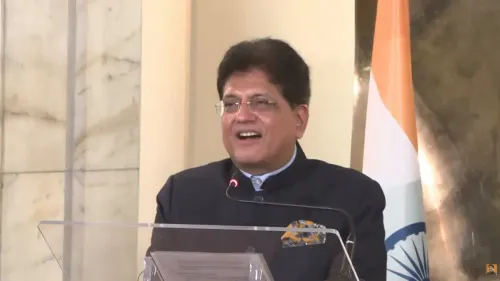
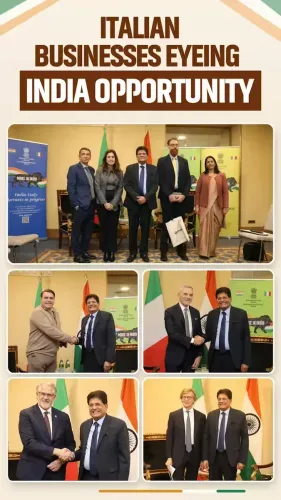
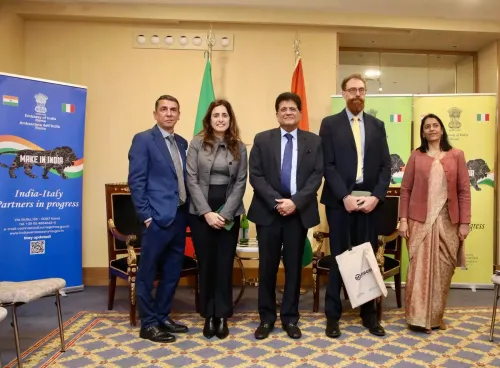
Goyal Bridges Rome, Varanasi and a Shared Love for Pizza
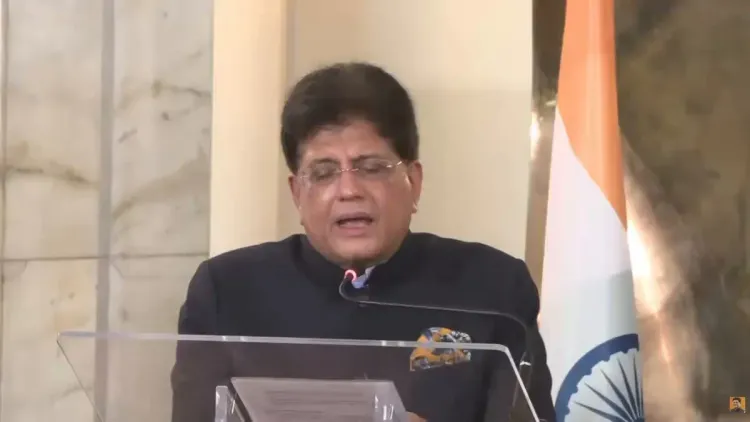
Synopsis
Commerce Minister Piyush Goyal draws a vivid civilizational bridge between India and Italy, citing the Rome–Varanasi parallel, the Sanskrit–Latin linguistic kinship, and a shared love of pizza and pasta as threads that bind the two nations across centuries.
Key Takeaways
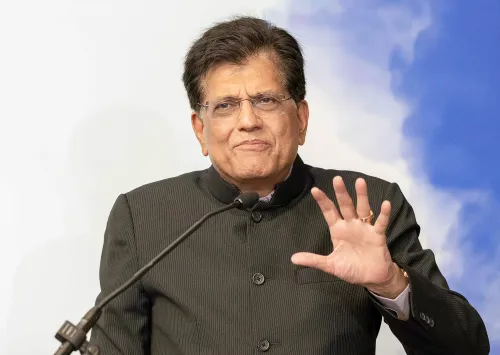
Union Commerce and Industry Minister Piyush Goyal posted on 18 November 2026 invoking the deep cultural ties between India and Italy .
He cited the Rome–Varanasi parallel as a 'timeless connection' rooted in historical continuity and civilizational longevity.
The post highlighted the shared Sanskrit–Latin linguistic heritage , a relationship grounded in comparative philology and the common Proto-Indo-European language family.
Goyal also referenced a mutual love for pizza and pasta as a lighthearted but pointed cultural bond.
The messaging fits a broader pattern of Indian ministers using soft-power framing to complement economic and diplomatic engagement with European partners.
From the ancient ghats of Varanasi to the cobblestoned forums of Rome, Union Commerce and Industry Minister Piyush Goyal invoked one of history's most evocative civilizational parallels on Wednesday, 18 November 2026 — and then, with a knowing wink, sealed it with pizza and pasta.
Goyal posted on X, noting that 'from the timeless connection between Rome and Varanasi to the shared linguistic heritage of Sanskrit and Latin, India and Italy have centuries of history that bring us closer' — before adding that 'our shared love for Pizza and Pasta makes this bond even more special.' The 🍕🍝 at the end said everything the diplomat in him left unsaid.
When Two Ancient Cities Mirror Each Other
The Rome–Varanasi comparison is a favourite of scholars and statesmen alike. Both cities claim an almost unbroken thread of habitation stretching back millennia; both sit on rivers — the Tiber and the Ganga — that their civilizations treated as sacred arteries. Varanasi is widely regarded as one of the world's oldest continuously inhabited cities, a distinction Rome shares in the European imagination. For an Indian minister leading a trade and industry portfolio, flagging this parallel is a soft-power move as deliberate as any tariff negotiation.
Sanskrit, Latin and the Family Tree of Languages
The linguistic angle Goyal raises is not mere poetry — it is established comparative philology. Sanskrit and Latin are both daughters of Proto-Indo-European, the reconstructed ancestral tongue whose family tree spans from India to Ireland. Words for 'mother' (matar / mater), 'brother' (bhratar / frater), and 'night' (nakt / nox) read like cognates because they are. That shared grammar underpins a civilizational kinship that predates any modern bilateral treaty.
The Softer Side of India–Italy Ties
Indian ministers have periodically leaned on historical and cultural affinity when messaging European partners — a strategy that complements harder economic engagement without demanding an immediate policy headline. Italy is a significant trading partner within the European Union framework, and India's ongoing negotiations with the EU give every gesture of goodwill an underlying strategic logic. Goyal's post, light in register but deliberate in framing, plants a flag of warmth ahead of any future bilateral discussions on commerce, culture, or tourism.
And if the path to deeper ties is paved with shared carbohydrates, few diplomats would complain.
Point of View
Messaging that positions India and Italy as natural cultural allies rather than transactional trade partners carries strategic weight beyond its cheerful tone. The Rome–Varanasi comparison, in particular, elevates India's antiquity as a diplomatic asset, subtly reframing the relationship as one between equals with parallel legacies rather than a developing-world supplicant and a European bloc. The pizza-and-pasta kicker ensures the post travels widely on social media — the reach is the point.
NationPress
18 Nov 2026
Frequently Asked Questions
Why does Piyush Goyal compare Rome and Varanasi?
Both Rome and Varanasi are among the world's oldest continuously inhabited cities, each central to its civilization's identity — making the comparison a popular shorthand for the depth and continuity of Indian and Italian heritage.
What is the connection between Sanskrit and Latin?
Sanskrit and Latin are both descended from Proto-Indo-European, an ancient ancestral language. They share cognate words for common concepts — family members, numbers, natural phenomena — reflecting a linguistic kinship that is thousands of years old.
What are India–Italy relations like in 2026?
India and Italy maintain diplomatic and trade ties, with Italy being a notable partner within the European Union framework. India's ongoing engagement with the EU gives bilateral cultural messaging added strategic significance.
What is Piyush Goyal's role in the Indian government?
Piyush Goyal is the Union Minister of Commerce and Industry, a senior BJP leader, and the Leader of the House in the Rajya Sabha, making him one of the most prominent faces of India's trade and economic diplomacy.
Is there a formal India–Italy cultural exchange programme?
India and Italy have existing frameworks for cultural cooperation, though no new programme was announced in this post. Any follow-up initiatives would likely emerge from future bilateral meetings.