CM Majhi Tables ₹24,150 Cr Supplementary Budget in Odisha Assembly
Synopsis
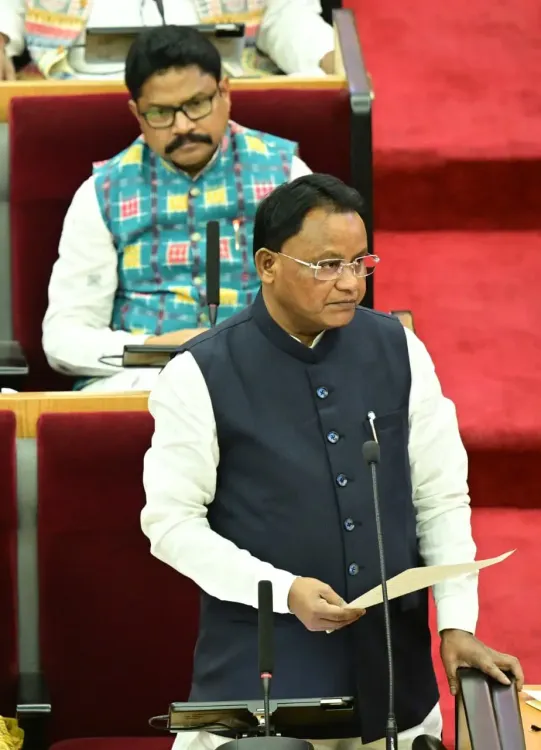
Chief Minister Mohan Majhi tabled a ₹24,150 crore Supplementary Budget in the Odisha Assembly on November 18, 2026, allocating ₹17,990 crore for programmes and ₹5,100 crore for disaster response, alongside seven new initiatives including free education from KG to PG.
Key Takeaways
₹24,150 crore Supplementary Budget for 2026–27 presented by CM Mohan Majhi in the Odisha Legislative Assembly on November 18, 2026 . ₹17,990 crore allocated for programme expenditure; ₹5,100 crore for disaster response; ₹1,060 crore for administrative costs.
Seven new initiatives introduced, including MukhyaMantri Annapurna Yojana for food security and Gyanodaya for free education from KG to PG.
Urban Challenge Fund and a public health infrastructure assistance window address urban and healthcare gaps.
Salt Pan Land Acquisition in Ganjam and land acquisition for new railway lines target coastal economy and connectivity.
A One-Time Settlement scheme aims to resolve the status of workers in closed spinning mills.
A ₹24,150 crore Supplementary Budget landed on the floor of the Odisha Legislative Assembly on Wednesday, November 18, 2026 — and it came loaded with seven new schemes, a disaster war chest, and a promise of free education from kindergarten to postgraduate. Chief Minister Mohan Charan Majhi presented the revised fiscal package for 2026–27, signalling that Odisha's mid-year course correction is anything but routine.
Where the ₹24,150 Crore Goes
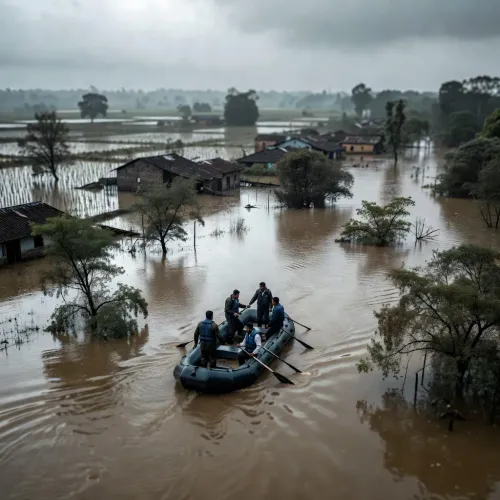
The budget breaks into three clear buckets. The lion's share — ₹17,990 crore — is earmarked for programme expenditure, the operational engine that drives state welfare and development schemes on the ground. ₹5,100 crore flows into disaster response, a figure that underscores just how central cyclone and flood preparedness is in a state that has absorbed repeat blows from Bay of Bengal storms. The remaining ₹1,060 crore covers administrative expenditure — the bureaucratic scaffolding that keeps everything running.
Odisha's pattern of using supplementary budgets to shore up disaster funding has roots going back at least to the aftermath of Cyclone Fani in 2019, when the state's coastal vulnerability reshaped its fiscal planning. The ₹5,100 crore disaster tranche in this budget keeps that institutional memory alive.
Seven New Schemes — From Free Degrees to Spinning Mills
The more politically resonant half of the announcement is the slate of seven new initiatives. MukhyaMantri Annapurna Yojana targets food security directly, adding a state-level layer to existing food welfare architecture. The standout, however, is Gyanodaya – Siksha ru Samruddhi (Gyanodaya – Siksha ru Samruddhi, roughly 'enlightenment — from education to prosperity'), which promises free education from KG to PG — an unusually broad sweep that covers everything from nursery to university.
Urban infrastructure gets a dedicated Urban Challenge Fund, while a new Financial Assistance window for Public Health Infrastructure addresses the state's hospital and clinic gap. Two entries in the list are strikingly specific: a One-Time Settlement for liquidation of closed spinning mills — a nod to industrial workers left in limbo — and Salt Pan Land Acquisition in Ganjam, targeting the coastal district's salt economy for structured development. The seventh initiative covers Land Acquisition for new Railway Lines, pushing forward Odisha's connectivity agenda at a moment when the state's tribal and rural hinterlands remain underserved by rail.
Majhi's Fiscal Signal and What Comes Next
CM Majhi, who took office in 2024 after the BJP's historic win in Odisha ending nearly 24 years of Naveen Patnaik's rule, is using this supplementary budget to stamp a distinct development identity on his tenure. The hashtag #PeoplesBudget chosen by the Chief Minister's Office is deliberate framing — positioning the mid-year revision not as an accounting exercise but as a public-welfare statement.
The real test, as always, will be in execution. Rollout timelines for Gyanodaya, the speed of Ganjam land acquisition, and whether the spinning mill settlement actually reaches affected workers will define whether these seven new schemes move from announcement to impact before the main 2027–28 budget arrives.
Odisha just told its assembly — and its people — where its priorities lie. Now it has to deliver.
Point of View
150 crore supplementary budget is CM Majhi's most consequential fiscal statement since taking office in 2024, using a mid-year revision to introduce sweeping welfare commitments — most notably universal free education — that go well beyond routine expenditure corrections. The ₹5,100 crore disaster tranche reflects the structural reality of governing a cyclone-exposed coastline, but the seven new schemes are a clear political bid to build a distinct BJP-led welfare identity in Odisha, historically associated with Naveen Patnaik's social programmes. The breadth of the Gyanodaya scheme, covering kindergarten through postgraduate, is unusually ambitious even by national standards and will draw scrutiny on implementation capacity. If even half these schemes reach beneficiaries effectively before the 2028 assembly cycle, Majhi will have built a durable governing narrative.
NationPress
18 Nov 2026
Frequently Asked Questions
What is the total size of Odisha's Supplementary Budget for 2026-27?
The Odisha Supplementary Budget for 2026–27 is ₹24,150 crore , presented by Chief Minister Mohan Majhi in the Odisha Legislative Assembly on November 18, 2026.
What is the Gyanodaya scheme in Odisha?
Gyanodaya – Siksha ru Samruddhi is a new Odisha government scheme that provides free education from kindergarten (KG) to postgraduate (PG) level, introduced as part of the 2026–27 Supplementary Budget.
How much has Odisha allocated for disaster response in the Supplementary Budget?
Odisha has allocated ₹5,100 crore specifically for disaster response in the 2026–27 Supplementary Budget, reflecting the state's vulnerability to cyclones and floods.
What is MukhyaMantri Annapurna Yojana in Odisha?
MukhyaMantri Annapurna Yojana is a new food security scheme announced under Odisha's 2026–27 Supplementary Budget, aimed at ensuring food access for residents of the state.
What are the seven new schemes in Odisha's Supplementary Budget 2026-27?
The seven new initiatives are: MukhyaMantri Annapurna Yojana , Gyanodaya – Siksha ru Samruddhi (free KG-to-PG education), Urban Challenge Fund , Financial Assistance for Public Health Infrastructure , One-Time Settlement for closed spinning mills , Salt Pan Land Acquisition in Ganjam , and Land Acquisition for new Railway Lines .