CM Majhi reaffirms Odisha's disaster-readiness on Preparedness Day
Synopsis
On Odisha Disaster Preparedness Day, CM Mohan Charan Majhi reaffirmed his government's commitment to early-warning systems, proactive planning, and community resilience — building on the state's landmark post-1999 disaster-management model.
Key Takeaways
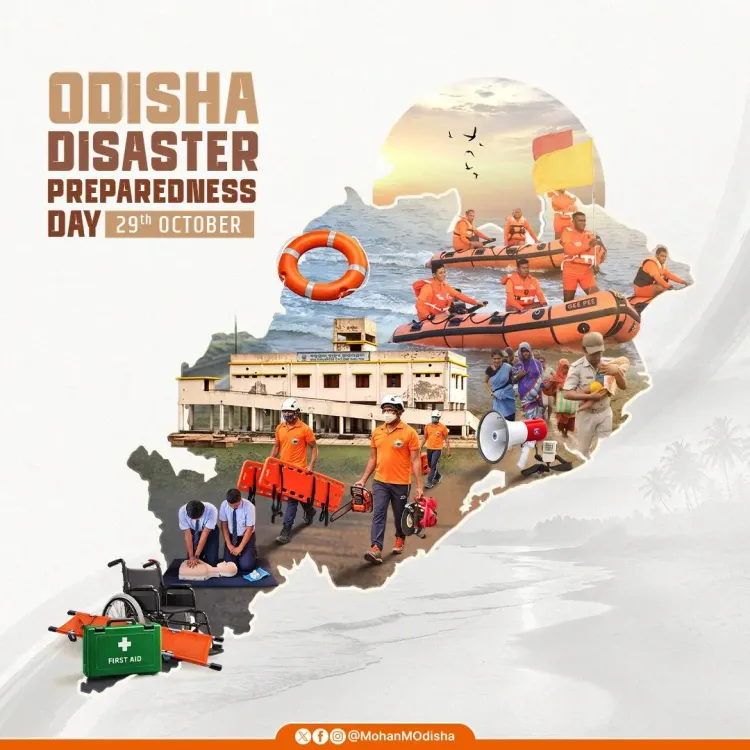
Odisha Disaster Preparedness Day was observed on 29 October 2026 , with CM Majhi posting a formal commitment on X.
The CM cited three pillars: proactive planning, improved early-warning systems, and coordinated response mechanisms.
The Odisha State Disaster Management Authority (OSDMA) was established in 1999 after a super cyclone that killed more than 10,000 people .
Odisha is widely regarded as India's most advanced state-level disaster-management model, with cyclone fatalities falling sharply since 1999.
CM Majhi has been in office since June 2024 , inheriting a cross-party institutional framework for disaster governance.
Upcoming focus: whether new technology pilots or expanded community drills are announced ahead of the 2026-27 cyclone season .
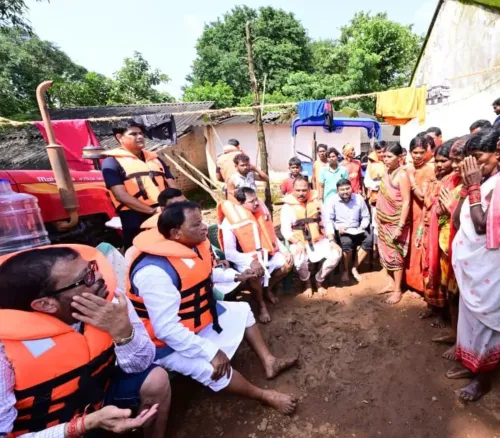
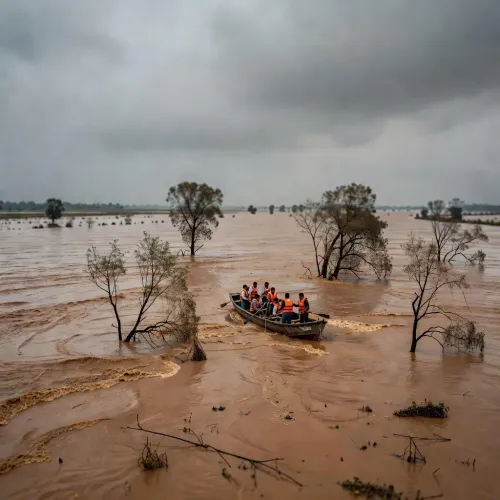
On Odisha Disaster Preparedness Day, Thursday, 29 October 2026, Odisha Chief Minister Mohan Charan Majhi renewed his government's pledge to deepen disaster readiness across the state — a commitment that carries real weight in a coastal state the Bay of Bengal has battered, again and again, for decades.
Posting on X, CM Majhi wrote: 'Through proactive planning, improved early warning systems and coordinated response mechanisms, we are working towards a safer and disaster-resilient Odisha.' The message flagged three specific pillars — preparedness planning, early-warning infrastructure, and coordinated response — rather than offering a generic seasonal tribute.
How the 1999 super cyclone rewrote Odisha's disaster playbook
The state's modern disaster-management architecture was forged in catastrophe. The 1999 super cyclone killed more than 10,000 people and triggered the creation of the Odisha State Disaster Management Authority (OSDMA) that same year. What followed was a sustained, cross-party investment in cyclone shelters, coastal communication networks, and mass-evacuation drills that became a model studied across the subcontinent.
The results over the subsequent quarter-century are stark: where the 1999 storm caused five-figure death tolls, successive major cyclones have been met with coordinated pre-emptive evacuations that have pushed fatality numbers sharply downward. Odisha now regularly draws attention as one of India's most effective disaster-management laboratories, a record built regardless of which party held the state.
Majhi's BJP government and the continuity question
CM Majhi, who assumed office in June 2024 after the BJP's victory in the state elections, inherits that institutional legacy — and the annual Disaster Preparedness Day observance itself signals a political choice to sustain rather than reset it. His post's explicit reference to 'community resilience' aligns with the OSDMA's long-standing emphasis on gram-panchayat-level training and shelter-committee mobilisation in coastal districts.
With the 2026-27 Bay of Bengal cyclone season approaching its peak window, attention will now turn to whether the government announces concrete technology pilots — upgraded Doppler radar coverage, SMS-based last-mile alert systems, or expanded community-drill calendars — that translate the commitment into measurable action on the ground.
For a state where the sea is simultaneously lifeline and threat, preparedness is not a policy slogan. It is a recurring test the calendar sets, every single year.
Point of View
He is signalling alignment with the OSDMA framework rather than a policy reset. For a BJP government that came to power partly on a governance-quality platform, sustaining Odisha's disaster-management reputation is a political asset as much as a civic obligation. The real test will arrive when the next serious Bay of Bengal depression forms: preparedness-day pledges are measured in evacuation numbers, not posts. Analysts watching the state will note whether the 2026-27 cyclone season produces concrete technology rollouts that match the rhetoric.
NationPress
29 Oct 2026
Frequently Asked Questions
What is Odisha Disaster Preparedness Day?
Odisha Disaster Preparedness Day is an annual observance held in the state to renew focus on disaster readiness, community training, and early-warning systems, particularly in the context of cyclone and flood risks from the Bay of Bengal.
What did CM Mohan Majhi say on Odisha Disaster Preparedness Day 2026?
CM Majhi pledged to strengthen proactive planning, improve early-warning systems, and ensure coordinated response mechanisms to build a safer, disaster-resilient Odisha.
When was the Odisha State Disaster Management Authority formed?
The Odisha State Disaster Management Authority (OSDMA) was constituted in 1999 , in direct response to the devastating super cyclone that killed more than 10,000 people in the state.
Why is Odisha considered a model for disaster management in India?
Odisha has achieved sharp reductions in cyclone-related fatalities since 1999 through sustained investment in shelters, mass-evacuation drills, coastal communication networks, and community-level training — a record maintained across successive state governments.
When did Mohan Charan Majhi become Chief Minister of Odisha?
Mohan Charan Majhi became Chief Minister of Odisha in June 2024 , following the BJP's victory in the state assembly elections.