CM Saini Highlights Lado Lakshmi Yojana's Role in Empowering Haryana's Girls
Synopsis
Haryana Chief Minister Nayab Singh Saini highlighted the Lado Lakshmi Yojana on 29 October 2026, saying the scheme is steering the state's daughters towards self-reliance and bringing positive change to their lives — building on a decade of girl-child welfare policy in the state.
Key Takeaways
Haryana CM Nayab Singh Saini publicly praised the Lado Lakshmi Yojana on 29 October 2026 via a bilingual post on X.
The scheme provides financial assistance and support to girls in Haryana focused on education, health, and economic self-reliance.
Saini described seeing positive change in beneficiaries' lives as 'deeply heartening,' underlining Atmanirbharta as the scheme's core goal.
The yojana builds on earlier state and central initiatives including Apki Beti Hamari Beti (2015) and Beti Bachao Beti Padhao (2015).
Haryana was historically flagged for a skewed child sex ratio, making girl-child welfare a long-standing political and policy priority for the state's BJP government.
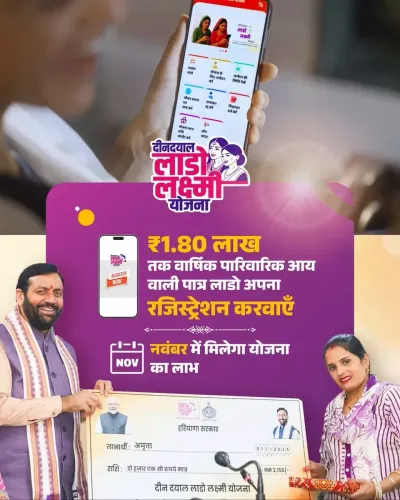
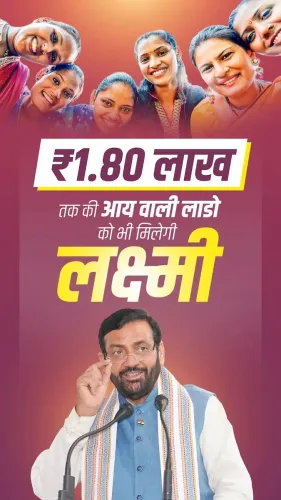
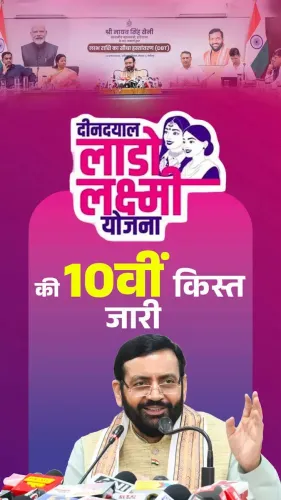
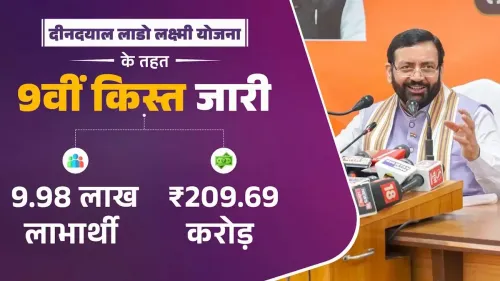
Haryana's daughters are at the centre of a quiet transformation — and Chief Minister Nayab Singh Saini wants the country to notice. On Thursday, 29 October 2026, the BJP leader took to X to spotlight the Lado Lakshmi Yojana, the state's flagship girl-child welfare scheme, describing the positive change it is bringing to young women's lives as 'deeply heartening.'
Saini wrote in both Hindi and English: 'लाडो लक्ष्मी योजना प्रदेश की बेटियों को आत्मनिर्भरता की ओर बढ़ने का संबल दे रही है' — 'The Lado Lakshmi Yojana is giving the daughters of our state the support to move towards Atmanirbharta (self-reliance).' The bilingual post signals a deliberate effort to amplify the scheme's reach and visibility beyond Haryana's borders.
What the Lado Lakshmi Yojana Sets Out to Do
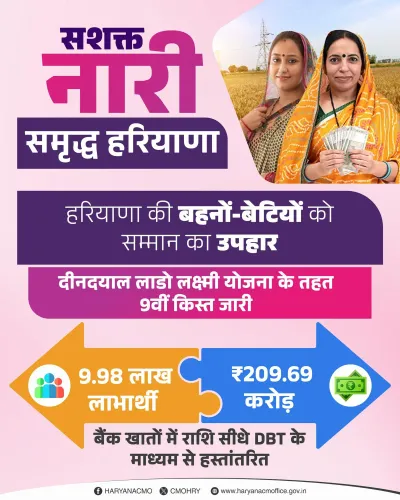
The Lado Lakshmi Yojana is a Haryana government welfare initiative designed to provide financial assistance and structured support to girls across the state — covering education, health, and pathways to economic independence. Its stated aim is to convert conditional cash transfers into lasting self-reliance, moving beyond a one-time benefit into a broader empowerment arc.
The scheme sits within a longer policy lineage. Haryana launched the Apki Beti Hamari Beti scheme in 2015, offering financial incentives for the first girl child in families — a direct response to the state's historically skewed child sex ratio. That same year, the Centre rolled out Beti Bachao Beti Padhao nationally, making Haryana one of its primary focus states. Lado Lakshmi Yojana builds on that foundation, sharpening the focus from mere survival and enrolment to active self-reliance.
A State Pattern That Reflects a National Push
Haryana's girl-child welfare architecture is part of a wider national trend. Since the mid-2010s, Indian states have rolled out multiple conditional cash-transfer and empowerment schemes, combining financial support with goals of education retention and later economic participation. The emphasis on Atmanirbharta — self-reliance — mirrors the vocabulary of central welfare policy after 2014, where women's economic agency has been an explicit headline goal.
For a state that once drew national attention for alarming gender-ratio data, the pivot to schemes like Lado Lakshmi Yojana marks a measurable shift in political priority. The primary stakeholders are girls and young women across Haryana's districts, and their families — particularly those in rural and semi-urban belts where institutional support systems have historically been thin.
Whether the scheme's utilisation data and impact evaluations bear out the optimism in Saini's post will likely surface in the next Haryana budget session — the real test of whether positive change is a headline or a headline backed by numbers.
Point of View
The messaging aligns state-level delivery with the broader national women's empowerment narrative — converting a welfare scheme into a political asset. The post's bilingual format also suggests an audience beyond Haryana, potentially feeding into BJP's pre-budget or electoral cycle communication. The real credibility test, however, lies in whether scheme utilisation data — expected in the next budget session — matches the optimism on display.
NationPress
29 Oct 2026
Frequently Asked Questions
What is the Lado Lakshmi Yojana in Haryana?
The Lado Lakshmi Yojana is a Haryana government welfare scheme that provides financial assistance and support to girls in the state, with the aim of improving their education, health, and economic self-reliance.
Who launched the Lado Lakshmi Yojana?
The scheme is a Haryana government initiative under the BJP-led administration. CM Nayab Singh Saini has been a prominent advocate for the scheme, publicly highlighting its impact on 29 October 2026.
What does Atmanirbharta mean in the context of girl welfare schemes?
Atmanirbharta means self-reliance in Hindi. In the context of girl welfare schemes like Lado Lakshmi Yojana, it refers to empowering girls to become economically independent and less reliant on external support systems.
How does Lado Lakshmi Yojana relate to Beti Bachao Beti Padhao?
Beti Bachao Beti Padhao was a national scheme launched in 2015 to improve the child sex ratio and promote girl-child education, with Haryana as a key focus state. Lado Lakshmi Yojana is a state-level scheme that builds on that foundation, extending support towards self-reliance and economic participation.
What girl-child welfare schemes has Haryana introduced?
Haryana has introduced several girl-child welfare schemes, including Apki Beti Hamari Beti in 2015, which offered financial incentives for families with a first girl child, and the Lado Lakshmi Yojana, which focuses on education, health, and self-reliance for girls across the state.