CM Saini urges Haryana girls to register for Lado Lakshmi scheme
Synopsis
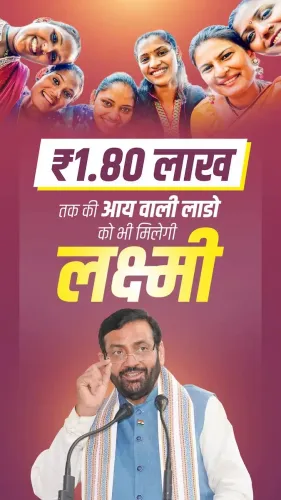
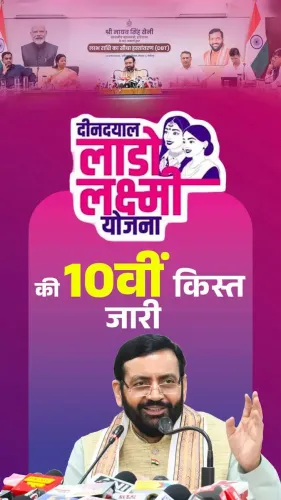
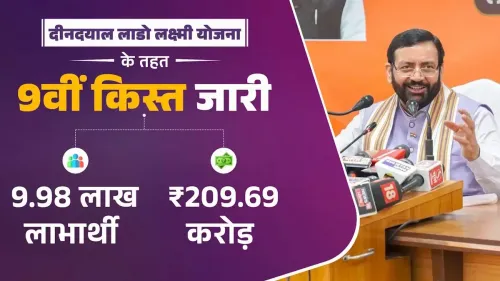
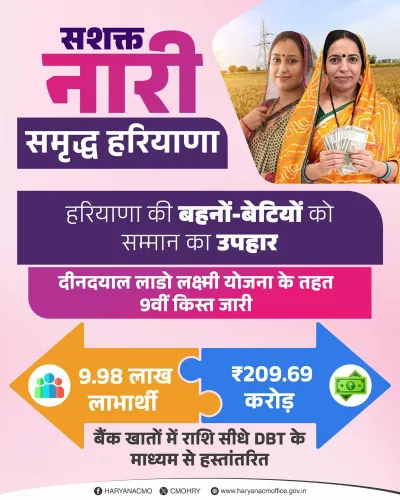
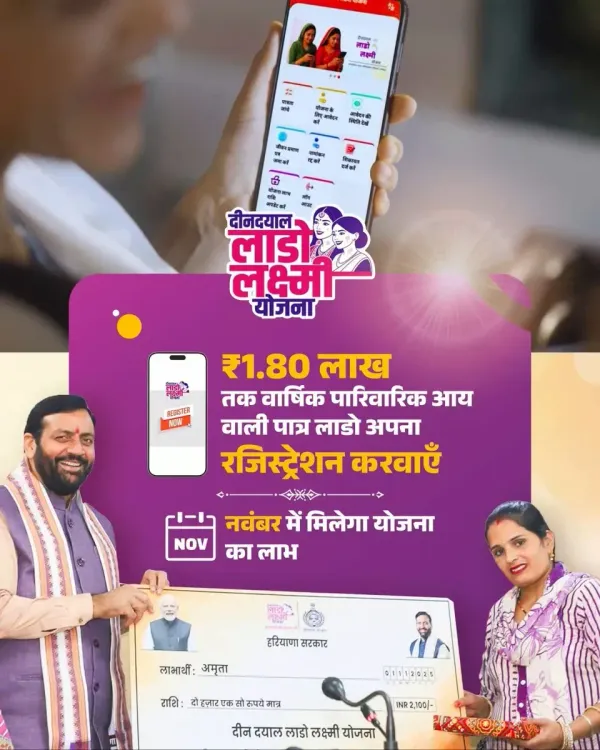
Haryana Chief Minister Nayab Singh Saini on 13 October 2026 urged families with annual income below ₹1.80 lakh to register for the Deen Dayal Lado Lakshmi Yojana, a state scheme providing financial support to girls from economically weaker households.
Key Takeaways
Haryana CM Nayab Singh Saini made a direct public appeal on 13 October 2026 for eligible families to register for the Deen Dayal Lado Lakshmi Yojana .
The scheme targets households with an annual family income of less than ₹1.80 lakh .
Registration is mandatory to access the scheme's benefits — CM Saini urged families not to delay sign-up.
The appeal was made in Hindi using the culturally resonant term 'Lado' , signalling outreach to rural and semi-urban Haryana.
The post included a nudge toward digital/mobile registration , reflecting the government's push for online enrolment.
If your family earns less than ₹1.80 lakh a year, Haryana's government has a message for you — and Haryana Chief Minister Nayab Singh Saini delivered it personally on Tuesday, 13 October 2026: register now for the Deen Dayal Lado Lakshmi Yojana.
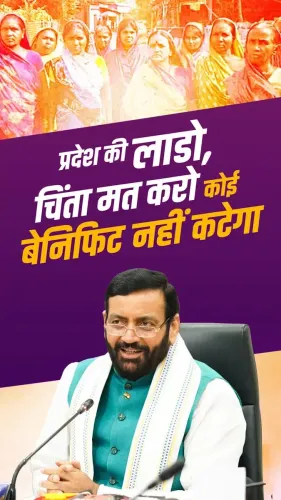
Addressing the women of the state with the warm salutation 'Meri Lado, Ram-Ram' ('My daughters, greetings'), CM Saini called on families with annual incomes below the ₹1.80 lakh threshold to complete their registration for the scheme without delay. The direct, colloquial appeal — bypassing bureaucratic language entirely — signals a push to maximise enrolment among the state's most economically vulnerable households.
What the Deen Dayal Lado Lakshmi Yojana offers
The Deen Dayal Lado Lakshmi Yojana is a Haryana government scheme designed to provide financial support to girls from low-income families. The scheme targets households falling below the ₹1.80 lakh annual income ceiling — a bracket that covers a significant share of rural and peri-urban families across the state. Beneficiaries must register to access the scheme's benefits, making the Chief Minister's public outreach directly actionable.
By framing the post around a registration call-to-action — complete with a mobile emoji nudging readers toward digital sign-up — the government is clearly prioritising direct reach over intermediary channels. The appeal cuts through: know your income limit, check your eligibility, register now.
A pattern of welfare outreach under Saini
CM Saini has consistently used social media to amplify welfare schemes targeting women and girls in Haryana, positioning direct digital communication as a tool to close the gap between policy announcements and ground-level enrolment. The use of the affectionate term 'Lado' — a common endearment for daughters in Haryanvi culture — adds a layer of cultural resonance that formal government notices rarely carry.
With the registration window open, the clock is on for eligible families to act — because a scheme that isn't claimed is a promise unkept.
Point of View
The messaging is engineered for shareability in rural Haryana — precisely the demographic the scheme targets. The ₹1.80 lakh income threshold is a telling policy marker: it captures a large swathe of economically marginal families who often fall through the cracks of awareness campaigns. How effectively the registration machinery on the ground matches the digital outreach will determine whether the scheme's intent translates into tangible impact.
NationPress
13 Oct 2026
Frequently Asked Questions
What is the Deen Dayal Lado Lakshmi Yojana?
The Deen Dayal Lado Lakshmi Yojana is a Haryana government scheme providing financial support to girls from low-income families. It targets households with an annual income below ₹1.80 lakh.
Who is eligible for the Deen Dayal Lado Lakshmi Yojana?
Families in Haryana with an annual income of less than ₹1.80 lakh are eligible. CM Nayab Singh Saini has urged all such families to complete their registration for the scheme.
How do I register for the Lado Lakshmi Yojana in Haryana?
CM Saini's post nudged eligible families toward mobile or digital registration. Families should check the official Haryana government portal for the registration process and required documents.
Why is CM Nayab Singh Saini promoting the Lado Lakshmi Yojana?
CM Saini is urging registration to ensure eligible low-income families do not miss out on the scheme's benefits. The appeal on social media is aimed at maximising enrolment, particularly in rural and peri-urban areas of Haryana.
What is the income limit for the Haryana Lado Lakshmi scheme?
The annual family income must be less than ₹1.80 lakh to qualify for the Deen Dayal Lado Lakshmi Yojana in Haryana.