Uttarakhand drives deworming for 1.23 lakh Pauri Garhwal kids
Synopsis
The Uttarakhand Health Department is administering Albendazole tablets to around 1.23 lakh children aged 1–19 in Pauri Garhwal under National Deworming Day, targeting soil-transmitted worm infections as part of the central government's National Health Mission programme launched in 2015.
Key Takeaways
~1,23,000 children aged 1 to 19 years in Pauri Garhwal are being dewormed in the current campaign round.
The drug administered is Albendazole , a safe antiparasitic tablet effective against soil-transmitted helminths.
The drive is part of National Deworming Day , a biannual initiative launched by the Government of India in 2015 under the National Health Mission .
Distribution is happening through government schools and anganwadi centres across the district.
Worm infections contribute to childhood anaemia and malnutrition — deworming is a low-cost, high-impact intervention.
The Uttarakhand Health Department is executing the campaign via district health machinery, ASHA workers, and anganwadi staff.
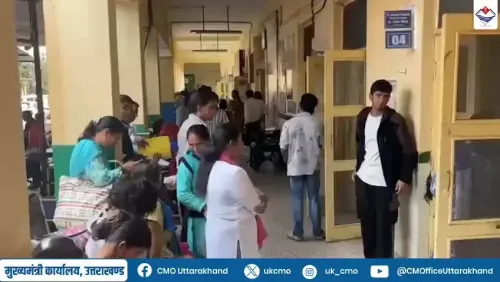
A quiet but consequential health drive is underway in the hills of Pauri Garhwal — one that could protect over a lakh children from a largely invisible threat. The Chief Minister's Office of Uttarakhand announced on Wednesday, 18 November 2026 that the state's Health Department has launched a large-scale deworming campaign across the district, reaching children in schools and anganwadis alike.
Under the National Deworming Day initiative, approximately 1,23,000 children aged 1 to 19 years in Pauri Garhwal are being administered Albendazole tablets to protect them from soil-transmitted helminth (worm) infections. The campaign is being executed by the Uttarakhand Health Department as part of a centrally mandated mass drug administration drive.
Why deworming this many children matters
Intestinal worm infections are among the most common — and most underreported — contributors to childhood anaemia and malnutrition in India. Children living in rural, hilly terrain like Pauri Garhwal face heightened exposure through contaminated soil and water. Left untreated, chronic worm infestations quietly drain iron and nutrients from growing bodies, blunting cognitive development and school attendance alongside physical health.
A single dose of Albendazole, an antiparasitic drug, is the backbone of India's response. It is safe, inexpensive, and effective — making mass administration campaigns a high-impact, low-cost public health tool. The scale here — over one lakh children across a single district — signals a systematic push rather than a token exercise.
National Deworming Day and Uttarakhand's role
The Government of India launched National Deworming Day in 2015 under the National Health Mission, targeting children aged 1–19 in schools and Integrated Child Development Services (ICDS) centres across the country. The programme is designed to run as a biannual drive, with states deploying district health machinery to reach every eligible child.
Uttarakhand's execution in Pauri Garhwal fits squarely within this national architecture — the state Health Department coordinating with teachers, ASHA workers, and anganwadi staff to ensure coverage across a geographically dispersed, hilly population where outreach is inherently harder than in flatland districts.
Who gets the tablet — and how
Children aged 1 to 2 years receive a half tablet, crushed and administered under supervision, while those aged 2 to 19 receive a full 400 mg Albendazole tablet. Distribution points include government and government-aided schools as well as anganwadi centres, ensuring both enrolled school-age children and pre-schoolers are captured in the same round. Children absent on the main campaign day are typically given a second opportunity through a 'mop-up' day.
Point of View
Consequential in practice. The scale of 1.23 lakh children in a single hilly district underscores how mass drug administration remains one of the most cost-effective tools in India's child nutrition arsenal, even as larger debates around malnutrition persist. For Uttarakhand, consistent execution of these drives matters especially in its dispersed hill communities, where service delivery is structurally harder. The real test, as always, will be in coverage data: whether every eligible child — including the absent and the hard-to-reach — actually receives the tablet.
NationPress
18 Nov 2026
Frequently Asked Questions
What is National Deworming Day in India?
National Deworming Day is a biannual initiative launched by India's Ministry of Health and Family Welfare in 2015 under the National Health Mission. It aims to administer Albendazole tablets to children aged 1–19 to protect them from soil-transmitted worm infections that cause anaemia and malnutrition.
Which children are covered in Pauri Garhwal's deworming drive?
Around 1,23,000 children aged 1 to 19 years in Pauri Garhwal district are being covered through government schools and anganwadi centres during this campaign round.
What drug is given on National Deworming Day?
Albendazole, an antiparasitic tablet, is administered. Children aged 1–2 receive a crushed half tablet, while those aged 2–19 receive a full 400 mg tablet.
Why is deworming important for children in hilly areas like Pauri Garhwal?
Rural and hilly terrain increases exposure to soil-transmitted helminths through contaminated soil and water. Chronic worm infections lead to iron deficiency, anaemia, and poor cognitive development, making deworming especially impactful in such geographies.
How is Uttarakhand implementing National Deworming Day?
The Uttarakhand Health Department coordinates with district health officials, ASHA workers, school teachers, and anganwadi staff to administer Albendazole at schools and ICDS centres across each district.