CM Saini Meets Union Min Yadav on NCR Pollution Control
Synopsis
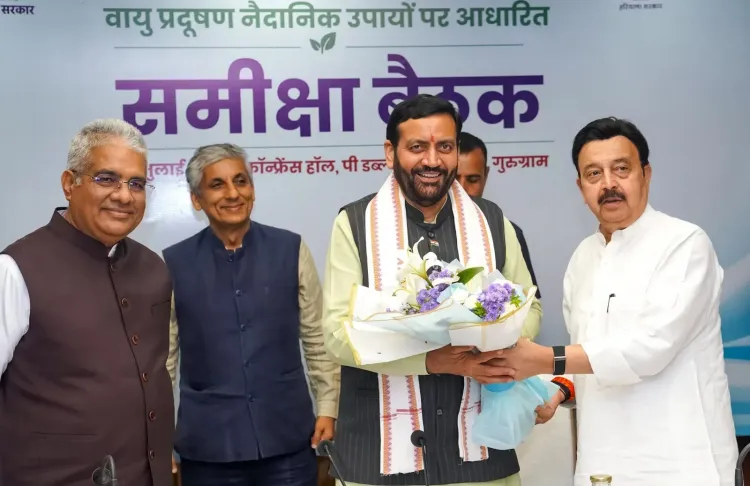
Haryana Chief Minister Nayab Singh Saini met Union Environment Minister Bhupender Yadav on 25 July 2026 to review pollution control, green energy, and environmental conservation in Haryana's NCR districts, directing officials for effective and time-bound implementation.
Key Takeaways
CM Nayab Singh Saini and Union Minister Bhupender Yadav held a detailed review meeting on 25 July 2026 on NCR environmental issues.
The meeting covered pollution control, green energy promotion , and broader environmental conservation in Haryana's NCR region.
Officials were directed to ensure effective and time-bound implementation of ongoing environmental programmes.
The review is anchored in the CAQM Act 2021 framework, which mandates centre-state coordination on Delhi-NCR air quality.
The National Clean Air Programme (NCAP) and India's COP26 clean energy commitments form the broader policy backdrop for the meeting.
State-level action plans for the 2026–27 winter pollution season are the immediate expected output.
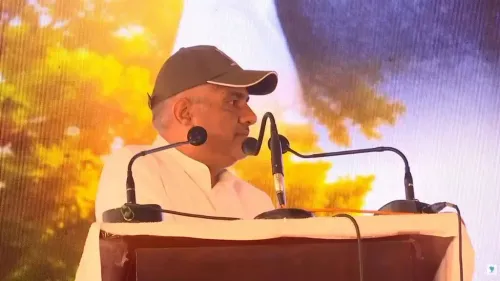
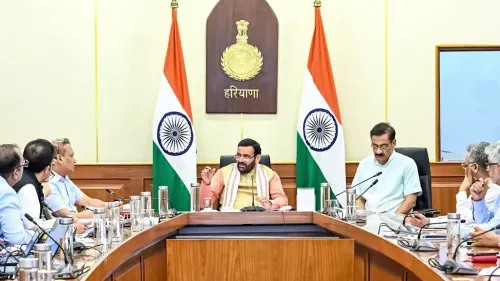
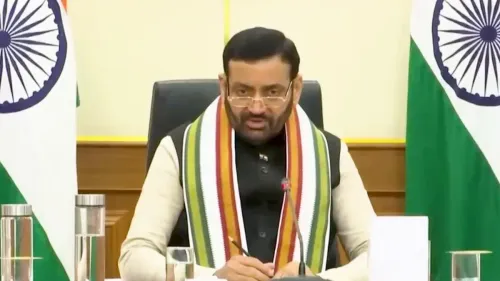
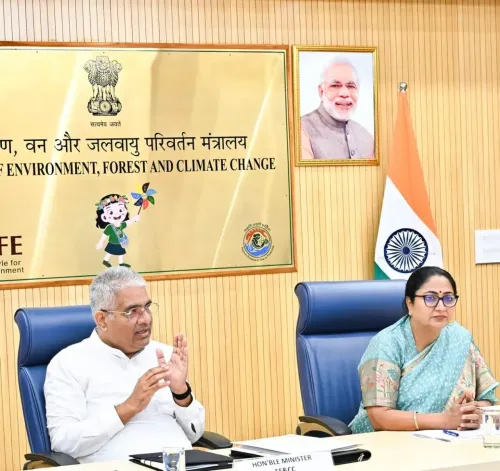
Haryana Chief Minister Nayab Singh Saini held a detailed review meeting with Union Minister of Environment, Forest and Climate Change Bhupender Yadav on Friday, 25 July 2026, focusing on pollution control, green energy promotion, and environmental conservation in Haryana's National Capital Region (NCR) districts.
Context
Posting on X, CM Saini described the meeting as a wide-ranging review — 'प्रदूषण नियंत्रण, हरित ऊर्जा को बढ़ावा देने तथा पर्यावरण संरक्षण' ('pollution control, promotion of green energy, and environmental conservation') — covering multiple subjects simultaneously. He stated that officials were issued 'necessary directions for effective and time-bound implementation' of ongoing efforts. The meeting underscores the continued centre-state coordination framework that governs air quality management across the Delhi-NCR belt.
Saini articulated a dual-track commitment: 'विकास और पर्यावरण संरक्षण साथ-साथ आगे बढ़ें' — 'development and environmental conservation must advance together' — framing the government's position as one of simultaneous economic and ecological responsibility.
Policy Backdrop
The meeting sits within a well-established statutory framework. The Commission for Air Quality Management in National Capital Region and Adjoining Areas (CAQM) Act, 2021 created a dedicated body to coordinate pollution abatement across Haryana, Delhi, Uttar Pradesh, and Rajasthan. Haryana's NCR districts — including Gurugram, Faridabad, Sonipat, and Jhajjar — fall directly under its mandate, making state-level compliance a recurring agenda item.
The National Clean Air Programme (NCAP), launched in 2019, set a target of 20–30 percent reduction in particulate pollution in identified cities by 2024 and continues to provide city-specific action plans and funding. On the green energy front, India's updated Nationally Determined Contributions at COP26 in 2021 committed to achieving 50 percent non-fossil fuel energy capacity by 2030, a goal that state-level renewable energy push directly feeds into.
Such high-level review meetings between state chief ministers and the Union Environment Ministry typically intensify ahead of the winter pollution season, when NCR air quality deteriorates sharply due to a combination of stubble burning, industrial emissions, and meteorological factors.
Stakeholders and Impact
The primary beneficiaries of effective implementation are the residents of Haryana's NCR districts, who bear a disproportionate share of the region's transboundary air pollution burden. Industrial units, transport operators, and the farming community — particularly those in NCR-adjacent areas where stubble burning remains a seasonal flashpoint — are also directly affected by any new directives that emerge from such reviews.
Bhupender Yadav, as the nodal Union minister for the CAQM framework, holds the authority to direct state governments on compliance timelines. His participation signals that the review carried ministerial-level weight rather than being a routine bureaucratic exercise. The instruction to officials for 'time-bound implementation' suggests follow-up action plans are expected to be submitted within defined deadlines.
What's Next
The immediate watch-point is Haryana's state-level action plan to be submitted to the CAQM for the 2026–27 winter season, which will detail specific measures on stubble burning, industrial emission curbs, and green energy project timelines. Any new funding releases or project approvals under the National Clean Air Programme linked to this review would be the clearest indicator of tangible follow-through.
Broader progress on Haryana's renewable energy capacity — particularly solar and green hydrogen initiatives aligned with India's 2030 clean energy targets — will serve as a longer-term measure of whether the 'development and environment together' pledge translates into on-ground outcomes for NCR residents.
Point of View
Coming months before the NCR's high-pollution winter window. The explicit instruction for 'time-bound implementation' is notable — it signals that Haryana is being held to a tighter compliance schedule, likely reflecting CAQM pressure after previous winter seasons drew criticism. Framing the agenda around 'green energy' alongside pollution control also aligns Haryana's state narrative with India's broader 2030 clean energy trajectory, giving the BJP-led state government political capital on the climate front. Whether the review produces concrete, measurable outcomes will depend on what action plans Haryana submits to CAQM ahead of the 2026–27 winter.
NationPress
23 Oct 2026
Frequently Asked Questions
Why did CM Nayab Singh Saini meet Bhupender Yadav?
CM Nayab Singh Saini met Union Environment Minister Bhupender Yadav on 25 July 2026 to conduct a detailed review of pollution control measures, green energy promotion, and environmental conservation in Haryana's NCR districts.
What is the CAQM and why does it matter for Haryana?
The Commission for Air Quality Management (CAQM) is a statutory body set up under a 2021 Act to coordinate air pollution action across Delhi, Haryana, Uttar Pradesh, and Rajasthan. Haryana's NCR districts fall directly under its mandate, making state compliance a key responsibility.
What is the National Clean Air Programme?
The National Clean Air Programme (NCAP) is a central government scheme launched in 2019 that targets a 20–30 percent reduction in particulate pollution in identified Indian cities and provides city-specific action plans and funding.
What specific actions were decided in the Saini-Yadav meeting?
The post does not detail specific decisions; CM Saini stated that officials were issued directions for 'effective and time-bound implementation' of ongoing environmental efforts across Haryana's NCR region.
How does this meeting relate to winter air pollution in NCR?
Such centre-state review meetings typically precede the winter pollution season, when NCR air quality worsens due to stubble burning, industrial emissions, and weather. The 2026 meeting is expected to feed into Haryana's action plan for the 2026–27 winter season.