CM Nayab Saini attends 42nd NCRPB meeting in New Delhi

Synopsis
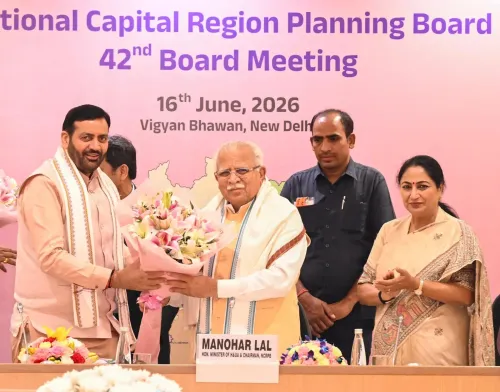
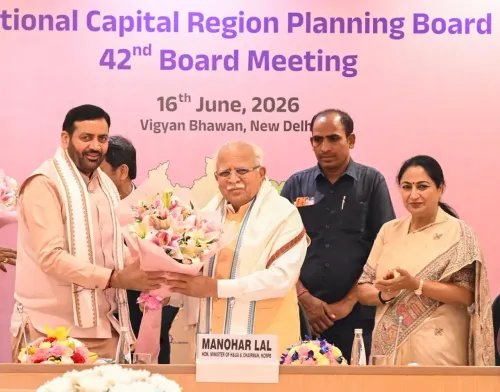
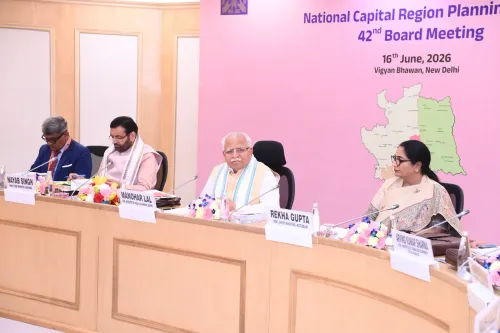
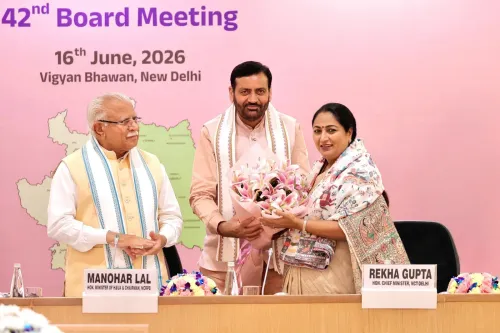
Haryana Chief Minister Nayab Singh Saini participated in the 42nd NCRPB meeting in New Delhi on 16 June 2026, chaired by Union Minister Manohar Lal Khattar. Senior officials and chief ministers from all NCR states convened to deliberate on long-term development plans for the National Capital Region.
Key Takeaways
Haryana Chief Minister Nayab Singh Saini attended the 42nd NCRPB meeting in New Delhi on 16 June 2026 .
The meeting was chaired by Union Minister Manohar Lal Khattar , who holds the Housing and Urban Affairs portfolio.
Chief ministers, ministers and senior officials from all NCR-constituent states — Delhi, Haryana, Uttar Pradesh and Rajasthan — participated.
Discussions centred on future development plans for the National Capital Region , which spans over 55,000 sq km .
The meeting is part of ongoing work to finalise and implement the NCR Regional Plan 2041 .
The NCRPB , constituted under the NCRPB Act, 1985 , is India's only statutory multi-state regional planning body.
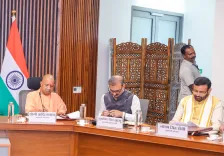
Haryana Chief Minister Nayab Singh Saini attended the 42nd meeting of the National Capital Region Planning Board (NCRPB) held in New Delhi on Tuesday, 16 June 2026. The meeting was chaired by Union Minister for Energy, Housing and Urban Affairs Manohar Lal Khattar and brought together chief ministers, ministers and senior officials from all NCR states for wide-ranging discussions on the future development of the National Capital Region.
Context
The Chief Minister's Office of Haryana confirmed Saini's participation, stating that the meeting included 'राष्ट्रीय राजधानी क्षेत्र (NCR) के भविष्य के विकास योजनाओं पर विस्तृत चर्चा' — 'detailed discussions on future development plans for the National Capital Region.' Chief ministers, ministers and senior central and state government officials from all NCR-constituent states were present at the session.
The NCRPB is the primary inter-governmental forum that aligns land-use, transport and environmental policy across Delhi, Haryana, Uttar Pradesh and Rajasthan. Its plenary meetings are the highest decision-making tier for coordinated regional planning across an area spanning over 55,000 sq km.
Policy Backdrop
The NCRPB was constituted under the NCRPB Act, 1985 with the mandate to prepare and monitor regional plans that promote balanced urban growth and reduce demographic and economic pressure on Delhi. The NCR Regional Plan 2021, notified in 2005, designated growth corridors and counter-magnet towns across the participating states.
Work on the successor Regional Plan 2041 began around 2019–2021, incorporating updated frameworks for infrastructure, multi-modal transport and environmental sustainability. The 42nd board meeting falls within the period of finalising and operationalising this long-term blueprint for the region's growth.
Manohar Lal Khattar, who chairs the board in his capacity as Union Minister for Housing and Urban Affairs, previously served as Chief Minister of Haryana — giving him direct familiarity with Haryana's stake in NCR planning, which includes major urban nodes such as Gurugram, Faridabad, Sonipat and Panipat.
Stakeholders and Impact
The NCR's multi-state planning structure is unique in India: decisions taken at the board level directly shape expressway alignments, metro extensions, new township development and water and sewerage infrastructure across four jurisdictions. Residents across the region — numbering in the tens of millions — are the primary beneficiaries of coordinated planning that prevents duplication and resolves cross-border infrastructure gaps.
State governments, urban local bodies and real-estate and infrastructure developers all calibrate investment decisions around NCRPB's regional plan norms. Haryana, which hosts a significant share of the NCR's fastest-growing urban clusters, has a particularly large stake in the board's policy directions on land use and transport connectivity.
What's Next
Attention will now focus on any formal outcomes or resolutions from the 42nd meeting, including project sanctions for roads, metro links and water infrastructure. The finalisation and official notification of the Regional Plan 2041 remains the most consequential near-term milestone for the board, with state-level compliance reports and implementation timelines expected to follow board-level approvals.
Haryana's active representation at the ministerial level signals the state government's intent to remain closely engaged with NCR-wide planning decisions that will shape urban development across the region for the next two decades.
Point of View
The state arguably holds unusual influence over both the central and regional dimensions of NCR policy. The meeting reflects the broader pattern of centre-state coordination that has defined NCR governance since 1985, but the stakes are higher now as the region grapples with rapid urbanisation, air quality pressures and multi-modal transport demands. How the board translates these deliberations into binding project sanctions and compliance timelines will determine whether the Plan 2041 framework delivers tangible results.
NationPress
15 Sept 2026
Frequently Asked Questions
What is the NCRPB and why does it meet?
The National Capital Region Planning Board (NCRPB) is a statutory body set up under the NCRPB Act, 1985 to prepare and monitor regional development plans for Delhi and adjoining areas in Haryana, Uttar Pradesh and Rajasthan. It meets periodically to review progress, sanction projects and align policies across the NCR's four constituent jurisdictions.
What was discussed at the 42nd NCRPB meeting on 16 June 2026?
The 42nd NCRPB meeting in New Delhi focused on future development plans for the National Capital Region. Chief ministers, ministers and senior officials from all NCR states participated in detailed discussions on regional infrastructure and urban growth.
Who chaired the 42nd NCRPB meeting?
Union Minister for Energy, Housing and Urban Affairs Manohar Lal Khattar chaired the 42nd NCRPB meeting. As the Union Minister holding the urban affairs portfolio, he heads the board ex officio.
Why did Haryana CM Nayab Saini attend the NCRPB meeting?
Haryana is one of the four constituent states of the NCR and has a large number of fast-growing urban districts within the planning area, including Gurugram and Faridabad. The Haryana chief minister participates in NCRPB meetings as a statutory member of the board.
What is the NCR Regional Plan 2041?
The NCR Regional Plan 2041 is the successor to the Regional Plan 2021 and sets out long-term land-use, transport, infrastructure and sustainability norms for the National Capital Region up to the year 2041. Work on the plan began around 2019–2021 and its finalisation and notification is a key near-term milestone for the NCRPB.