HP CM Office: Ex-Army Man Earns ₹20,000 from Natural Farming
Synopsis
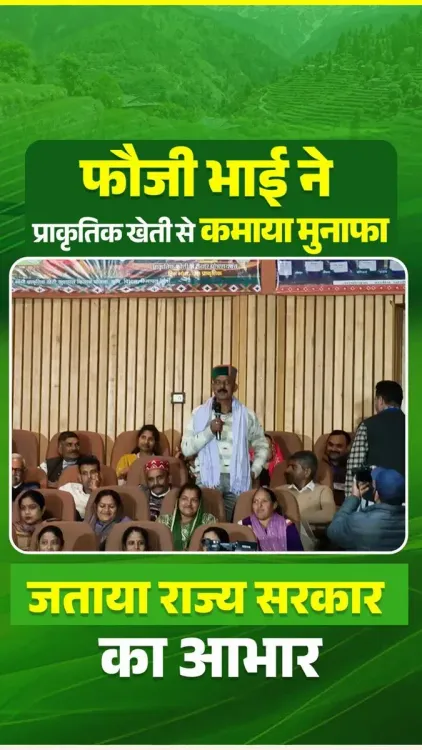
The Himachal Pradesh CMO has highlighted how retired army veteran Balwant Ji earned ₹20,000 selling wheat grown through natural farming in 2024, with direct bank transfer reinforcing his confidence — and the state's push for chemical-free hill agriculture.
Key Takeaways
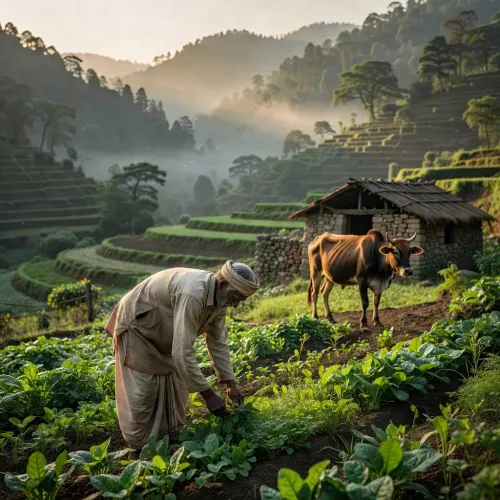
Balwant Ji , a retired army personnel from Himachal Pradesh , adopted natural farming post-retirement.
In 2024 , he sold 2.5 quintals of wheat and earned ₹20,000 , transferred directly to his bank account.
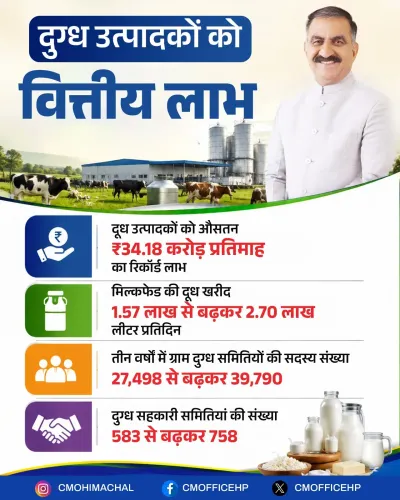
He has since expanded into desi cow milk production, diversifying his natural farm income.
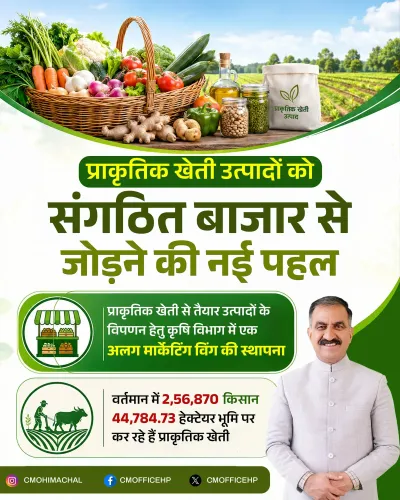
Himachal Pradesh has promoted Prakritik Kheti since the late 2010s to reduce chemical inputs in hill farming.
Direct benefit transfers for produce are part of a broader state effort to build farmer trust through payment transparency.
Ex-servicemen are seen as credible advocates for natural farming adoption among smallholders in the Himalayan region.
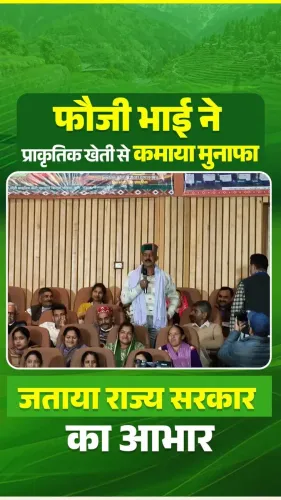
A retired soldier swapped his uniform for a farm, and Himachal Pradesh's government says the numbers are vindicating his bet. The Chief Minister's Office of Himachal Pradesh on Wednesday, November 18, 2026, spotlighted the story of Balwant Ji, a veteran who embraced natural farming after military retirement and is now earning a steady income without leaving home.
The post, shared in Hindi, describes how Balwant Ji adopted Prakritik Kheti (natural farming) post-retirement and in 2024 sold two-and-a-half quintals of wheat for ₹20,000 — a payment that landed directly in his bank account. 'This amount reaching straight into his bank account strengthened his faith in farming even further,' the post reads. It goes on to note he is now also producing desi cow's milk — a signal of a diversified, low-input farm model taking root.
From cantonment to chemical-free fields
Himachal Pradesh has been nudging smallholders and ex-servicemen toward natural farming since the late 2010s, positioning chemical-free hill agriculture as both an ecological and economic fix. For veterans, who bring discipline and community credibility, the transition carries a demonstration effect that government extension workers alone rarely achieve. Balwant Ji's story is a deliberately chosen signal: a credible face for a policy the state wants to scale.
The direct bank transfer detail is not incidental. State governments across India have worked to digitise agricultural payments precisely to cut out intermediaries and build farmer confidence — the moment a payment hits a passbook is often the moment skepticism dissolves. For Balwant Ji, it clearly did.
Desi cow milk and the broader natural-farming playbook
Natural farming in the Himalayan belt leans heavily on desi (indigenous) cattle. Cow dung and urine form the base of low-cost bioinputs — Jeevamrit and Beejamrit preparations — that replace synthetic fertilisers. Adding desi cow milk sales to a wheat income stream is a textbook move toward the multi-revenue model the state promotes: each output reinforces the viability of the whole system.
Himachal's hills, with fragmented landholdings and high transport costs for chemical inputs, are arguably better suited to natural farming economics than the plains. What's genuinely worth watching is whether the state backs individual success stories like Balwant Ji's with aggregated acreage data and ex-serviceman-specific incentives in upcoming agriculture budgets — turning one compelling human story into a verifiable policy outcome.
One veteran's wheat sale is a small number. The idea it is meant to plant is considerably larger.
Point of View
Relatable face to an agriculture policy that still struggles with scale. The direct-bank-transfer detail speaks to a wider national push to prove that institutional trust flows from transparency in payments, not just promises. What remains the key test for HP's natural farming programme is whether individual testimonials translate into aggregate data — acreage, income averages, input-cost reductions — that can sustain budget allocations. Until then, Balwant Ji's story is persuasive, but the policy's depth is yet to be publicly quantified.
NationPress
18 Nov 2026
Frequently Asked Questions
What is natural farming (Prakritik Kheti) in Himachal Pradesh?
Natural farming in Himachal Pradesh is a chemical-free agricultural practice promoted by the state government since the late 2010s. It relies on indigenous cattle-based bioinputs like Jeevamrit to replace synthetic fertilisers, reducing input costs for smallholder and hill farmers.
How much did Balwant Ji earn from natural farming in 2024?
According to the Himachal Pradesh CMO's post, Balwant Ji sold two-and-a-half quintals of wheat in 2024 and received ₹20,000, deposited directly into his bank account.
Why does Himachal Pradesh encourage ex-servicemen to take up natural farming?
Retired defence personnel bring community credibility and discipline that makes them effective advocates for new farming practices. The state uses their success stories to demonstrate viable alternatives to chemical-dependent conventional agriculture in the hills.
How does direct bank transfer help natural farmers in Himachal Pradesh?
Direct payment into a farmer's bank account removes intermediaries, ensures transparency, and builds confidence in market linkages — a key factor in persuading smallholders to commit more land and effort to natural farming methods.
What role does desi cow milk play in natural farming in HP?
Indigenous cow dung and urine are core ingredients in low-cost bioinputs used in natural farming. Farmers like Balwant Ji also sell desi cow milk as an additional income stream, making the overall farm model more financially resilient.