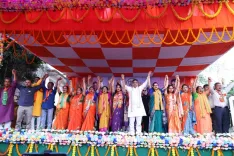
CM Mohan Yadav Launches Asia's First Pumped Hydro Unit at Gandhisagar
Synopsis
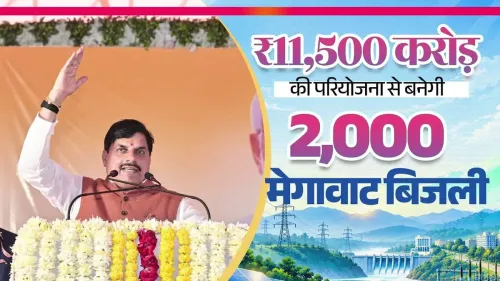
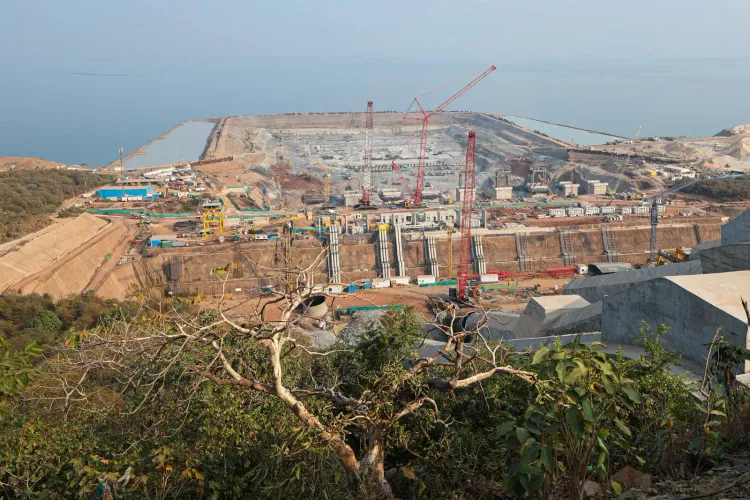
Madhya Pradesh CM Dr. Mohan Yadav launched the first unit of the ₹11,474 crore Gandhisagar Pumped Hydro Storage Project at Neemuch on 18 November 2026 — a 1,920 MW, 9-turbine facility Greenko is building across 414 hectares, described as Asia's first of its kind.
Key Takeaways
₹11,474 crore Gandhisagar Pumped Hydro Storage Project's first unit launched by CM Dr.
Mohan Yadav on 18 November 2026 .
Project is described as Asia's first pumped hydro storage initiative of its kind, developed by Greenko at Rampur, Neemuch district .
Total installed capacity will be 1,920 MW across 9 turbines , spread over 414 hectares .
Designed to supply power during peak demand hours , addressing the state's evening grid-stress challenge.
Launch followed a Cabinet meeting at Gandhisagar , signalling the project's political and policy priority for the MP government.
Remaining turbine units are yet to be commissioned; full capacity delivery timeline remains to be announced.
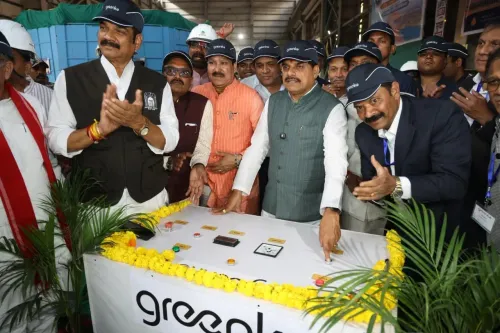
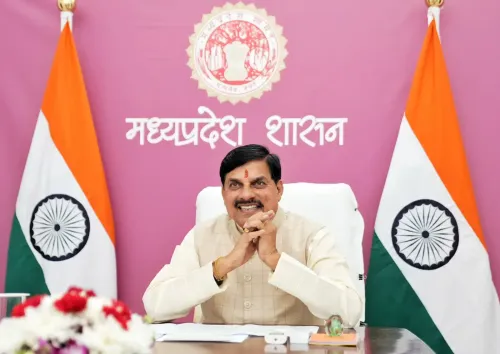
A ₹11,474 crore energy storage gamble is now live. Madhya Pradesh Chief Minister Dr. Mohan Yadav on Wednesday, 18 November 2026, inaugurated the first unit of the Gandhisagar Pumped Hydro Storage Project in Neemuch district — triggering what his government is calling Asia's first-of-its-kind pumped storage initiative, capable of delivering 1,920 megawatts at full throttle.
The launch followed a Cabinet meeting held at Gandhisagar. After the meeting, Dr. Yadav visited the Greenko Power Plant at Rampur, Neemuch, where the first turbine unit was formally commissioned. The project sprawls across 414 hectares and will house a total of 9 turbines once complete.
How a Pumped Hydro Plant Works — and Why This One Matters
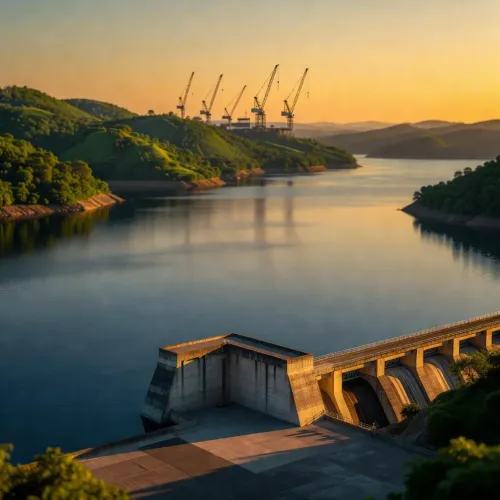
Pumped hydro storage is deceptively simple in concept: when electricity supply outstrips demand, surplus power pumps water uphill to a reservoir; when evening peak demand hits, that water rushes back down through turbines to generate power on cue. It is the world's most proven large-scale energy storage technology — and Madhya Pradesh is now betting big on it.
The Gandhisagar project, developed by Greenko — one of India's most active renewable energy developers in the pumped storage space — is designed precisely to solve the peak-hour crunch. As solar and wind generation flood the grid during the day, the plant stores that surplus. By evening, when demand spikes and solar panels go dark, it pushes 1,920 MW back into the grid. That is enough to power millions of households through the highest-demand hours of the day.
Greenko's Role and the Neemuch Site
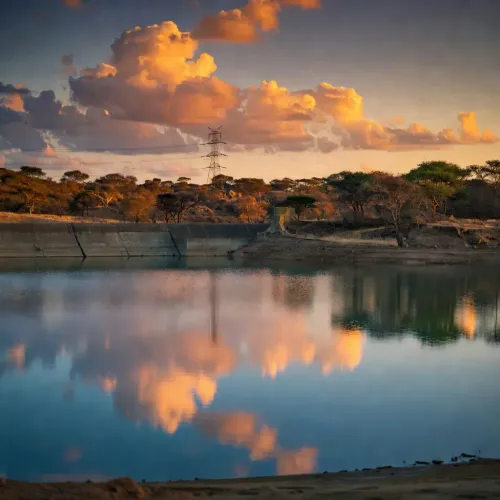
Greenko has emerged as a central player in India's pumped hydro push, investing heavily in integrated renewable energy storage complexes. The Rampur site in Neemuch, western Madhya Pradesh, provides the topography essential for such a project — the elevation differential needed to store and release water efficiently at scale.
At 414 hectares, the project footprint is substantial, and the 9-turbine configuration spreads generation capacity across multiple units, allowing phased commissioning. The first unit's launch today marks the transition from construction milestone to operational reality — even as the bulk of installed capacity still awaits completion.
MP's Grid Stability Ambitions in a Renewable-Heavy Future
India's states face a deepening paradox: the more solar and wind capacity they add, the more volatile their grids become. Evening demand peaks — when solar generation collapses — have become the defining stress test for state electricity boards. Pumped hydro is the only storage technology currently able to absorb and release power at the multi-gigawatt scale required to stabilise an entire state grid.
Madhya Pradesh has identified pumped hydro as a strategic priority, and the Gandhisagar project is its flagship bet. The state government has framed the project not just as a power asset but as an infrastructure statement — a signal that MP intends to lead on grid-scale energy storage, not merely follow national mandates.
With the first turbine now live and eight more in the pipeline, the real test will be how quickly the remaining units come online — and whether the full 1,920 MW capacity is commissioned in time to meet the state's growing peak-hour demand. The clock is running.
Point of View
A flagship ₹11,474 crore infrastructure milestone provides a concrete deliverable narrative ahead of future electoral cycles. More broadly, the project reflects how Indian states are increasingly shouldering the burden of grid balancing as the Centre pushes renewable capacity targets without an equal push on dispatchable storage. Whether the remaining eight turbines are commissioned on schedule will determine how much of this promise translates into tangible relief for electricity consumers.
NationPress
18 Nov 2026
Frequently Asked Questions
What is the Gandhisagar Pumped Hydro Storage Project?
It is a ₹11,474 crore energy storage project being developed by Greenko in Neemuch district, Madhya Pradesh. Spanning 414 hectares with 9 turbines, it will have a total capacity of 1,920 MW and is intended to supply electricity during peak demand hours.
What did CM Mohan Yadav inaugurate on 18 November 2026?
CM Dr. Mohan Yadav inaugurated the first unit of the Gandhisagar Pumped Hydro Storage Project at the Greenko Power Plant in Rampur, Neemuch, following a Cabinet meeting at Gandhisagar.
Why is pumped hydro storage important for Madhya Pradesh?
Pumped hydro allows the state to store surplus electricity — often generated from solar and wind — and release it during evening peak demand hours when generation drops. This helps stabilise the grid and ensures reliable power supply to consumers.
Is the Gandhisagar project really Asia's first of its kind?
The Madhya Pradesh government has described it as Asia's first pumped hydro storage project of its kind. The claim relates to the specific configuration and scale of the project; independent verification of this distinction was not available at the time of this report.
What is Greenko's role in the Gandhisagar project?
Greenko, one of India's leading renewable energy companies, is the developer building the Gandhisagar Pumped Hydro Storage Project at the Rampur site in Neemuch district, Madhya Pradesh.