CM Manik Saha at TTAADC Swearing-In, Calls for State-Council Unity
Synopsis
Tripura CM Dr. Manik Saha attended the TTAADC Executive Council oath ceremony at Khumulwng on November 10, 2026, stressing the Sixth Schedule's role in protecting tribal rights and calling for state-council cooperation to build a 'Bikashit Tripura'.
Key Takeaways
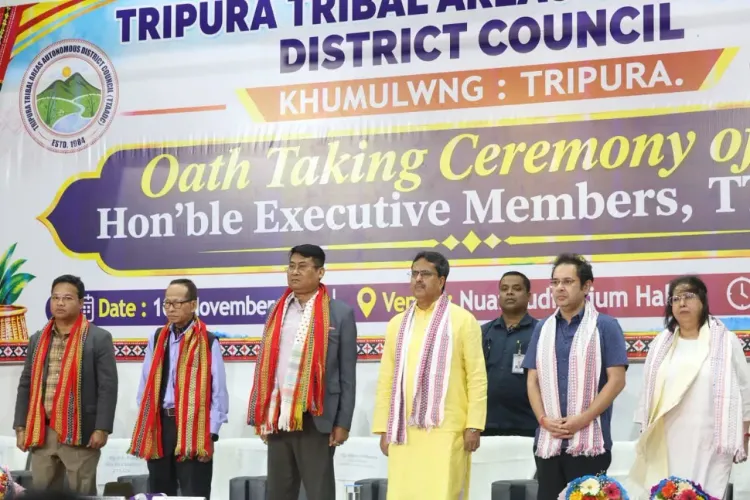
Manik Saha attended the TTAADC newly elected Executive Council swearing-in on November 10, 2026 at Noai Auditorium Hall, Khumulwng .
He highlighted the Sixth Schedule of the Indian Constitution as the primary legal shield for tribal land, language, culture, and socio-economic rights in Tripura.
The TTAADC governs roughly two-thirds of Tripura's geographic area and is home to 19 recognised tribal communities .
Saha called for 'mutual cooperation and coordination' between the state government and TTAADC to ensure constitutional guarantees are properly implemented.
He invoked the vision of 'Bikashit Tripura' (Developed Tripura), aligning the Council's mandate with the national Viksit Bharat framework.
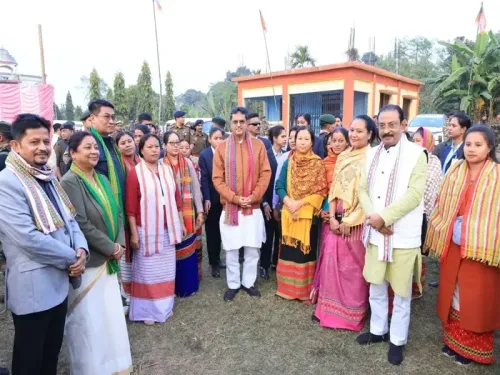
A new executive council took oath in the hills of Tripura on Tuesday, November 10, 2026 — and Tripura Chief Minister Dr. Manik Saha was there to witness it, standing inside the Noai Auditorium Hall at Khumulwng as freshly elected members of the Tripura Tribal Areas Autonomous District Council (TTAADC) were sworn in.
Posting in Bengali on X, Dr. Saha underlined the constitutional weight of the moment: 'The Sixth Schedule of the Indian Constitution plays a crucial role in protecting the land, language, culture, heritage, customs, and socio-economic interests of tribal communities. The TTAADC's role in its proper implementation is extremely significant.'
What the Sixth Schedule Actually Guarantees
The Sixth Schedule of the Indian Constitution is not ordinary administrative machinery — it is a sui generis shield. Enacted at the founding of the republic to protect tribal societies in northeastern India, it creates autonomous district and regional councils with legislative, executive, and judicial powers over matters including land allotment, forest management, social customs, and local governance. Tripura's TTAADC, covering roughly two-thirds of the state's geographical area, is one of the most consequential such bodies in the country.
The Council's jurisdiction directly touches the lives of Tripura's indigenous tribal population — communities whose land rights, cultural practices, and livelihoods are legally insulated from the state legislature under this constitutional architecture. That is why a change in the TTAADC's executive council is not merely a local election result; it is a shift in the hands that hold a constitutional trust.
Dr. Saha's Call for State–TTAADC Coordination
Congratulating all newly elected Executive Council members, the Chief Minister issued what amounts to a governance compact: 'I believe that if the state government and the TTAADC administration work together through mutual cooperation and coordination, it will not only lead to the overall development of the tribal society but also strengthen the resolve to build a Bikashit Tripura.'
The phrase 'বিকশিত ত্রিপুরা' ('Bikashit Tripura' — 'Developed Tripura') echoes the broader Viksit Bharat framework championed by the central government, signalling alignment between the state's developmental vocabulary and the national BJP agenda. The Chief Minister's presence at the oath ceremony — rather than a mere congratulatory statement — signals the state government's intent to stay close to the Council's functioning.
Why This Transition Matters for Tribal Tripura
The TTAADC governs an area that is home to Tripura's 19 recognised tribal communities, including the Tripuri, Reang, Jamatia, and Chakma peoples. Any gap between state policy and council administration can leave constitutional guarantees on paper only — which is precisely why Dr. Saha's emphasis on 'proper implementation' carries practical urgency.
With a new executive in place, the Council enters a fresh term carrying both opportunity and accountability: to translate Sixth Schedule provisions into tangible protections on land, language, and livelihood for some of Tripura's most historically marginalised communities.
The oath is taken. The mandate is clear. What happens inside the Council chambers next will determine whether the Constitution's tribal shield holds — or merely shines.
Point of View
Rather than a written congratulation, signals BJP's strategic effort to demonstrate ownership over tribal governance in Tripura ahead of future electoral cycles. His framing of the TTAADC's role within the Sixth Schedule — and his call for state-council coordination — is simultaneously a constitutional affirmation and a political signal that the state government intends to remain closely aligned with the autonomous body. The 'Bikashit Tripura' language consciously ties local tribal aspirations to the Centre's Viksit Bharat vocabulary, reflecting the BJP's standard practice of layering state and national brand identities. If the new Executive Council delivers on development, the CM shares credit; if it falters, the expectation of coordination he has set today becomes a point of accountability.
NationPress
10 Nov 2026
Frequently Asked Questions
What is the TTAADC and what powers does it have?
The Tripura Tribal Areas Autonomous District Council (TTAADC) is a constitutional body under the Sixth Schedule of the Indian Constitution. It has legislative, executive, and judicial authority over matters including tribal land, forests, social customs, and local governance across roughly two-thirds of Tripura's area.
What is the Sixth Schedule of the Indian Constitution?
The Sixth Schedule is a special constitutional provision protecting the rights of tribal communities in northeastern India. It establishes autonomous district councils with powers to legislate on land use, forest management, cultural practices, and dispute resolution within their jurisdictions.
Why did CM Manik Saha attend the TTAADC swearing-in ceremony?
CM Dr. Manik Saha attended the TTAADC Executive Council oath ceremony at Khumulwng on November 10, 2026, to mark the significance of the event and to call for active coordination between the state government and the autonomous council for tribal welfare.
Which tribal communities live under TTAADC jurisdiction in Tripura?
The TTAADC area is home to 19 recognised tribal communities in Tripura, including the Tripuri, Reang, Jamatia, and Chakma peoples, among others.
What is 'Bikashit Tripura' and how does it relate to Viksit Bharat?
'Bikashit Tripura' means 'Developed Tripura' in Bengali, and it is the state-level articulation of the central government's 'Viksit Bharat' (Developed India) vision. CM Saha used the phrase to connect the TTAADC's developmental mandate to the BJP's national policy framework.