White House Touts 'Comeback' of American Coal
Synopsis
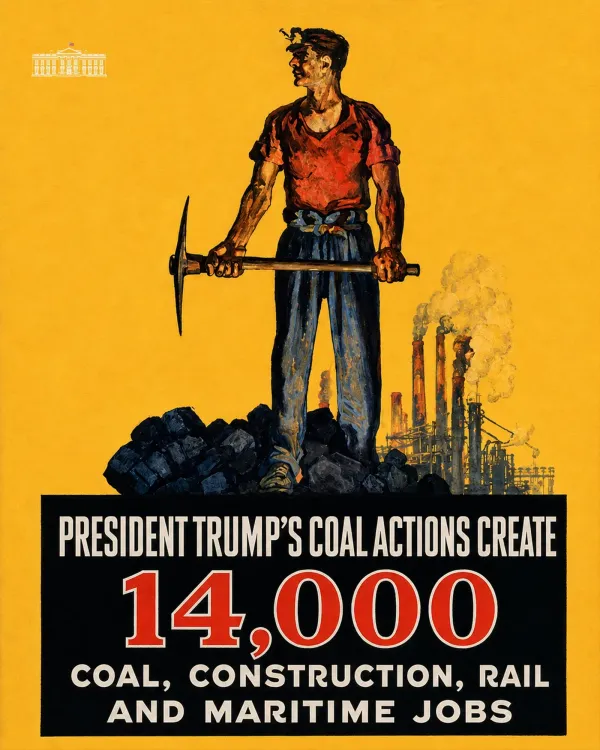
The White House on 5 June 2026 proclaimed 'the great comeback of Clean, Beautiful American coal,' signalling a renewed federal push for domestic coal production. The statement echoes earlier executive actions that rolled back EPA emission standards and frames coal as a cultural and economic touchstone for energy-producing communities.
Key Takeaways
The White House posted on 5 June 2026 declaring 'the great comeback of Clean, Beautiful American coal.' The message echoes the administration's earlier use of Executive Order 13783 (2017) and the Affordable Clean Energy rule (2019) to ease restrictions on coal.
U.S. coal output has been in structural decline since the late 2000s due to cheaper natural gas, renewables growth, and state clean-energy mandates.
The Appalachian coal region and its mining communities are the primary stakeholders in any federal policy shift toward coal.
The EPA's next moves on power-sector emission standards will determine whether the rhetoric translates into concrete regulatory relief.
Environmental groups and many utility operators are expected to resist or complicate any large-scale coal revival.
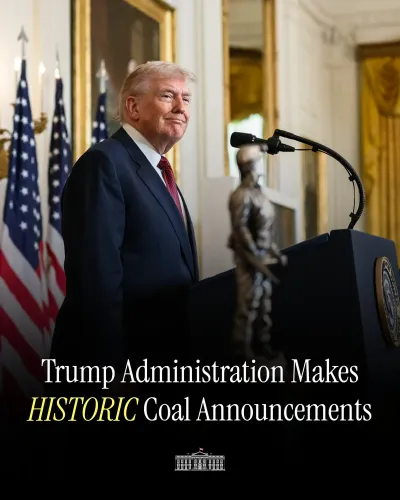
The White House, the official communications account of the Executive Office of the President of the United States, declared on Thursday, 5 June 2026, that American coal is staging a major revival, posting a message celebrating what it called 'the great comeback of Clean, Beautiful American coal.'
Context
The post, brief but pointed, signals a renewed federal embrace of domestic coal production. The phrase 'Clean, Beautiful American coal' echoes language used by the current administration to frame coal not merely as an energy source but as a symbol of American industrial identity and economic resilience. The message comes amid ongoing debates in Washington D.C. over energy policy, power-sector emissions standards, and the United States' posture on international climate commitments.
U.S. coal output has been in a long structural decline since the late 2000s, squeezed by cheaper natural gas, rapidly growing renewable energy capacity, and state-level clean-energy mandates. Against that backdrop, the White House framing of a 'comeback' represents a deliberate counter-narrative aimed at energy-producing communities and their political representatives.
Policy Backdrop
The current administration's pro-coal stance has deep roots in recent executive history. In 2017, Executive Order 13783 directed federal agencies to review and rescind regulations seen as burdensome to coal production. By 2019, the Environmental Protection Agency (EPA) had finalised the Affordable Clean Energy rule, replacing the Obama-era Clean Power Plan of 2015 with standards more permissive of continued coal use at power plants.
The Biden administration reversed course in 2021, rejoining the Paris Agreement and directing the EPA to strengthen power-sector emission standards. The current administration's messaging suggests another pivot back toward deregulation and support for coal infrastructure. The EPA's posture on new or revised power-sector emission rules will be a key indicator of whether this rhetorical signal translates into concrete policy.
Stakeholders and Impact
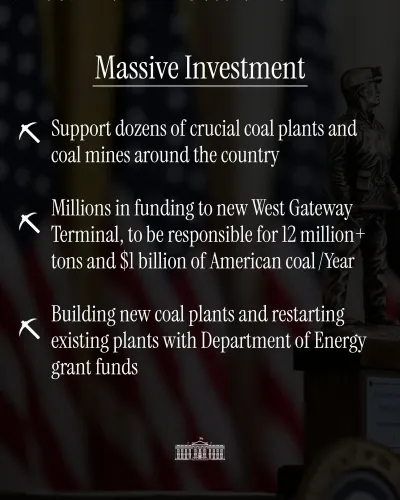
The communities most directly affected by federal coal policy are concentrated in the Appalachian coal region of the eastern United States, where decades of mining job losses have made energy policy a defining political issue. Miners and their families, as well as utility operators who run coal-fired power plants, stand to benefit if the administration follows through with regulatory relief or infrastructure investment.
Environmental groups, by contrast, argue that any revival of coal runs counter to the United States' stated climate goals and international obligations. They are expected to mount legal and advocacy challenges to any rollback of EPA emission rules. Utility operators occupy a more complex position: many have already committed capital to natural gas and renewable projects, meaning a policy shift toward coal may face market headwinds regardless of regulatory signals from Washington.
What's Next
Observers will watch closely for EPA proposals on revised power-sector emission standards and any congressional movement on permitting reform or infrastructure funding that could affect coal mines, rail links, and power plants. The White House post, while short on policy specifics, is widely read as a political signal ahead of legislative and regulatory decisions that could reshape the U.S. energy mix. Whether the 'comeback' rhetoric translates into durable production gains will ultimately depend on market forces, regulatory outcomes, and the pace of the clean-energy transition across American states.
Point of View
A strategy the current administration has deployed consistently since 2017. By framing coal as 'clean' and 'beautiful,' the post pre-empts environmental critiques while appealing to a working-class identity politics that has proven electorally durable. However, the structural economics of the energy market — cheap gas, falling renewable costs — mean that political signals alone are unlikely to reverse coal's long decline without substantial regulatory and financial intervention. The real test will come when the EPA tables its next round of power-sector emission rules and Congress debates permitting reform.
NationPress
21 Oct 2026
Frequently Asked Questions
What did the White House say about coal in June 2026?
The White House posted on 5 June 2026 that the United States is witnessing 'the great comeback of Clean, Beautiful American coal,' signalling strong federal support for domestic coal production.
Is American coal making a comeback in 2026?
The White House claims coal is making a comeback, but U.S. coal output has been in long-term decline due to competition from natural gas and renewables. Whether a genuine revival occurs will depend on EPA regulatory decisions and market conditions.
What is the Clean Power Plan and how does it relate to coal?
The Clean Power Plan was a 2015 Obama-era EPA regulation targeting carbon dioxide emissions from existing power plants. The Trump administration replaced it in 2019 with the Affordable Clean Energy rule, which imposed less stringent standards and was seen as more favourable to coal operators.
How has U.S. coal policy changed across administrations?
The Trump administration rolled back coal regulations via Executive Order 13783 in 2017 and the Affordable Clean Energy rule in 2019. The Biden administration rejoined the Paris Agreement in 2021 and pushed for stricter EPA standards. The current administration appears to be reverting to a pro-coal stance.
Which U.S. regions depend most on coal mining jobs?
The Appalachian coal region in the eastern United States — covering parts of West Virginia, Kentucky, Pennsylvania, and Virginia — is the area most economically dependent on coal mining and most directly affected by shifts in federal coal policy.