White House Says Trump Takes Historic Steps for US Coal Industry
Synopsis
The White House declared on June 5, 2026 that President Trump has taken 'historic steps' to revitalise American coal, invoking his signature 'clean, beautiful coal' framing. The move builds on first-term deregulation and signals fresh executive action targeting the EPA and federal land-leasing rules, even as market forces continue shifting US power generation away from coal.
Key Takeaways
The White House announced on June 5, 2026 that President Trump has taken 'historic steps' to revitalise the American coal industry.
Trump's first-term coal agenda included Executive Order 13783 (2017) and the Affordable Clean Energy rule (2019), which replaced the Obama-era Clean Power Plan.
The US withdrew from the Paris Agreement in 2017 , partly citing harm to coal workers, and rejoined in 2021 before policy shifted again.
Key coal-producing states — West Virginia , Pennsylvania , and Wyoming — stand to be most directly affected by any new federal measures.
Environmental organisations and state governments are expected to mount legal challenges to any significant regulatory rollbacks.
Structural market forces — cheaper natural gas and expanding renewables — have continued to erode coal's share of US electricity generation regardless of administration policy.
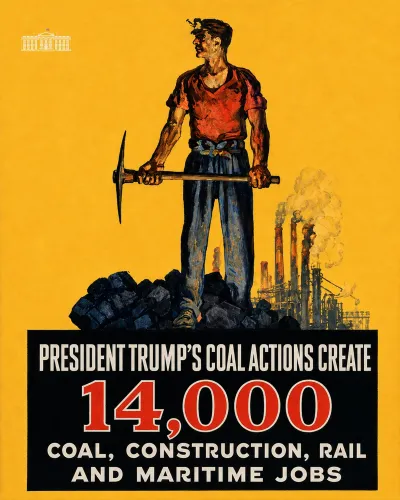
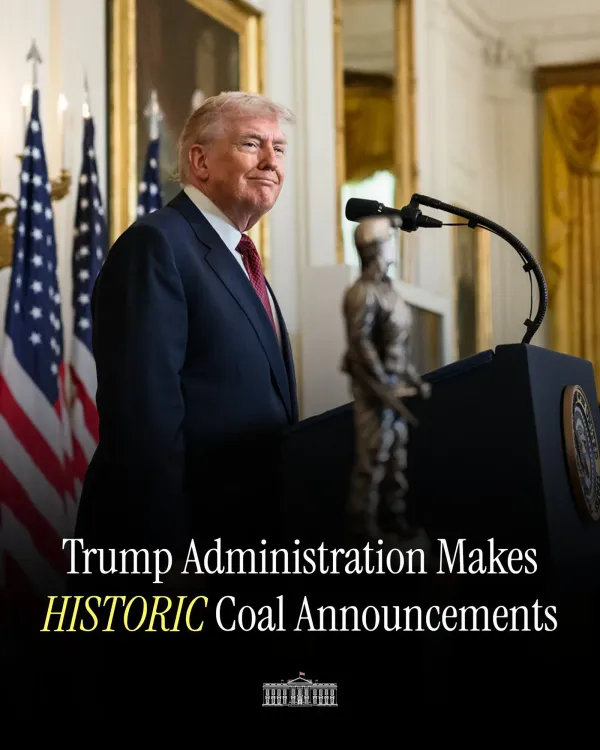
The White House, the official communications account of the Executive Office of the President, declared on Friday, June 5, 2026, that President Donald Trump has taken what it called 'historic steps' to revitalise the American coal industry, asserting that no president has prioritised 'clean, beautiful coal' as Trump has.
Context
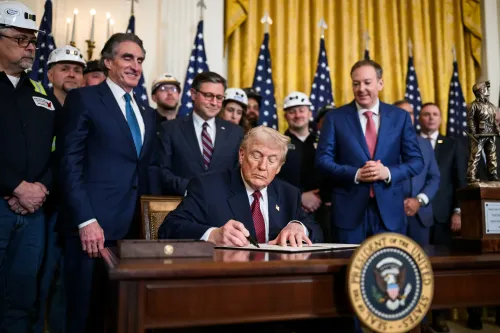
The White House post stated: 'No President has prioritized CLEAN, BEAUTIFUL COAL like President Trump. His actions today take historic steps to revitalizing the American coal industry.' The announcement signals a fresh round of executive-level action aimed at bolstering a sector the administration has long championed as central to American energy and employment.
The phrase 'clean coal' has been a signature rhetorical device for Trump since his first term, used to frame coal as compatible with modern environmental expectations — a claim that has drawn sustained scrutiny from climate scientists and energy economists alike.
Policy Backdrop
Trump's relationship with the coal industry stretches back to his first administration (2017–2021), when he signed Executive Order 13783, directing federal agencies to review and rescind regulations seen as burdensome to coal and other fossil-fuel production. His administration also finalised the Affordable Clean Energy rule in 2019 to replace the Obama-era Clean Power Plan, handing states greater latitude over coal-plant efficiency standards.
The United States withdrew from the Paris Agreement in 2017, with the Trump White House explicitly citing harm to American coal workers as a rationale. The country rejoined the accord in 2021 under the Biden administration before policy directions shifted again.
The broader energy market context is significant: the US coal industry has faced long-term structural decline driven by cheaper natural gas and the rapid expansion of renewable energy, trends that persisted through both pro-coal and climate-focused administrations.
Stakeholders and Impact
The communities most directly affected by any federal coal policy shift are concentrated in states such as West Virginia, Pennsylvania, and Wyoming, where coal mining remains a significant employer. Electric utilities that still operate coal-fired generation capacity are also closely watching federal regulatory signals, as compliance costs and investment decisions hinge on the regulatory environment.
Environmental organisations and several state governments have historically mounted legal challenges to rollbacks of clean-air and climate rules, and any new executive actions are likely to face similar scrutiny in federal courts.
What's Next
The specific executive actions referenced in the June 5 post had not been detailed in the White House statement as published. Observers will be watching for follow-on rulemakings from the Environmental Protection Agency and the Department of the Interior, which governs leasing of federal lands for coal extraction.
Legal challenges from environmental groups and Democratic-led states are widely anticipated if new rules significantly weaken existing emissions or land-use standards. The trajectory of US energy markets — where coal's share of electricity generation has continued to shrink regardless of the prevailing administration — will also test whether policy support translates into durable industrial revival.
Point of View
Where energy-sector employment carries outsized electoral weight. The 'clean, beautiful coal' rhetoric recycles a first-term formula that proved effective as messaging even as coal's market share continued to decline — suggesting the administration is prioritising symbolic politics alongside regulatory action. Any concrete rulemaking will face the same dual headwind that stymied first-term efforts: federal court challenges on environmental grounds and the relentless economics of cheaper alternatives. The June 2026 announcement fits a broader pattern of using energy policy as a culture-war proxy, framing fossil-fuel support as a defence of American workers against elite climate priorities.
NationPress
21 Oct 2026
Frequently Asked Questions
What did the White House announce about coal on June 5 2026?
The White House announced that President Trump took 'historic steps' to revitalise the American coal industry, describing him as the president who has most prioritised 'clean, beautiful coal.'
What is clean coal and why is it controversial?
'Clean coal' generally refers to technologies aimed at reducing emissions from coal combustion, such as carbon capture. Critics argue the phrase overstates the environmental benefits and that no coal combustion process is truly clean compared with renewables.
What did Trump do for coal in his first term?
In his first term, Trump signed Executive Order 13783 to roll back Obama-era energy regulations, replaced the Clean Power Plan with the Affordable Clean Energy rule, and withdrew the US from the Paris Agreement, citing harm to coal workers.
Which US states are most affected by federal coal policy?
West Virginia, Pennsylvania, and Wyoming are the most directly affected states, as coal mining is a significant employer and economic driver in those regions.
Will Trump's coal actions face legal challenges?
Environmental organisations and Democratic-led states have historically challenged rollbacks of clean-air and land-use rules in federal court, and any new executive actions on coal are widely expected to face similar legal scrutiny.