Giriraj Singh Backs Surat's Shuttle-Loom Weavers for New Markets
Synopsis
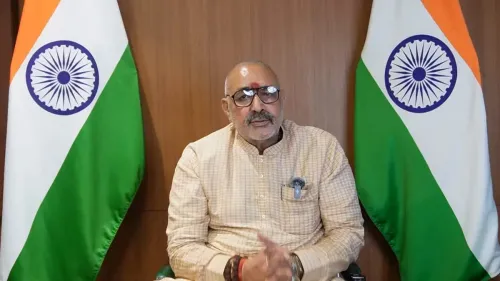
Union Textiles Minister Giriraj Singh highlighted an initiative to link Surat's traditional shuttle-loom weaving heritage to contemporary markets, calling for new opportunities for weavers without abandoning craft traditions.
Key Takeaways
Union Textiles Minister Giriraj Singh posted on 24 September 2026 spotlighting an initiative for Surat's shuttle-loom weavers.
The initiative aims to connect traditional handloom skills to new uses and markets, including potentially export channels.
Surat, Gujarat is India's largest textile manufacturing hub, encompassing both synthetic and traditional handloom clusters.
The National Handloom Development Programme (2015) provides the broader policy framework for modernising handloom clusters and market linkages.
The specific initiative referenced by the Minister has not yet been formally named or detailed in public announcements.
The Minister's phrase 'virasat wahi, avsar naye' ('the heritage remains, the opportunities are new') frames craft preservation and market expansion as complementary goals.
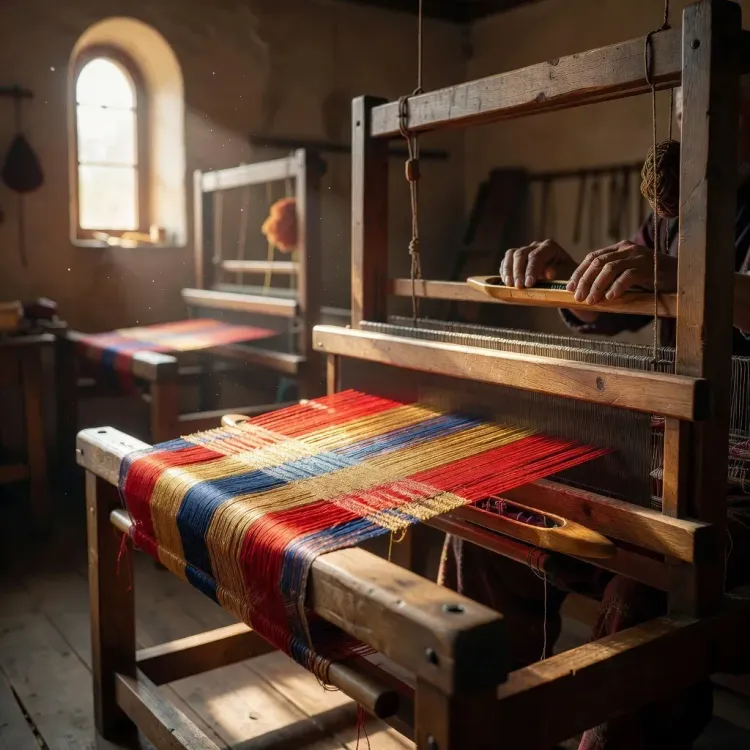
India's textile heartland is being asked to look forward without letting go of its roots. Union Textiles Minister Giriraj Singh on Thursday, 24 September 2026 spotlighted an initiative aimed at connecting Surat's centuries-old weaving tradition to contemporary demand — and opening fresh markets for the lightweight, comfortable fabrics that its shuttle looms have long produced.
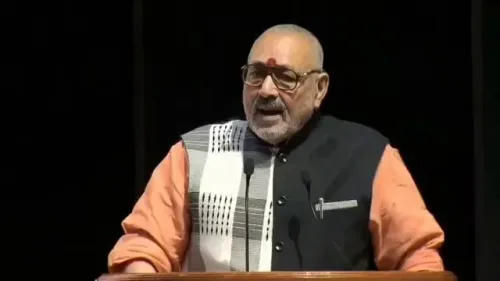
Posting in Hindi, the Minister wrote: 'Surat ki bunai parampara mein chhipe hunar ko aaj ki zarurato se jodne ki yah pahal khaas hai' — 'This initiative to connect the hidden skill within Surat's weaving tradition to today's needs is special.' He added that the light and comfortable fabric produced on traditional shuttle looms 'opens possibilities to take our weavers' craftsmanship to new uses and new markets.' He closed with a line that doubles as a policy motto: 'The heritage remains the same, the opportunities are new.'
Why Surat, and Why the Shuttle Loom
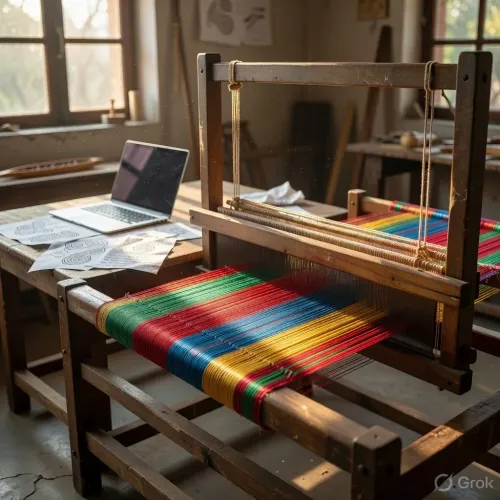
Surat, Gujarat, is India's single largest textile manufacturing hub — a city that processes an estimated bulk of the country's synthetic fabric output alongside its older handloom and power-loom clusters. The shuttle loom, a traditional mechanism pre-dating mechanised rapier and projectile technology, produces a distinctively breathable, softer-selvedge fabric that has found renewed appeal among designers and conscious consumers seeking heritage textiles.
That commercial angle is precisely what the Minister's framing targets. The challenge has always been the same: traditional weavers possess irreplaceable craft knowledge but often lack direct access to design partnerships, retail channels, or export networks. Bridging that gap — not replacing the loom, but widening the road that leads away from it — sits at the core of what Singh is championing here.
National Handloom Policy and the Market-Linkage Push
The post lands within a well-established policy arc. The National Handloom Development Programme, launched in 2015, set out to modernise handloom clusters and connect artisans to markets through technology upgradation and design support. Successive textile ministries have built on that framework, extending cluster-based interventions to cities like Surat, Varanasi, and Chanderi.
Giriraj Singh's tenure at the Textiles Ministry has been marked by repeated emphasis on weaver livelihoods and on positioning traditional Indian fabrics — khadi, handloom, and technical textiles — as complementary rather than competing priorities. His highlighting of a Surat-specific initiative fits that pattern, signalling that the ministry's attention is not confined to the handloom belt of eastern Uttar Pradesh and Bengal but extends to Gujarat's industrial textile capital.
The specific initiative referenced in the post has not been formally named or announced in accompanying official communication, so its precise scope — whether a cluster scheme, a design incubation programme, or a trade-fair linkage — remains to be detailed publicly. What is clear is the minister's intent: craft heritage as a launchpad, not a museum exhibit.
What Surat's Weavers Stand to Gain
For the artisan communities that still operate traditional shuttle looms in and around Surat, the stakes are concrete. Market linkage schemes, when executed well, have historically translated into better price realisation, reduced dependence on middlemen, and access to export-quality finishing. Lighter fabrics — the kind shuttle looms are well-suited to produce — are in demand for summer apparel, resort wear, and technical blending, giving Surat's weavers a genuine product-market fit if distribution channels open up.
The minister's phrase 'virasat wahi, avsar naye' — 'the heritage remains the same, the opportunities are new' — is as much a brief for policymakers as it is a post on social media. It will be watched to see whether it is followed by a formal scheme rollout or a cluster-level trade-fair push in the coming months.
Point of View
The ministry signals an intent to bring market-savvy export infrastructure into contact with traditional shuttle-loom clusters that have historically operated in its shadow. The emphasis on 'new markets' rather than subsidy language reflects a shift in political framing from artisan protection to artisan enterprise. Whether this translates into a named scheme with measurable targets will determine how substantive the pivot truly is.
NationPress
24 Sept 2026
Frequently Asked Questions
What did Giriraj Singh say about Surat's weavers?
Union Textiles Minister Giriraj Singh highlighted an initiative to connect Surat's traditional shuttle-loom weaving skills to contemporary demand and new markets, saying 'the heritage remains the same, the opportunities are new.'
Why is Surat important for India's textile industry?
Surat in Gujarat is India's largest textile manufacturing hub, known for synthetic fabric processing as well as traditional handloom and power-loom clusters with centuries of weaving heritage.
What is a traditional shuttle loom and why does it matter?
A shuttle loom is a traditional weaving mechanism that produces lightweight, breathable fabrics with a distinctive soft selvedge — qualities increasingly valued in contemporary apparel and heritage textile markets.
What is the National Handloom Development Programme?
The National Handloom Development Programme, launched in 2015, is India's flagship scheme to modernise handloom clusters, provide technology upgradation, and link weavers directly to domestic and export markets.
What could this initiative mean for Surat's handloom artisans?
If a formal market-linkage or design-support scheme follows, Surat's shuttle-loom weavers could gain better price realisation, reduced middlemen dependency, and access to export channels for their lighter fabrics.