PM Modi Highlights Defence Reforms and Export Growth Since 2014
Synopsis
Prime Minister Narendra Modi on 21 June 2026 credited major policy-level reforms since 2014 for driving rapid growth in India's defence production and pushing defence exports to unprecedented levels, reinforcing the government's Atmanirbhar Bharat push.
Key Takeaways
PM Modi credited post- 2014 policy reforms for rapid growth in India's defence production and unprecedented rise in defence exports.
The Make in India initiative, launched in September 2014 , identified defence as a priority sector to reduce import dependence.
The Atmanirbhar Bharat programme announced in 2020 accelerated indigenisation, including a negative import list of 101 defence items .
The FDI cap in defence was raised to 74 per cent under the automatic route to attract private investment into the sector.
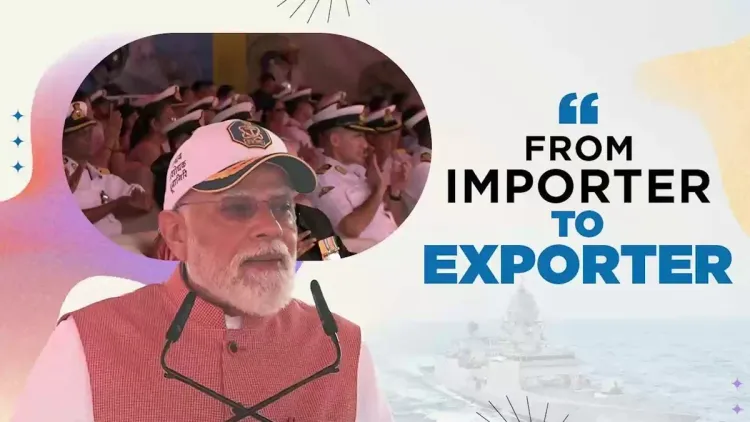
The reforms have shifted India's defence posture from import substitution to building an export-oriented domestic industry .
Future indicators include Defence Budget allocations, outcomes of DefExpo and Aero India , and expansion of the negative import list.
Prime Minister Narendra Modi on Sunday, 21 June 2026, highlighted the sweeping policy reforms undertaken since 2014 that have accelerated India's defence production and driven defence exports to unprecedented levels, posting his remarks on X alongside a video.
In his post, PM Modi stated — '2014 के बाद से हमने नीतियों के स्तर पर बड़े रिफॉर्म किए हैं' — translated: 'Since 2014, we have carried out major reforms at the policy level. As a result, defence production has grown rapidly and our defence exports have increased at an unprecedented pace.'
Context
The statement comes as India's defence manufacturing ecosystem has undergone a structural transformation over the past decade. The government's push began with the Make in India initiative, launched in September 2014, which identified defence as a priority sector to reduce the country's heavy dependence on imports.
Subsequent years saw the introduction of the Defence Procurement Procedure 2016, designed to streamline acquisitions and give preference to indigenously developed systems. These steps laid the groundwork for a more ambitious self-reliance drive.
Policy Backdrop
A significant acceleration came with the announcement of the Atmanirbhar Bharat programme in 2020, which placed defence indigenisation at its core. In August 2020, the Ministry of Defence unveiled the first negative import list of 101 defence items, effectively barring their import to compel domestic sourcing.
Simultaneously, the foreign direct investment cap in defence was raised to 74 per cent under the automatic route to attract private capital into the sector. These interlocking reforms created conditions for both higher domestic output and a growing pipeline of exportable products.
The government has since expanded the negative import list in successive tranches, covering more sophisticated platforms and sub-systems, signalling a deliberate shift from import substitution toward building an export-oriented defence industrial base.
Stakeholders and Impact
Domestic defence manufacturers — spanning public sector undertakings and a growing private sector — have been the primary beneficiaries of these reforms, gaining access to larger orders and a more predictable procurement pipeline. The Indian Armed Forces stand to gain from faster induction of indigenously developed equipment, reducing long lead times associated with foreign procurement.
Defence exporters, including firms supplying platforms, ammunition, and electronics to friendly nations, have seen order books expand as India positions itself as a credible defence supplier in global markets. The government has set ambitious export targets as part of its broader strategic outreach.
What's Next
Observers will watch the next Union Defence Budget for fresh allocations earmarked for indigenisation incentives and production-linked schemes. Major defence exhibitions such as DefExpo and Aero India serve as key showcases for the progress India has made and are expected to draw further export interest.
Parliamentary standing committee assessments of export performance and the expansion of the negative import list to cover more advanced systems will be closely tracked as indicators of how deeply the reforms have taken root across the defence manufacturing value chain.
Point of View
Framing a decade of defence policy as a coherent, results-driven arc rather than a series of discrete decisions. By linking 2014-era reforms directly to export outcomes, the messaging seeks to consolidate the government's 'Atmanirbhar Bharat' brand in the defence domain ahead of budget and exhibition cycles. The emphasis on exports — rather than just import substitution — marks a maturation of the narrative, positioning India as a net contributor to global defence supply chains rather than merely a large buyer seeking self-sufficiency. This aligns with a broader diplomatic strategy of deepening defence ties with partner nations through supply relationships.
NationPress
20 Sept 2026
Frequently Asked Questions
What defence reforms has India carried out since 2014?
Since 2014, India has launched the Make in India initiative, introduced the Defence Procurement Procedure 2016, announced a negative import list of 101 defence items in 2020, and raised the FDI cap in defence to 74 per cent under the automatic route, all aimed at boosting domestic production and exports.
What is India's defence export target?
The Indian government has set ambitious defence export targets as part of its Atmanirbhar Bharat programme, seeking to grow exports significantly by positioning domestic manufacturers as credible global suppliers, though specific figures for 2026 targets are subject to official budget announcements.
What is the negative import list in India's defence sector?
The negative import list, first announced in August 2020 with 101 items, bans the import of specified defence equipment to compel domestic sourcing and has since been expanded in successive tranches to cover more advanced platforms and sub-systems.
How has Make in India helped India's defence sector?
Make in India, launched in September 2014, identified defence as a priority sector, channelling policy support, procurement preferences, and private investment incentives toward domestic manufacturers, helping shift India from being primarily an importer to a growing exporter of defence equipment.
What is Atmanirbhar Bharat in the context of defence?
Atmanirbhar Bharat, meaning 'self-reliant India,' is a programme announced in 2020 that placed defence indigenisation at its centre, combining negative import lists, higher FDI limits, and production-linked incentives to build a self-sufficient and export-capable defence industrial base.