Rajnath Singh highlights PM Modi's Mann Ki Baat on defence rise
Synopsis
Union Defence Minister Rajnath Singh amplified PM Narendra Modi's Mann Ki Baat remarks on 26 July 2026, highlighting India's rising defence production and its emergence as a credible global defence partner, reinforcing the Atmanirbhar Bharat policy push.
Key Takeaways
Rajnath Singh shared PM Modi 's Mann Ki Baat remarks on 26 July 2026 , spotlighting India's defence production growth.
PM Modi described India as 'a credible global defence partner' continuously strengthening its defence capabilities.
The Atmanirbhar Bharat initiative launched in 2020 underpins the indigenisation drive with dedicated defence production components.
Successive positive indigenisation lists since 2020 have banned imports of specified platforms, compelling domestic sourcing.
Export approvals for platforms such as BrahMos and Akash marked milestones between 2022 and 2024 .
Upcoming budget allocations and bilateral defence production talks will be key indicators of how the policy translates into outcomes.
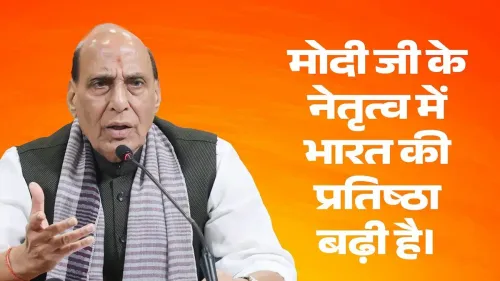
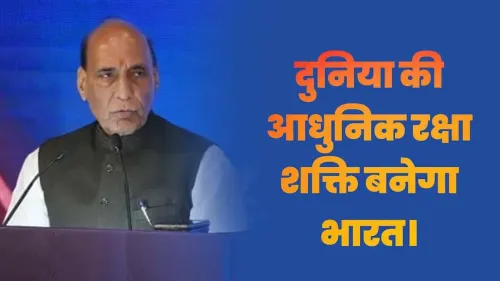
Union Defence Minister Rajnath Singh on Sunday, 26 July 2026 amplified Prime Minister Narendra Modi's remarks from the latest edition of Mann Ki Baat, sharing the Prime Minister's assertion that India's defence production is scaling new heights and that the country is emerging as a credible global defence partner.
Context
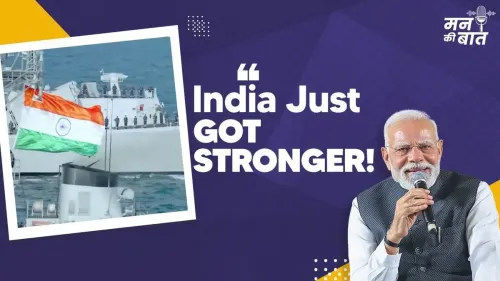
In his post, Rajnath Singh quoted Prime Minister Modi directly: 'Bharat ek vishwasniya vaishvik raksha sajhedar ke roop mein ubhar raha hai aur desh apni raksha kshamataon ko lagatar majboot kar raha hai' — 'India is emerging as a credible global defence partner and the country is continuously strengthening its defence capabilities.' The Defence Minister underscored that Modi had used the monthly Mann Ki Baat radio address to highlight the upward trajectory of domestic defence production.
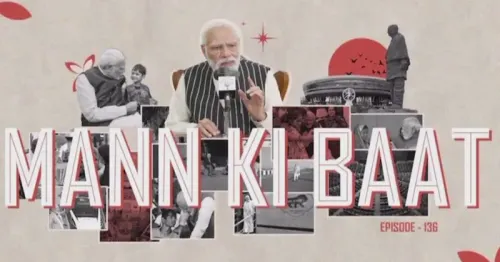
Mann Ki Baat is the Prime Minister's monthly public radio programme, used consistently to communicate government priorities directly to citizens. Defence self-reliance has featured as a recurring theme in the programme over recent years.
Policy Backdrop
The remarks sit within a multi-year policy architecture designed to reduce India's dependence on foreign defence imports and build an indigenous manufacturing base. The Atmanirbhar Bharat initiative, launched in 2020, included dedicated components for defence production and export promotion.
Since 2020, the government has notified successive negative import lists — later reframed as positive indigenisation lists — banning imports of specified defence platforms and equipment to compel domestic sourcing. Between 2022 and 2024, record defence export approvals were announced for platforms including BrahMos and Akash. Policy tools such as offset requirements, technology transfer mandates, and dedicated defence industrial corridors in Uttar Pradesh and Tamil Nadu have supported this push.
Stakeholders and Impact
The primary beneficiaries of this policy direction are domestic defence manufacturers — both public sector undertakings and a growing private sector base — as well as the three armed forces, which gain access to indigenously developed platforms. Defence exporters stand to benefit as India positions itself as a supplier nation rather than solely a buyer.
For partner countries, the framing of India as a 'reliable global defence partner' signals a willingness to enter long-term co-production and supply arrangements. This has strategic implications for India's bilateral defence diplomacy across Southeast Asia, West Asia, and parts of Africa.
What's Next
Observers will watch the next Union Budget for the defence allocation figure, which will indicate whether fiscal support matches the rhetorical ambition. Fresh positive indigenisation lists, if notified, would expand the range of equipment that must be sourced domestically.
Outcomes of upcoming bilateral defence production talks with key partner countries will also test whether India's positioning as a credible global defence partner translates into concrete co-production agreements and export contracts.
Point of View
Rajnath Singh performs a dual function: reinforcing the government's public narrative on defence self-reliance and signalling ministerial alignment with the broader Atmanirbhar Bharat messaging. The choice of Mann Ki Baat as the vehicle underlines how defence indigenisation has moved from a niche policy domain to a mainstream political communication priority. This pattern — senior ministers echoing the Prime Minister's public addresses — reflects a coordinated information strategy designed to give policy milestones wider reach. The real test of the 'credible global partner' claim will come in the form of signed co-production agreements and sustained export growth figures in the months ahead.
NationPress
25 Oct 2026
Frequently Asked Questions
What did PM Modi say about India's defence production in Mann Ki Baat?
PM Modi stated that India is emerging as a credible global defence partner and is continuously strengthening its defence capabilities, remarks shared by Defence Minister Rajnath Singh on 26 July 2026.
What is the Atmanirbhar Bharat initiative in defence?
Atmanirbhar Bharat, launched in 2020, is a self-reliance initiative that includes dedicated components for defence production and export promotion, supported by indigenisation lists that ban imports of specified equipment.
What is Mann Ki Baat and why does it matter for defence policy?
Mann Ki Baat is PM Modi's monthly public radio programme used to communicate government priorities; defence self-reliance has been a recurring theme, giving indigenisation milestones wide public visibility.
Which Indian defence platforms have been approved for export?
Between 2022 and 2024, India received record defence export approvals for platforms including BrahMos and Akash missiles, reflecting the country's growing role as a defence supplier.
What should I watch next on India's defence indigenisation policy?
Key indicators include the next Union Budget defence allocation, any fresh positive indigenisation lists banning further imports, and outcomes of bilateral defence production talks with partner countries.