Dr. Jitendra Singh Holds Public Darbar in Kishtwar, Resolves Grievances On Spot
Synopsis
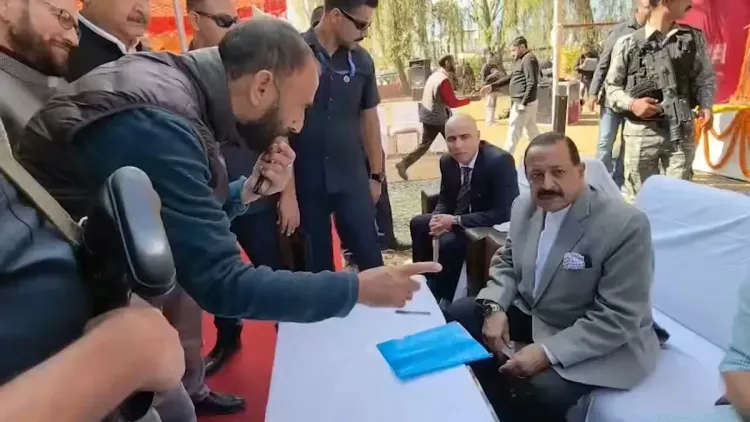
Union Minister Dr. Jitendra Singh held a Public Darbar in Kishtwar on November 2, 2026, resolving public grievances on the spot alongside LoP Sunil Sharma and MLA Shagun Parihar, while highlighting the district's transformation in roads, telecom and pilgrimage infrastructure since 2014.
Key Takeaways
Jitendra Singh held a Public Darbar in Kishtwar on November 2, 2026 , engaging with a large number of residents.
Several issues were resolved on the spot; directions were issued for time-bound resolution of others.
Leader of Opposition Sunil Sharma , MLA Shagun Parihar , and DC Pankaj Sharma were present at the event.
Before 2014 , Kishtwar lacked safe road access, mobile connectivity, and basic amenities on the Machail Yatra route.
PM Modi's December 2014 visit to Kishtwar is cited as the turning point for focused development in the region.
Post-2014 improvements span road connectivity, telecom services, and basic pilgrim infrastructure.
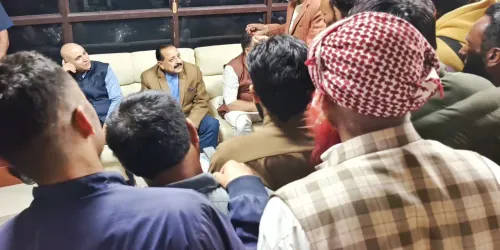
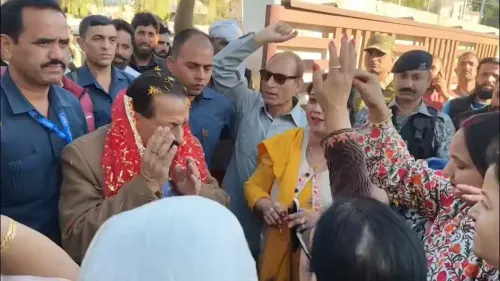
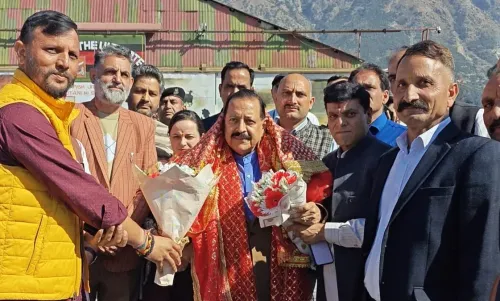
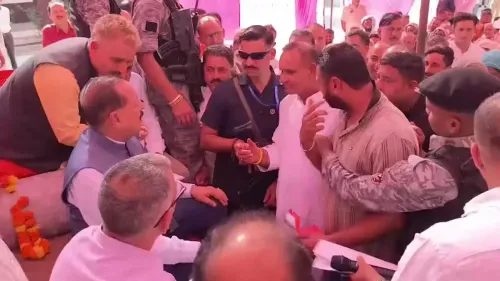
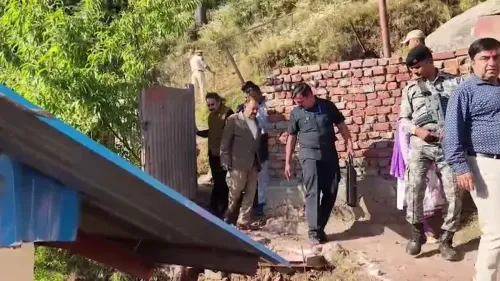
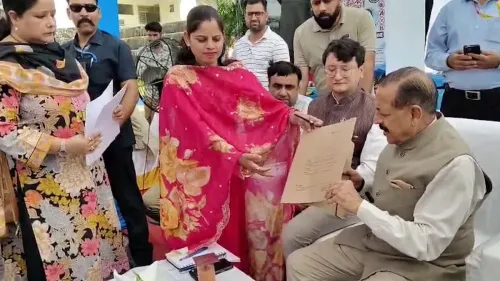
A remote Jammu and Kashmir district that once lacked even a mobile signal hosted a full-scale public grievance court on Monday, November 2, 2026 — and the Union Minister came to listen. Union Science and Technology Minister Dr. Jitendra Singh held a Public Darbar in Kishtwar, meeting a large number of residents, resolving several issues on the spot and issuing directions for the time-bound resolution of the rest.
Who Was in the Room — and Why It Matters
The darbar was not a solo act. Leader of Opposition Sunil Sharma, MLA Shagun Parihar, and District Collector Pankaj Sharma were all present, giving the session both administrative authority and political breadth. When a Union Minister, a district collector, and elected representatives sit together to hear public concerns, resolutions carry more than symbolic weight — they carry follow-through.
Dr. Singh directly addressed the post to both @Sunil_SharmaBJP and @ShagunParihar_, a public signal that the accountability for time-bound resolutions is shared.
Kishtwar Before 2014: What 'Neglected' Actually Looked Like
Dr. Singh's post drew a sharp before-and-after. Before 2014, he noted, 'reaching Kishtwar safely was itself a challenge, mobile connectivity was scarce, and the Machail Yatra route lacked even basic amenities like toilet, electricity or mobile tower.' The Machail Yatra — a significant pilgrimage in the region — was being conducted without the most elementary infrastructure for the thousands who undertook it.
Kishtwar is a mountainous, landlocked district in Jammu and Kashmir, historically difficult to access and chronically under-resourced compared to the valley districts. The picture Dr. Singh paints is of a region where the most basic markers of connectivity — a road you could rely on, a phone signal, a lit route for pilgrims — were absent.
The December 2014 Visit That Set the Direction
Prime Minister Narendra Modi's visit to Kishtwar in December 2014 is cited by Dr. Singh as the inflection point — 'a renewed commitment to prioritising regions long neglected.' That visit, now over a decade old, is still being invoked as the origin of Kishtwar's infrastructure push, covering road connectivity, telecom services and basic amenities.
The post-2014 pattern in Jammu and Kashmir has broadly emphasised grievance redressal and physical infrastructure in remote districts — from road projects to mobile tower rollouts — as tools to integrate peripheral regions with the national mainstream. Kishtwar's journey, as Dr. Singh frames it, is a case study in that larger push.
The Darbar Model: Governance That Travels
The Public Darbar format — where officials and ministers travel to constituents rather than waiting for files to reach Delhi — has long been a feature of governance outreach in Jammu and Kashmir. By holding such an event in Kishtwar itself, Dr. Singh signals that the district is not merely a beneficiary of distant policy, but a destination worth showing up for.
The real test, as with every darbar, lies in the follow-up: whether the 'time-bound resolutions' directed on November 2 translate into visible action on the ground in the weeks ahead.
Point of View
On-ground governance in Jammu and Kashmir's most remote districts — events that double as political messaging about development delivery. Invoking PM Modi's 2014 visit as the origin story is a deliberate framing that ties local progress to central leadership, reinforcing a narrative the party has consistently cultivated ahead of any electoral or administrative cycle. The presence of both the Leader of Opposition and the local MLA at a ministerial event is worth noting — it suggests a deliberate optics of cross-party administrative consensus, even as the political credit flows one way. The real governance metric, however, will be the follow-through on time-bound directives issued on the day.
NationPress
2 Nov 2026
Frequently Asked Questions
What is a Public Darbar and what happened at Kishtwar?
A Public Darbar is a formal public grievance forum where officials and elected representatives meet citizens directly to hear and resolve complaints. On November 2, 2026, Union Minister Dr. Jitendra Singh held one in Kishtwar, resolving several issues on the spot and directing time-bound resolution of others, with LoP Sunil Sharma and MLA Shagun Parihar also present.
How has Kishtwar changed since 2014?
According to Dr. Jitendra Singh, Kishtwar has seen significant improvements in road connectivity, telecom services, and basic infrastructure since 2014. Before that, the district was difficult to reach safely, mobile signals were scarce, and the Machail Yatra route had no toilets, electricity, or mobile towers.
Why is PM Modi's 2014 visit to Kishtwar significant?
PM Narendra Modi's visit to Kishtwar in December 2014 is cited as a pivotal moment that signalled renewed central government commitment to developing long-neglected remote regions of Jammu and Kashmir, setting the direction for the infrastructure improvements that followed.
What is the Machail Yatra?
The Machail Yatra is a religious pilgrimage held in the Kishtwar district of Jammu and Kashmir. Before 2014, the route reportedly lacked basic amenities such as toilets, electricity, and mobile towers; improvements to pilgrim infrastructure have since been highlighted as part of the region's development.
Who is Sunil Sharma and why was he at the Kishtwar darbar?
Sunil Sharma is the Leader of Opposition in the Jammu and Kashmir Assembly. He attended the Public Darbar held by Union Minister Dr. Jitendra Singh in Kishtwar on November 2, 2026, alongside MLA Shagun Parihar and District Collector Pankaj Sharma.