Dr. Jitendra Singh Holds Public Durbar at Kathua's Chakra Village
Synopsis
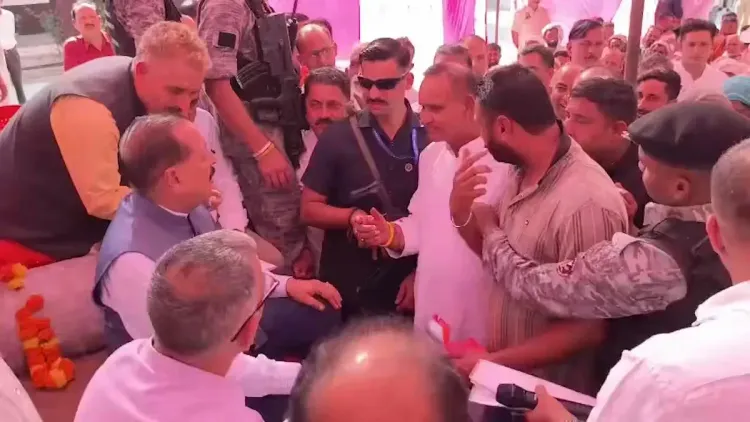
Union Minister Dr. Jitendra Singh organised a Public Durbar at Chakra village in Kathua's Hiranagar segment on 25 October 2026. Several grievances were resolved on the spot, with Deputy Commissioner Rajesh Sharma heading a multi-department team, as part of a regular constituency-wide outreach programme.
Key Takeaways
A Public Durbar was held at Chakra village , Hiranagar Assembly segment , Kathua on 25 October 2026 .
Deputy Commissioner Kathua Sh Rajesh Sharma led a multi-department team of senior officers at the event.
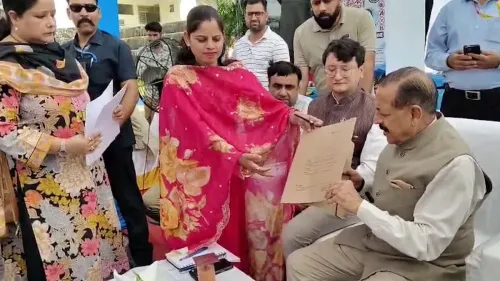
Several citizen issues were resolved on the spot; directions were issued for expeditious disposal of remaining matters.
Senior BJP district leaders and a former MLA participated alongside administrative officers.
Public Durbars are regularly held at district, block, and Panchayat levels across the Udhampur-Kathua-Doda Lok Sabha constituency .
The programme is designed to bridge the gap between administration and citizens, especially in remote areas.
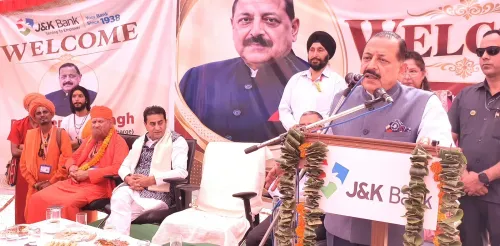
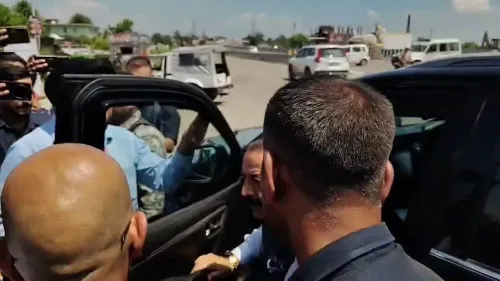
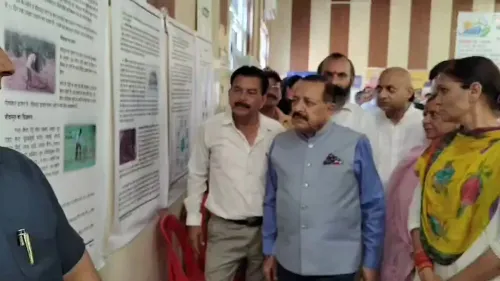
Governance arrived at the doorstep of Chakra village in the Hiranagar Assembly segment of Kathua on Sunday, 25 October 2026, as Union Science and Technology Minister Dr. Jitendra Singh organised a Public Durbar — a direct grievance-redressal camp that resolved several citizen complaints on the spot and issued directions for the expeditious disposal of others.
Kathua's DC leads a multi-department response team
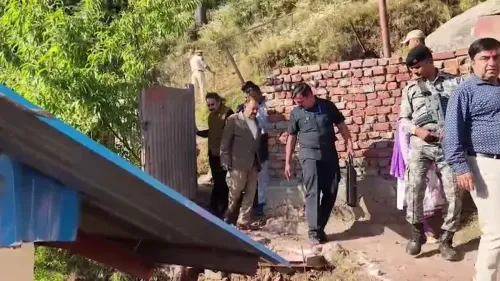
Deputy Commissioner Kathua Sh Rajesh Sharma led a team of senior officers drawn from multiple departments, transforming the village gathering into a functional administrative bench. The format — officials present, files open, decisions made in real time — is precisely what makes the Public Durbar model distinct from a ceremonial visit.
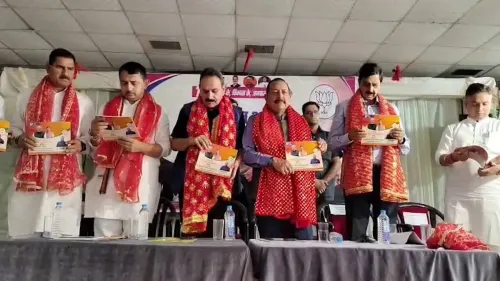
A broad cross-section of local BJP leadership was also present: Kathua District President Smt Updesh Andotra, District General Secretaries Sh Rajesh Mehta and Ravinder Sharma, former MLA Kuldip Raj, and several other local representatives including Sh Prem Nath Dogra, Sh Rashpal Verma, Smt Gita Bhagat, and Sh Naresh Naib Sarpanch, among others.
A constituency-wide programme, not a one-off event
Dr. Jitendra Singh's post underlines that these are not isolated events. Public Durbars are regularly organised across the Udhampur-Kathua-Doda Lok Sabha constituency at the district, block, and Panchayat levels — a structured outreach architecture designed, in his own framing, to ensure 'every voice, including those from the remotest corners, is heard.'
The Udhampur-Kathua-Doda constituency spans a wide swathe of the Jammu division, encompassing districts where terrain and geography have historically made administrative access uneven. The Public Durbar model pushes that access to the village level, cutting through the conventional barrier of a citizen having to travel to a district headquarters to be heard.
Rooted in J&K's post-2019 governance reset
The durbar format carries added significance in the context of Jammu and Kashmir's reorganisation into a Union Territory in August 2019. That constitutional change was explicitly framed by the central government as a mechanism to strengthen direct administrative reach in a region where governance gaps had persisted for decades. The Public Durbar programme fits squarely within that stated agenda — pushing bureaucratic accountability to the panchayat level rather than leaving it anchored to district headquarters.
For rural communities in Kathua and the broader constituency, the practical measure of success is simple: did a problem get solved today that would otherwise have waited months? Sunday's durbar at Chakra village claims at least a partial 'yes.'
If the programme's momentum holds, the real test will be the follow-through — whether directions issued at the durbar translate into closed files, and whether the next round of camps reports fewer repeat grievances than the last.
Point of View
Organising these camps systematically across one of J&K's most geographically spread Lok Sabha constituencies serves a dual purpose: it demonstrates parliamentary responsiveness and reinforces the central government's narrative of normalisation through institutional reach. The real policy question is scalability — whether the durbar outputs feed into measurable service-delivery improvements or remain largely ceremonial in their follow-through. Consistent documentation of resolved versus pending grievances would sharpen the programme's accountability and widen its credibility.
NationPress
25 Oct 2026
Frequently Asked Questions
What is a Public Durbar in Jammu and Kashmir?
A Public Durbar is a grievance-redressal camp where government officials, including ministers and district administration, meet citizens directly to hear and resolve complaints on the spot, often held at village, block, or district level.
Where was Dr. Jitendra Singh's Public Durbar held on 25 October 2026?
It was held at Chakra village in the Hiranagar Assembly segment of Kathua district in Jammu and Kashmir.
Who is Dr. Jitendra Singh?
Dr. Jitendra Singh is the Union Minister of State (Independent Charge) for Science and Technology and Earth Sciences, and also a Minister of State in the Prime Minister's Office. He is the Member of Parliament from the Udhampur-Kathua-Doda Lok Sabha constituency.
What is the purpose of Public Durbars in the Udhampur-Kathua-Doda constituency?
The durbars aim to bridge the gap between the administration and citizens, ensuring that even residents in the most remote areas can have their grievances heard and resolved without travelling to district headquarters.
How does the Public Durbar programme relate to J&K's reorganisation in 2019?
Since Jammu and Kashmir was reorganised as a Union Territory in August 2019, there has been a stated push to strengthen direct central administration and grassroots outreach. Public Durbars are a key mechanism in that effort, extending bureaucratic accountability to the panchayat level.