Jal Shakti Minister Paatil backs secure digital banking push
Synopsis
Union Jal Shakti Minister C. R. Paatil invoked PM Modi's 'Surakshit Digital Bharat' vision on 2 November 2026, calling for a modern cyber security mechanism to protect India's banking system and financial sovereignty — signalling a fresh political push on digital defence.
Key Takeaways
Paatil , Union Jal Shakti Minister and senior BJP leader, posted on 2 November 2026 calling for a modern cyber security architecture for India's banking system.
He framed the effort as an 'aithihasik pahal' (landmark initiative) under PM Narendra Modi's 'Surakshit Digital Bharat' (Secure Digital India) vision.
The post accompanies a video but does not specify a named scheme or policy document.
India's UPI-led payments ecosystem processes billions of transactions monthly, raising the stakes for financial cyber defence.
The Digital India programme , launched in 2015 , underpins this digitisation push; successive budgets have prioritised cyber security for financial infrastructure.
Paatil's signal will prompt observers to watch for budget allocations and regulatory actions on banking sector cyber security.
India's banking system and financial sovereignty are at the centre of a fresh push for cyber resilience, with Union Jal Shakti Minister C. R. Paatil lending his voice to the call for a stronger digital defence architecture — invoking Prime Minister Narendra Modi's vision of a 'Surakshit Digital Bharat' (Secure Digital India) on Monday, 2 November 2026.
The pledge in Paatil's own words
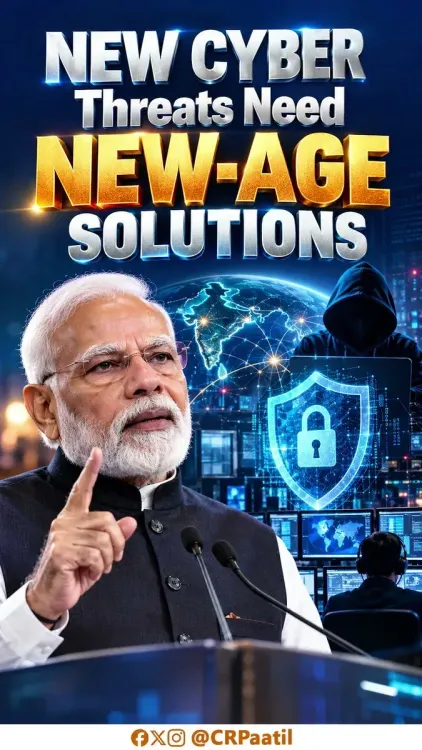
Posting on X in Hindi, Paatil framed the moment as nothing short of historic: 'Yashasvi Pradhanmantri Shri Narendra Modi ji ke doordarshi netritva mein Surakshit Digital Bharat ka sankalp' — 'A resolve for a Secure Digital India under the visionary leadership of Prime Minister Narendra Modi.' He described efforts to reinforce the country's banking system and financial sovereignty through a 'modern cyber security mechanism' as an 'aithihasik pahal' — a landmark initiative.
The post, accompanied by a video, did not name a specific scheme or policy document, but its framing aligns squarely with India's long-running effort to build protective layers around the digital financial ecosystem even as that ecosystem expands at breakneck speed.
Why cyber security for banking matters right now
India's digital payments architecture — built around UPI (Unified Payments Interface) — processes billions of transactions a month, making the financial stack one of the country's most consequential pieces of critical infrastructure. The faster payments flow, the higher the stakes for the security layer underneath. Successive Union Budgets have flagged cyber security for financial infrastructure as a priority, and parliamentary discussions have periodically examined allocations for protecting banking networks from sophisticated attacks.
The Digital India programme, launched in 2015, laid the groundwork for this expansion — connecting citizens to governance, banking, and commerce in ways that were unimaginable a decade ago. The flip side of that connectivity is exposure. Every new user onboarded to digital banking is also a potential target, which is why policymakers across the board have stressed that the pace of security upgrades must match, or outrun, the pace of digitisation itself.
Paatil's signal and what the political class is watching
As a senior BJP leader and former Gujarat state president, Paatil's amplification of the cyber-security-for-banking message carries political weight beyond a routine post. It signals the ruling party's intent to keep digital sovereignty — the idea that India's financial data and transaction infrastructure must be protected from external interference — at the forefront of its governance narrative.
Observers will now watch for concrete follow-through: budget line items dedicated to financial-sector cyber defence, regulatory notifications from banking authorities, or announcements tied to any scheme the accompanying video may have detailed. The resolve has been stated. The architecture is what India's banking users will be counting on.
Point of View
The ruling party is broadening that narrative beyond payments convenience into the territory of national security, a frame that commands broader consensus. The absence of a specific scheme or policy detail in the post suggests this is positioning ahead of a concrete announcement — possibly a budget allocation or a regulatory circular — rather than a response to one. Watch for whether the accompanying video details a new initiative that would give this political signal its policy teeth.
NationPress
2 Nov 2026
Frequently Asked Questions
What did C. R. Paatil post about digital banking cyber security?
On 2 November 2026, Paatil posted on X calling for a 'modern cyber security mechanism' to strengthen India's banking system and financial sovereignty, framing it as a landmark initiative under PM Modi's 'Surakshit Digital Bharat' vision.
What is 'Surakshit Digital Bharat'?
'Surakshit Digital Bharat' translates to 'Secure Digital India' — a phrase invoking PM Modi's Digital India programme with an emphasis on protecting India's digital infrastructure, particularly financial systems, from cyber threats.
Why is cyber security important for India's banking sector?
India's UPI-based digital payments platform processes billions of transactions monthly, making the financial stack critical infrastructure. As more citizens join digital banking, the attack surface grows, making robust cyber security essential to protect both users and financial sovereignty.
What is C. R. Paatil's role in the Indian government?
C. R. Paatil is the Union Minister of Jal Shakti and a senior BJP leader. He previously served as the BJP's Gujarat state president and is considered a close associate of Prime Minister Narendra Modi.
What is the Digital India programme and when was it launched?
Digital India was launched in 2015 to expand digital infrastructure, connectivity, and services across governance, finance, and commerce. It laid the foundation for India's UPI payments boom and has since been extended to encompass digital sovereignty and cyber security objectives.