Sitharaman: India's 2047 Vision Needs Both Generations
Synopsis
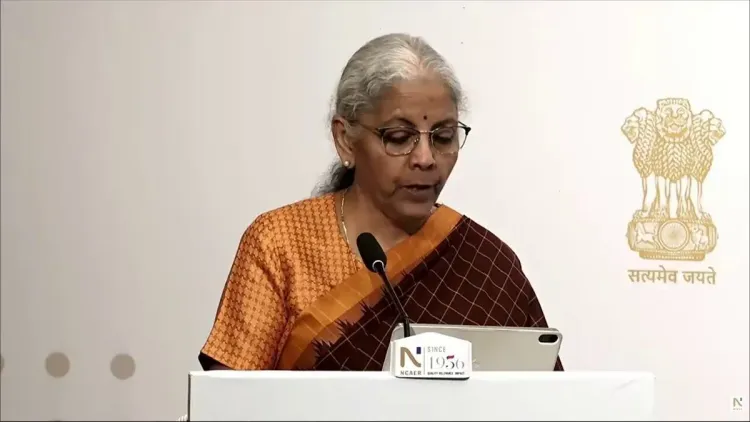
At the C.D. Deshmukh Lecture 2026 in New Delhi, Finance Minister Nirmala Sitharaman argued that India's path to 2047 depends on an active partnership between generations — the older carrying institutional memory, the younger providing the energy to execute the vision.
Key Takeaways
Finance Minister Nirmala Sitharaman spoke at the C.D.
Deshmukh Lecture 2026 in New Delhi on 6 August 2026 .
She called for a 'partnership between generations' as the foundation for India's future.
She warned that national memory 'does not sustain itself' and fades without active transfer to younger generations.
The 2047 centenary of independence was cited as the horizon by which the younger generation will lead and live in the India being built today.
The remarks build on the 'Amrit Kaal' framework that has anchored Union Budgets and NITI Aayog planning since the early 2020s.
The post is part of a thread, with further remarks from the lecture expected to be shared.
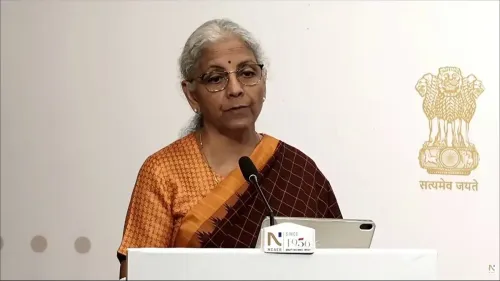
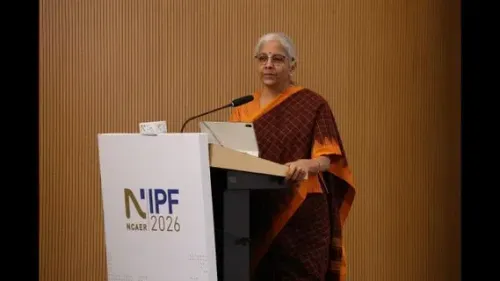
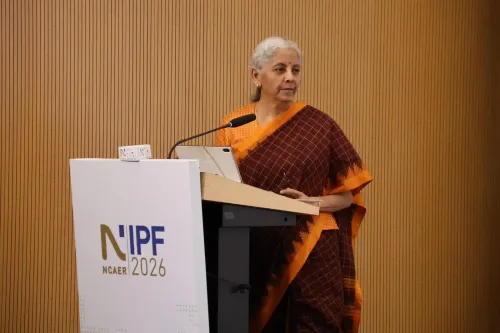
Memory fades when it is not transferred. That is the quiet warning Union Finance Minister Nirmala Sitharaman delivered at the C.D. Deshmukh Lecture 2026 in New Delhi on 6 August 2026 — a reminder that no nation builds its future on energy alone.
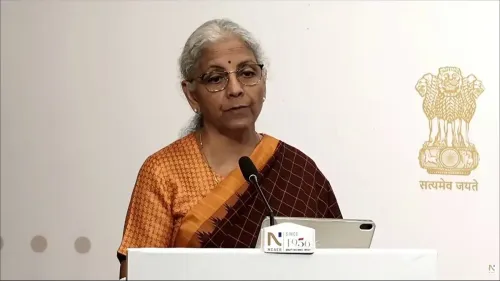
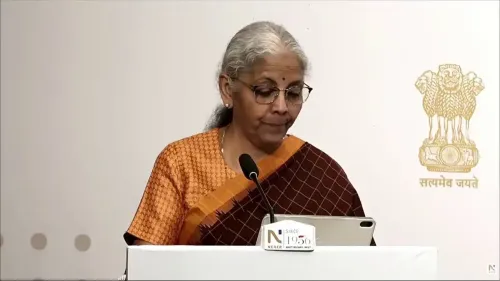
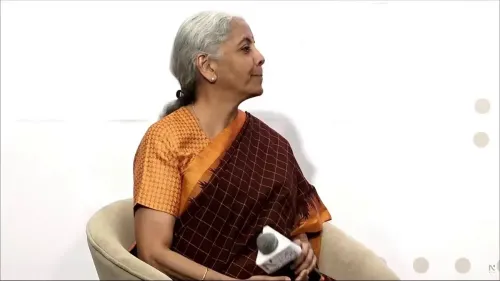
Speaking at the annual lecture series named after C.D. Deshmukh — India's first Indian-born Reserve Bank Governor and a former Finance Minister — Sitharaman framed the country's march to 2047 not as a technocratic exercise but as an intergenerational compact. 'India's future must be built upon a partnership between generations,' she said. The older generation, she argued, carries the wisdom and memory of the nation. The younger generation brings the energy, the innovation, and the leadership to execute the next phase. Crucially, she noted, they are also the people who will actually live in 2047 and beyond.
Why 2047 Is the Defining Deadline
The 2047 horizon — the centenary of India's independence — has become the single most-cited temporal anchor in Indian policy planning since the early 2020s. Successive Union Budget speeches and NITI Aayog documents have framed this period as 'Amrit Kaal': the window in which India must achieve developed-economy status. Sitharaman has anchored multiple Budget addresses around this deadline. What Thursday's lecture added was a human-layer argument: that hitting the 2047 target is not just about GDP trajectories or infrastructure pipelines, but about whether the institutional memory and lived experience of one generation successfully passes to the next.The Demographic Dividend's Hidden Condition
Indian official discourse has long celebrated the country's demographic dividend — a working-age population larger than most of the world. Sitharaman's framing at the Deshmukh lecture introduced a condition that often goes unstated: that dividend only pays out if the older generation's knowledge — of governance, of institutional culture, of hard-won lessons — is actively transmitted. Memory, she said plainly, 'does not sustain itself.' It fades when it is not transferred. The observation cuts across party lines and policy cycles. It is the kind of structural argument that named lecture series, insulated from the daily news cycle, are designed to surface. The C.D. Deshmukh lecture itself models the very principle Sitharaman was articulating — a living institution that carries the name and intellectual legacy of a mid-20th-century statesman into contemporary policy conversation. The Finance Minister's remarks were posted as part of a thread, signalling that fuller remarks from the lecture are expected to follow. Whether subsequent segments tie the generational framework to specific budget commitments or NITI Aayog deliverables will determine how far Thursday's speech travels beyond the auditorium.Point of View
She is broadening the 2047 frame beyond economics into governance culture and intergenerational responsibility. For a Finance Minister, that is an unusually philosophical register, and it suggests the BJP's long-horizon messaging is being stress-tested for depth ahead of the final decade of the Amrit Kaal window. Whether this framing eventually maps onto concrete policy — in education, archiving, or mentorship infrastructure — is the question the lecture series alone cannot answer.
NationPress
21 Sept 2026
Frequently Asked Questions
What did Nirmala Sitharaman say at the CD Deshmukh Lecture 2026?
She called for a partnership between India's older and younger generations, arguing that the older generation holds the nation's wisdom and memory while the younger generation brings the energy and innovation needed to achieve India's 2047 vision.
What is the CD Deshmukh Lecture series?
It is an annual lecture series named after C.D. Deshmukh , India's first Indian-born Reserve Bank Governor and a former Finance Minister, designed to bring senior policymakers and thinkers into dialogue on long-term national questions.
What is India's 2047 vision?
2047 marks the centenary of India's independence. Government policy documents and Budget speeches have framed it as the target year for India to achieve developed-economy status, a period officially called 'Amrit Kaal' .
Why did Sitharaman say memory 'fades when it is not transferred'?
She was making the case that India's demographic dividend — its large young workforce — only delivers its full potential if the institutional knowledge and lived experience of the older generation is actively passed on, not assumed to survive on its own.
Will Sitharaman make further remarks from the CD Deshmukh Lecture?
The post was shared as part of a thread marked '2/n', indicating that additional excerpts or remarks from the lecture are expected to be posted subsequently.