Sitharaman to Chennai students: youth must think together for common good
Synopsis
Union Finance Minister Nirmala Sitharaman met college students in Chennai and spoke in Tamil, urging youth to stay connected with people and leaders, think collectively, and ask what is good for everyone — framing young people as architects of continuity, not passive beneficiaries.
Key Takeaways
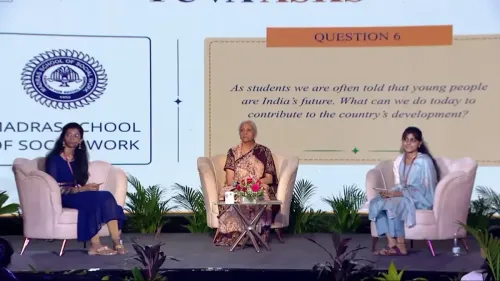
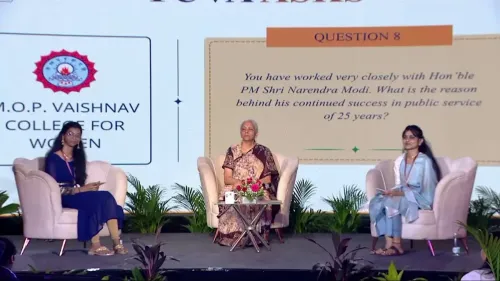
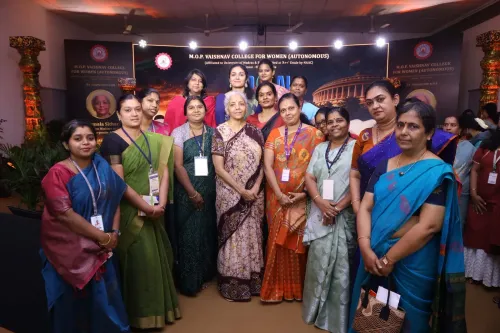
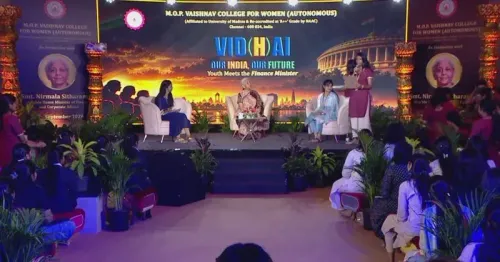
Nirmala Sitharaman addressed college students — specifically women — in Chennai, Tamil Nadu on 25 September 2026 .
She spoke in Tamil , saying 'இளைஞர்கள் தான் நம் எதிர்காலம்' — 'Youth are our future.' She told students that asking the right questions itself demonstrates a sense of responsibility.
She urged youth to stay connected with both the public and current leaders, and to keep doing good consistently.
She posed three questions for young people to carry: what benefits everyone, how to sustain it, and how to take it to the next level.
The interaction is part of a broader pattern of Central ministers conducting student outreach in southern states.
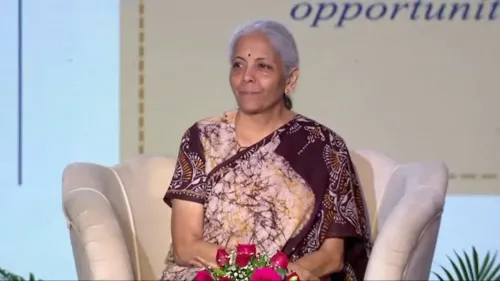
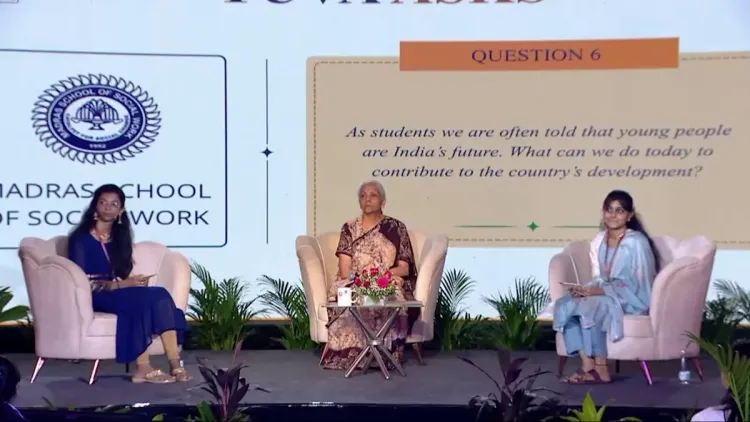
In a candid conversation with college students in Chennai, Tamil Nadu, Union Finance Minister Nirmala Sitharaman turned the spotlight squarely on youth responsibility — telling them that the very act of asking the right questions is proof they already carry the weight of the future on their shoulders.
Speaking in Tamil, the minister's words carried both warmth and challenge: 'இளைஞர்கள் தான் நம் எதிர்காலம்' — 'Youth are our future.' But she quickly pushed past the familiar refrain, urging students not to wait for leadership to come to them.
'The fact that you are asking this question shows the sense of responsibility within you,' she said. 'We must always stay in touch with our people and with today's leaders, and keep doing whatever good we can.' The message was clear: good intentions need a plan, and a plan needs collective thinking.
The three questions Sitharaman asked students to carry with them
At the heart of her address were three pointed questions she put back to the audience: What will be good for everyone? How do we sustain it? And how do we take it to the next level? It is a compact framework — not a policy prescription, but a civic habit of mind she wants young people to internalise before they step into professional and public life.
The framing is deliberate. Rather than positioning youth as future recipients of governance, Sitharaman positioned them as active architects — people who must think in concert, not in silos. 'For us to keep doing this well,' she said, 'young people must come together and think: what is good for everyone, how can we sustain it, how can we take it to the next stage?'
Why Chennai, why college women
The choice of audience matters. The interaction was specifically with college students — women — in Chennai, a city that has long produced a disproportionate share of India's administrative, financial, and entrepreneurial talent. For a Finance Minister who herself hails from Tamil Nadu, speaking in Tamil to an audience of young women carries an unmistakable signal about who she sees as the next generation of consequential voices.
Central ministers holding student interactions at state-level institutions is not unusual, but the register of this exchange — conversational, Tamil-medium, specifically engaging young women — gives it a texture beyond routine outreach. Sitharaman has consistently used such platforms in southern states to build direct dialogue outside the formal press-conference circuit.
The minister's closing challenge to Chennai's students is also a quiet reminder that the burden of continuity does not rest with any single leader — it rests with the generation asking the questions.
Point of View
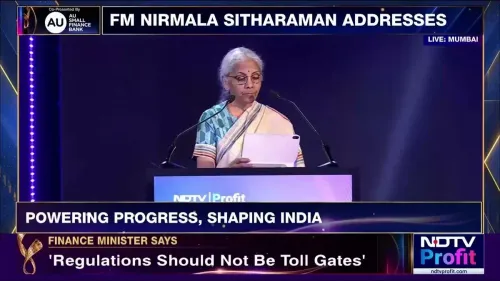
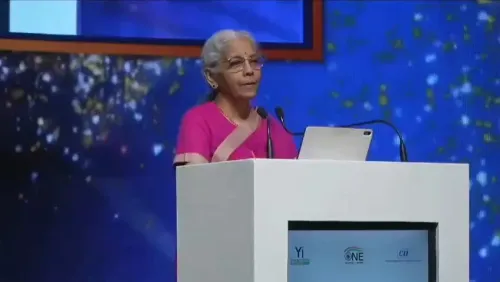
She inverts the usual top-down narrative. It fits a broader BJP strategy of embedding senior Union ministers into state-level conversations in Tamil Nadu, a state where the party continues to seek a stronger foothold. The emphasis on youth as architects rather than beneficiaries of policy also subtly aligns with the government's ongoing Viksit Bharat 2047 messaging arc.
NationPress
25 Sept 2026
Frequently Asked Questions
What did Nirmala Sitharaman say to students in Chennai?
She told college students that youth are the nation's future, praised them for asking responsible questions, and urged them to think collectively about what benefits everyone and how to sustain and advance it.
Why did Sitharaman speak in Tamil to the students?
Sitharaman, who has a Tamil Nadu background, chose to address the Chennai college students in Tamil to connect directly with the local audience in their own language.
What three questions did Sitharaman ask students to think about?
She asked them to reflect on: what is good for everyone, how that good can be sustained, and how it can be taken to the next level.
Where did the Nirmala Sitharaman student interaction take place?
The interaction took place in Chennai, Tamil Nadu, with college students — specifically women students.
Does Nirmala Sitharaman regularly meet students in southern states?
Yes, Central ministers including Sitharaman conduct student and youth interactions at state-level institutions as part of routine outreach; such engagements in southern states are a recurring feature of her public calendar.