CM Bhajan Lal Reaffirms Zero-Hunger Pledge on World Food Day
Synopsis
On World Food Day 2026, Rajasthan CM Bhajan Lal Sharma reaffirmed his government's commitment to delivering adequate, nutritious food to every eligible family and ensuring no resident of Rajasthan goes hungry.
Key Takeaways
Rajasthan CM Bhajan Lal Sharma issued a food security pledge on World Food Day, 16 October 2026 .
He described food security as the foundation for building a 'healthy and empowered society,' stressing adequate, nutritious, and quality food access.
The government committed to ensuring every eligible family receives food grains under existing food security schemes.
The statement aligns with the National Food Security Act (2013) , India's legal framework for subsidised grain entitlements via the PDS.
The zero-hunger resolve sets an implicit benchmark against which Rajasthan's distribution coverage and upcoming budget reviews will be judged.
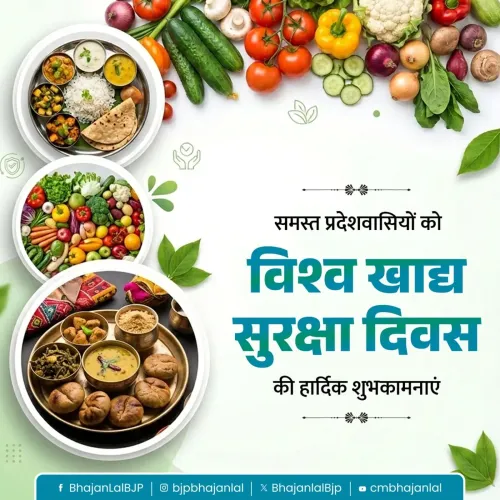
On World Food Day, 16 October 2026, Rajasthan Chief Minister Bhajan Lal Sharma declared his government's unwavering commitment to ensuring no eligible family in the state goes hungry — framing food security not merely as a welfare goal but as the foundation of a healthy and empowered society.
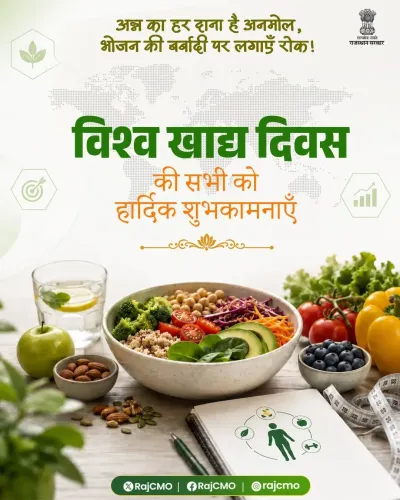
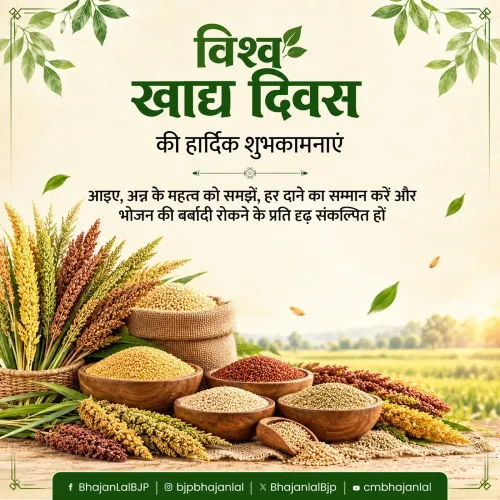
In a post on X, CM Sharma wrote in Hindi: 'खाद्य सुरक्षा हर जरूरतमंद तक पर्याप्त, पौष्टिक और गुणवत्तापूर्ण भोजन पहुंचाने के साथ एक स्वस्थ एवं सशक्त समाज के निर्माण का आधार है' — ('Food security, along with delivering adequate, nutritious, and quality food to every person in need, is the foundation for building a healthy and empowered society.'). He added that the state government is committed to making the resolve of 'no one remaining hungry in Rajasthan' a reality.
World Food Day and India's Food Security Architecture
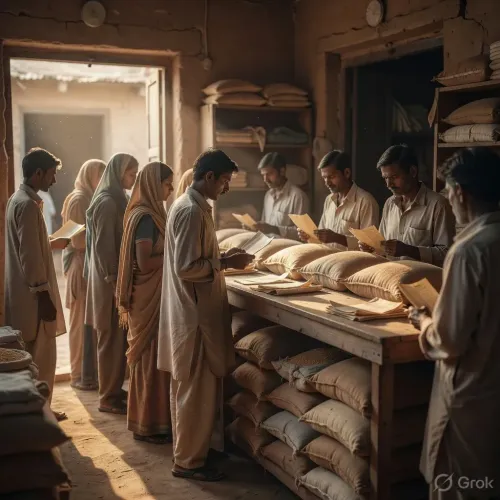
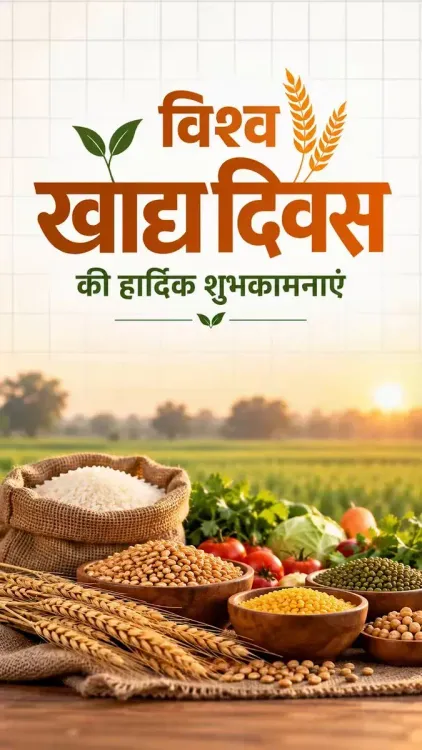
World Food Day is observed every year on 16 October — the founding date of the Food and Agriculture Organisation (FAO) of the United Nations — to focus global attention on hunger, nutrition, and equitable food access. In India, the occasion carries particular policy weight: the country's food security framework is anchored by the National Food Security Act (NFSA), enacted by Parliament in 2013, which gives legal entitlements to subsidised food grains for eligible households through the Public Distribution System (PDS).
States are the primary delivery arms of that architecture. Rajasthan, with one of India's largest rural populations and significant pockets of nutritional vulnerability, has historically been a critical testing ground for how effectively central legislation translates into last-mile grain delivery.
Sharma's Pledge: Every Eligible Family, No Exception
CM Sharma, who assumed office in December 2023, placed his government squarely behind universal coverage — promising availability of food grains for every eligible family and the delivery of benefits under food security schemes. The emphasis on 'patra parivaar' (eligible families) signals continued reliance on the NFSA's targeted household framework, rather than a universal open-access model.
The statement's stress on adequate, nutritious, and quality food goes beyond mere caloric sufficiency — a framing that aligns with the broader global conversation around nutrition security, not just hunger elimination. That distinction matters: India has made progress on reducing extreme hunger, but malnutrition and micronutrient deficiency remain persistent challenges across several districts in Rajasthan.
World Food Day statements from state leaders are a regular feature of India's political calendar — but what distinguishes this one is the specific three-part formulation: availability, scheme-benefit delivery, and a zero-hunger resolve. Each is a discrete operational target, and together they sketch the outline of a governance accountability standard that the state's upcoming budget reviews and scheme audits will be measured against.
Point of View
Delivery, zero hunger) is more specific than a routine ceremonial post, and carries implicit accountability. For a state where PDS leakages and beneficiary exclusion have historically been audit concerns, the public restatement of these targets creates a standard that civil society and opposition alike can hold the government to. It also reflects the BJP's broader 2024-onward electoral strategy of tightly wrapping governance delivery narratives around central welfare legislation — positioning the party as the executor, not merely the architect, of India's food security promise.
NationPress
16 Oct 2026
Frequently Asked Questions
Why is World Food Day observed on 16 October?
World Food Day is observed on 16 October every year to mark the founding date of the Food and Agriculture Organisation (FAO) of the United Nations in 1945. It aims to raise awareness of hunger, nutrition, and global food security challenges.
What did Rajasthan CM Bhajan Lal Sharma say on World Food Day 2026?
CM Bhajan Lal Sharma reaffirmed his government's commitment to ensuring every eligible family in Rajasthan receives adequate, nutritious, and quality food grains, and vowed that no resident of the state would go hungry.
What is the National Food Security Act and how does it apply to Rajasthan?
The National Food Security Act (NFSA) was enacted by Parliament in 2013 to provide legal entitlements to subsidised food grains for eligible households through the Public Distribution System. Rajasthan , like all Indian states, is responsible for implementing the Act at the ground level.
When did Bhajan Lal Sharma become Chief Minister of Rajasthan?
Bhajan Lal Sharma assumed office as Chief Minister of Rajasthan in December 2023 after the BJP's victory in the state assembly elections.
What is the Public Distribution System in India?
The Public Distribution System (PDS) is India's government-run food grain supply network that delivers subsidised rice, wheat, and other commodities to eligible households identified under the National Food Security Act. State governments manage its last-mile implementation.