HP CM Sukhu raises income limit for widow job appointments
Synopsis
Chief Minister Thakur Sukhvinder Singh Sukhu has raised Himachal Pradesh's annual income ceiling for appointment eligibility of widowed, destitute and single women from Rs 50,000 to Rs 75,000, expanding employment access for a vulnerable cohort previously shut out by an inflation-eroded threshold.
Key Takeaways
The annual income ceiling for appointment eligibility of widows, destitute and single women in Himachal Pradesh has been raised from Rs 50,000 to Rs 75,000 .
The revision represents a 50 per cent increase in the income threshold, directly expanding the pool of eligible women.
Chief Minister Thakur Sukhvinder Singh Sukhu framed the move as providing 'economic security' to needy women.
Women earning between Rs 50,000 and Rs 75,000 annually — previously ineligible — now qualify for state appointment schemes.
The change follows a broader pattern of Indian states recalibrating income ceilings in women-specific schemes to account for inflation.
Official implementation notifications detailing affected recruitment cycles are awaited.
A quiet but consequential policy shift is now on the books in Himachal Pradesh: the annual income ceiling that determines whether a widow, destitute, or single woman qualifies for appointment benefits has been raised from Rs 50,000 to Rs 75,000 — a 50 per cent jump that opens the door to employment opportunities for thousands of women who previously fell just outside eligibility.
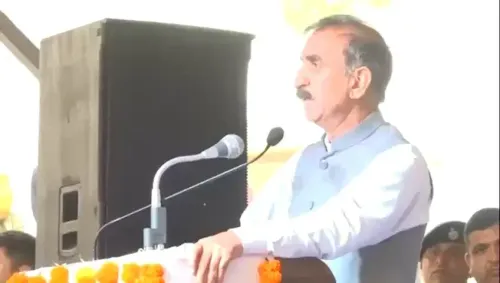
The Chief Minister's Office of Himachal Pradesh announced the decision on Friday, October 16, 2026, quoting Chief Minister Thakur Sukhvinder Singh Sukhu directly: 'विधवा, निराश्रित एवं एकल बहनों के लिए नियुक्ति हेतु वार्षिक आय सीमा 50,000 रुपये से बढ़ाकर 75,000 रुपये कर पात्र बहनों के लिए रोजगार के अवसरों का दायरा बढ़ाया है।' ('The scope of employment opportunities for eligible sisters has been expanded by raising the annual income limit for appointment of widowed, destitute and single sisters from Rs 50,000 to Rs 75,000.') The CM added that the decision 'will provide economic security to needy sisters.'
Why the old Rs 50,000 ceiling had become a barrier
The original income threshold was set at a time when Rs 50,000 per annum — roughly Rs 4,167 a month — served as a reasonable proxy for the poorest households. But inflation in daily essentials, housing costs, and seasonal labour wages across Himachal Pradesh's predominantly rural districts has steadily eroded that line's relevance. A widow earning Rs 55,000 from a small piece of land or intermittent casual work was technically 'ineligible' under the old norm, even as her financial vulnerability remained acute. The revision to Rs 75,000 per annum corrects that distortion.
This is a well-worn pattern across Indian states. Periodically, governments recalibrate income ceilings in women-specific welfare and recruitment schemes to keep pace with the real economy. Himachal Pradesh has followed this incremental revision approach for vulnerable groups before, and this announcement continues that arc.
What changes in practice for eligible women
Widows, destitute women, and single women whose household income now falls between Rs 50,000 and Rs 75,000 annually are the direct beneficiaries — the cohort that was previously locked out purely by the arithmetic of an outdated ceiling. For these women, the revision is not symbolic. It means they can now apply for state appointments and employment schemes previously beyond their reach, translating the government's language of 'aarthik suraksha' (economic security) into an actual eligibility card.
The broader stakeholder group — existing beneficiaries below the Rs 50,000 mark — retains all prior entitlements. No one falls out; only the tent gets wider.
Implementation details, including the official notification and the specific recruitment cycles where the revised ceiling will apply, are expected to follow. The real test will be in the uptake numbers: how many additional applications from newly eligible women materialise in the next round of appointments.
Point of View
Recalibrating income ceilings for widows and single women is low-controversy and high-visibility among women voters, a demographic the Congress government in Himachal Pradesh has consistently courted since December 2022. The broader policy question is whether a one-time threshold revision will be sufficient, or whether the state needs an indexed, auto-adjusting ceiling so the same erosion problem does not recur a few years down the line. The announcement's framing — direct quote from the CM, posted by the official CMO account — also suggests this is being positioned as a front-facing welfare credential ahead of any upcoming political cycle.
NationPress
16 Oct 2026
Frequently Asked Questions
What is the new income limit for widows to get appointments in Himachal Pradesh?
The annual income ceiling has been raised to Rs 75,000 . Previously, widowed, destitute and single women in Himachal Pradesh had to earn less than Rs 50,000 per year to qualify for state appointment benefits.
Who announced the income limit revision for widow appointments in HP?
Chief Minister Thakur Sukhvinder Singh Sukhu announced the decision, with the official statement issued by the Chief Minister's Office of Himachal Pradesh on October 16, 2026.
Which women benefit from the revised income ceiling in Himachal Pradesh?
Widows, destitute women, and single women whose annual household income falls up to Rs 75,000 are now eligible. The change most directly benefits those earning between Rs 50,000 and Rs 75,000, who were previously excluded.
Why was the income limit for widow appointment eligibility increased in HP?
The original Rs 50,000 ceiling had become outdated due to inflation and rising living costs. Raising the threshold to Rs 75,000 ensures that more genuinely vulnerable women are not excluded purely on a technicality.
When will the new income limit for widow appointments take effect in Himachal Pradesh?
The decision was announced on October 16, 2026 . Official implementation notifications specifying the recruitment cycles where the revised ceiling applies are expected to follow from the Himachal Pradesh government.