CM Sawant Flags Opposition 'Regime-Change' Agenda
Synopsis
Goa Chief Minister Pramod Sawant on 16 October 2026 publicly accused the Opposition of revealing a 'regime-change agenda' through Prashant Bhushan's remarks, insisting that India's constitutional order permits only electoral — never extra-constitutional — transfers of power.
Key Takeaways
Goa CM Pramod Sawant posted on 16 October 2026 accusing the Opposition of exposing a 'regime-change agenda' through a statement by Prashant Bhushan .
Sawant draws a constitutional line between electoral politics and what he terms 'extra-constitutional agitation.' He invokes PM Narendra Modi's long-held doctrine that governments are changed only through the ballot, not by force or bypassing the Constitution.
Prashant Bhushan is a Supreme Court lawyer and activist with a history of high-profile public interest litigation against multiple governments.
The BJP has consistently used the 'electoral mandate' frame since 2014 to counter opposition-led street pressure.
Opposition parties are expected to respond, sharpening what is already a pointed political exchange.
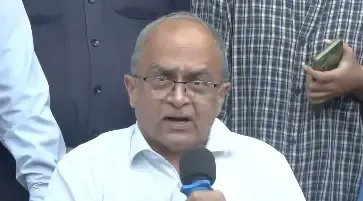
A single phrase — 'regime change' — has reignited one of Indian democracy's oldest fault lines: whether political power is contested at the ballot box or in the streets. Goa Chief Minister Pramod Sawant fired a sharp salvo on Friday, 16 October 2026, charging that the Opposition has made its agenda explicit through remarks by Supreme Court lawyer and activist Prashant Bhushan on 'regime change', and framing it as a test of constitutional fidelity.
The Bhushan Remarks That Triggered the Exchange
Sawant's post draws a deliberate line between two kinds of political change: the kind that flows from elections, and the kind that tries to bypass them. His central charge is that Bhushan's statement crossed that line — moving from advocacy for a change of government into territory he describes as 'extra-constitutional agitation.' The research notes that the specific content and timing of Bhushan's remarks remain unverified, but Sawant's characterisation is unambiguous: 'The Opposition Has Made Its Regime-Change Agenda Clear.'
Bhushan is no stranger to political controversy. Long a fixture of public interest litigation in the Supreme Court, he has historically pushed against both BJP and Congress governments, making his alignment — or perceived alignment — with any 'regime change' narrative politically combustible.
Modi's Electoral Mandate Doctrine as the Counter-Frame
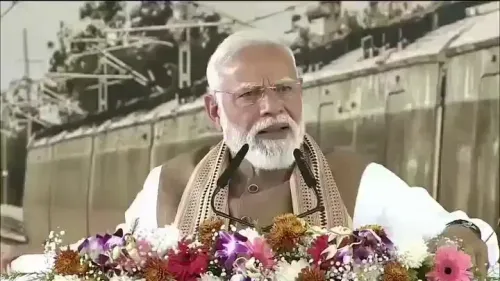
Sawant reaches for the Prime Minister's long-held philosophical anchor. Citing Prime Minister Narendra Modi, he writes that 'the path to power in a democracy is through winning people's hearts, earning their trust and securing their mandate through elections.' This is not a new formulation — Modi has consistently since 2014 argued that electoral legitimacy is the sole legitimate basis for governance in India.
By invoking Modi here, Sawant is doing something precise: he is elevating what could be a Goa CM's local political comment into a national constitutional argument. The BJP's institutional line — governments are changed by people through the ballot, not by force or by bypassing the Constitution — gets restated, but now as a direct response to a named opposition-aligned figure.
A Recurring Fault Line in Indian Politics
This exchange fits a pattern older than any of its participants. Ruling parties have, through multiple governments and decades, drawn exactly this distinction when faced with agitation-led pressure — from the anti-corruption movement of 2011-12 to street protests during demonetisation and the farm laws repeal. The Opposition, in turn, has consistently argued that peaceful mass protest is itself a constitutional right and a check on executive power.
What makes Sawant's framing notable is its directness. He does not accuse the Opposition of protest — he accuses it of pursuing a 'regime-change agenda' through extra-constitutional means. That is a specific charge that opposition parties are now expected to rebut, setting up a sharply worded political week ahead.
In a democracy of 1.4 billion people, the question of who gets to define what counts as 'constitutional' pressure is never truly settled — it is relitigated with every election cycle, every major protest, every Supreme Court petition. Sawant has just thrown that question back into the arena.
Point of View
He shifts a lawyer's statement into a BJP national narrative about the sanctity of electoral democracy. It fits a well-worn BJP playbook of framing opposition pressure as illegitimate when it occurs outside election season. The real political test is whether the Opposition counters with a defence of protest rights or distances itself from Bhushan's framing — either response shapes the terms of the next electoral argument. This exchange also signals that the BJP intends to keep the 'constitutional versus extra-constitutional' binary at the centre of its political messaging heading into any future electoral cycle.
NationPress
16 Oct 2026
Frequently Asked Questions
What did Prashant Bhushan say about regime change in India?
Goa CM Pramod Sawant's post references a statement by Supreme Court lawyer Prashant Bhushan on 'regime change.' The specific content of Bhushan's remarks has not been independently confirmed, but Sawant characterises it as evidence of an extra-constitutional opposition agenda.
What is CM Pramod Sawant's charge against the Opposition?
Sawant accuses the Opposition of pursuing a 'regime-change agenda' through extra-constitutional agitation rather than through the electoral process, calling it a violation of democratic norms.
What is the BJP's position on how governments should change in India?
The BJP, including PM Modi since 2014, holds that governments are legitimately changed only through elections — by winning people's trust and securing their mandate at the ballot box, not through street pressure or bypassing the Constitution.
Who is Prashant Bhushan and why is he politically significant?
Prashant Bhushan is a prominent Supreme Court lawyer known for public interest litigations. He has historically challenged both BJP and Congress governments, making any alignment of his with opposition political movements newsworthy.
Is extra-constitutional agitation illegal in India?
Peaceful protest is a constitutional right in India. The political debate centres on whether specific calls for 'regime change' cross from legitimate democratic pressure into actions that seek to bypass the electoral process — a line that ruling and opposition parties define very differently.