Prashant Bhushan: Protests against CEC Gyanesh Kumar now a fight for regime change
Synopsis
Senior advocate Prashant Bhushan embraced the BJP's 'regime change' label — and turned it into a battle cry. Defending the protests against CEC Gyanesh Kumar as a constitutional democratic right, he challenged the BJP to explain its own UPA-era protest history. With the CJP calling a Tiranga Assembly at Connaught Place on Friday, the confrontation over India's election commission is now openly framed as a struggle over who governs.
Key Takeaways
Prashant Bhushan on 15 October declared the protests against CEC Gyanesh Kumar a 'fight for regime change' and called it a democratic right .
BJP National Spokesperson Pradeep Bhandari accused Rahul Gandhi and the opposition of trying to 'destroy Indian democracy' and engineer a 'forced regime change.' CJP Chief Abhijeet Dipke alleged that protesters and opposition leaders were detained solely to 'protect Gyanesh Kumar .' The CJP has called a 'Tiranga Assembly' at Central Park, Connaught Place at 5 pm on Friday , protesting the arrest of co-conveners Saurav Das and Ashutosh Ranka .
BJP leader Gaurav Bhatia accused the CJP of trying to 'spread an atmosphere of anarchy.'
Senior advocate Prashant Bhushan on Thursday, 15 October declared that the ongoing protests against Chief Election Commissioner (CEC) Gyanesh Kumar have evolved into a broader 'fight for regime change' — and defended that goal as a democratic right of every citizen. His remarks came directly in response to the Bharatiya Janata Party (BJP)'s charge that the opposition was plotting a 'forced regime change' in India.
What Bhushan Said
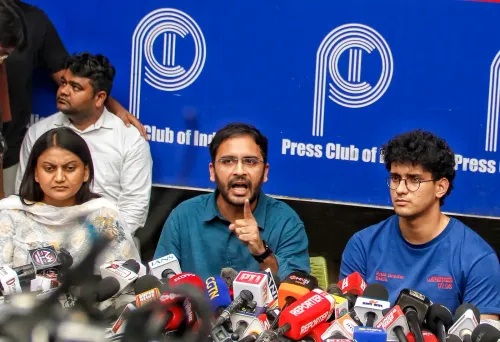
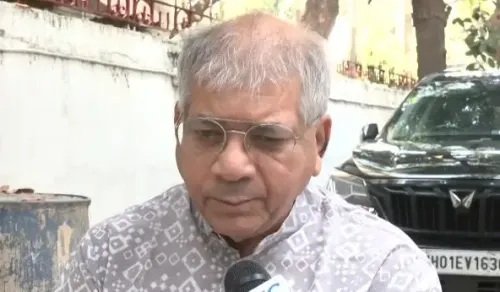
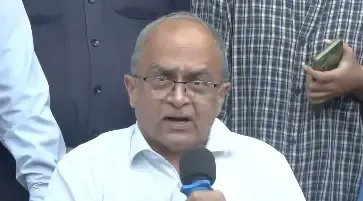
Addressing a press conference in New Delhi alongside Citizens for Justice and Peace (CJP) Chief Abhijeet Dipke, Bhushan offered no apology for the 'regime change' framing. 'There will definitely be a regime change. We all want a regime change. Is there anything wrong with that?' he said.
He also pointed to the BJP's own history of protest politics. 'The BJP also had repeatedly protested for regime change during the UPA government... now they are claiming that we are conspiring for regime change,' he added, accusing the ruling party of double standards.
Bhushan further anchored his argument in constitutional law, citing the Supreme Court's observations on sedition. 'That is why the Supreme Court had noted that the colonial-era sedition law is unconstitutional, till someone provokes people to incite violence or public disorder... only creating disaffection against the government is not a crime according to our Constitution,' he said.
The BJP's Accusations
Earlier on Thursday, BJP National Spokesperson Pradeep Bhandari directly targeted Congress and Leader of Opposition in Lok Sabha Rahul Gandhi, accusing them of seeking to 'destroy Indian democracy.' The trigger for the BJP's statement was remarks by All India Students' Association (AISA) President Neha Bora, who praised Bangladesh's Gen-Z protest movement as an 'inspiration' for young Indians.
'Rahul Gandhi and the entire ecosystem do not want to engage in political resistance; they want to bring about regime change,' Bhandari said. BJP leader Gaurav Bhatia followed up by criticising the CJP's planned 'Tiranga Assembly', accusing its organisers of attempting to 'spread an atmosphere of anarchy.'
Crackdown on Protests and the CJP's Response
Dipke alleged that the government had detained members of student organisations, opposition leaders, and protesters solely to 'protect only one man, Gyanesh Kumar.' He announced that the CJP has called for a 'Tiranga Assembly' at Central Park, Connaught Place, New Delhi, at 5 pm on Friday. The gathering is intended as a protest against the arrest of the party's co-conveners Saurav Das and Ashutosh Ranka.
Notably, this is the latest flashpoint in a series of confrontations between protest groups and authorities over the CEC controversy, with tensions escalating steadily through the week.
Political Context
The dispute over CEC Gyanesh Kumar has exposed a sharp fault line between the ruling BJP and a fragmented but vocal opposition bloc. Critics argue that the crackdown on protests sets a troubling precedent for civil dissent ahead of election cycles. The BJP, for its part, argues that the opposition is exploiting electoral process concerns to delegitimise a sitting government. As both sides harden their positions, the Tiranga Assembly on Friday is being closely watched as a test of public mobilisation capacity.
Point of View
Which has been building since the CEC appointment controversy. Framing dissent as sedition-adjacent, as BJP leaders risk implying, is precisely the overreach the Supreme Court warned against in its sedition ruling. If Friday's Tiranga Assembly draws large crowds, the government will face an uncomfortable choice between continued crackdowns and concession — either of which carries political cost.
NationPress
15 Oct 2026
Frequently Asked Questions
Why is Prashant Bhushan calling the protests a 'fight for regime change'?
Bhushan used the BJP's own 'regime change' framing and defended it as a democratic right, arguing that peaceful protest against a government — including its election commission appointments — is constitutionally protected. He cited the Supreme Court's observations that merely creating disaffection against the government is not a crime.
What are the protests against CEC Gyanesh Kumar about?
The protests centre on opposition to Chief Election Commissioner Gyanesh Kumar, with critics alleging that his appointment and conduct compromise the independence of the Election Commission. Protest groups, student organisations, and opposition leaders have been demonstrating, and several have reportedly been detained.
What is the CJP's Tiranga Assembly and when is it?
The Citizens for Justice and Peace (CJP) has called a 'Tiranga Assembly' at Central Park, Connaught Place, New Delhi, at 5 pm on Friday, 16 October 2026. The event is a protest against the arrest of CJP co-conveners Saurav Das and Ashutosh Ranka.
What did the BJP say about the regime change remarks?
BJP National Spokesperson Pradeep Bhandari accused Rahul Gandhi and the Congress-aligned 'ecosystem' of seeking to destroy Indian democracy rather than pursue legitimate political resistance. BJP leader Gaurav Bhatia separately accused the CJP of trying to spread anarchy.
How does Bhushan justify regime change as a democratic right?
Bhushan argued that the BJP itself repeatedly called for regime change during the UPA government years, making its current objections inconsistent. He also cited the Supreme Court's ruling that the colonial-era sedition law is unconstitutional unless speech provokes violence or public disorder.