Fadnavis targets Congress, CJP after Prashant Bhushan's 'regime change' remarks
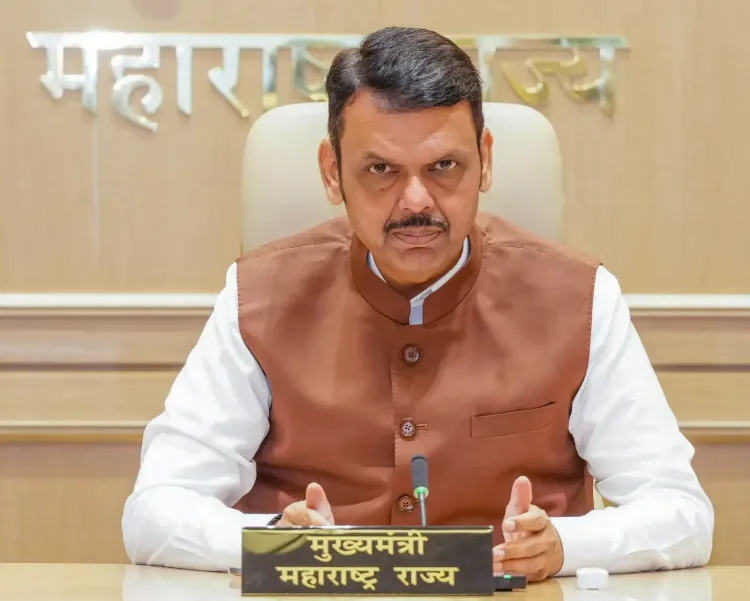
Synopsis
A single phrase at a press conference has handed Maharashtra's ruling alliance a political grenade. Senior advocate Prashant Bhushan's apparent reference to 'regime change' alongside CJP figures has triggered a coordinated BJP counteroffensive — with CM Fadnavis and Defence Minister Rajnath Singh both framing civil protests as a cover for power capture, even as the CJP rushed out a midnight clarification.
Key Takeaways
CM Devendra Fadnavis attacked the opposition and CJP on 16 October after senior advocate Prashant Bhushan made remarks referencing 'regime change' at a press conference.
Fadnavis posted a video clip of Bhushan's remarks on X , calling it proof that 'everything is exposed'.
Defence Minister Rajnath Singh accused the opposition of attempting a Bangladesh -style upheaval in India.
CJP representative Abhijeet Dipke issued a late-night clarification, saying protests targeted only the resignation of Chief Election Commissioner Gyanesh Kumar , not regime change.
Fadnavis also defended CJI Surya Kant's refusal to meet protesters, arguing grievances must be addressed through courts, not street pressure.
The BJP maintains the remarks have exposed the opposition's 'core agenda', providing fresh political ammunition ahead of upcoming state contests.
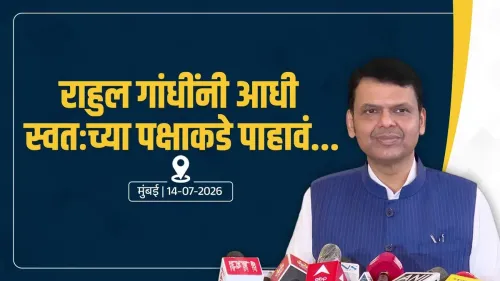
Maharashtra Chief Minister Devendra Fadnavis on Friday, 16 October 2026, launched a sharp political offensive against the opposition and the Citizens for Justice and Peace (CJP), declaring that 'the hidden truth is finally out' following remarks by senior advocate Prashant Bhushan that appeared to reference a 'regime change' objective at a recent press conference.
What Bhushan Said and Why It Sparked a Row
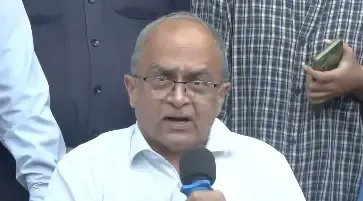
The controversy erupted after Prashant Bhushan, speaking at a press conference alongside CJP representatives and activists including Neha Bora — a figure previously associated with NEET-related protests — openly discussed objectives linked to a 'regime change'. The remarks were swiftly seized upon by ruling coalition leaders as evidence of an organised political agenda concealed within civil society activism.
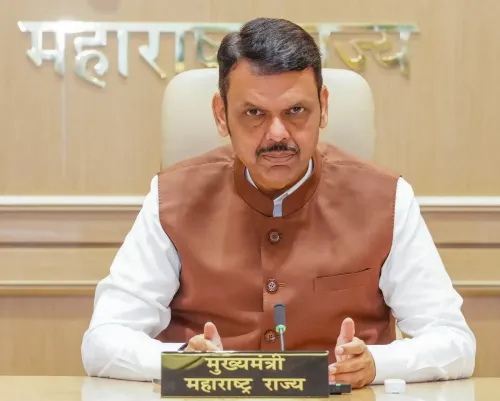
Taking to social media platform X, CM Fadnavis shared a video clip of Bhushan's remarks, captioning it: 'It's done, bro, everything is exposed!! After all, it was all about 'Regime Change'.. the hidden thoughts have finally slipped onto the lips.'
Fadnavis Alleges a Coordinated Conspiracy
CM Fadnavis accused the opposition of deploying protests as a smokescreen for what he called a calculated bid to seize power. He alleged that various demonstrations — whether involving students or farmers — alongside campaigns spreading caste and linguistic discord, are part of a unified political game aimed at destabilising India's constitutional institutions.
Speaking during a separate media interaction, Fadnavis alleged that a 'well-crafted conspiracy' is underway to systematically discredit independent pillars of democracy, specifically naming the Supreme Court, the Election Commission of India, and the Reserve Bank of India (RBI). He argued that the ultimate goal of these groups is to persuade citizens that constitutional frameworks cannot deliver justice, thereby creating conditions for 'ultra-Leftist' anarchy.
Rajnath Singh Joins the Attack
Defence Minister Rajnath Singh also weighed in, accusing the opposition of exploiting the youth for political mileage and attempting to engineer what he described as a Bangladesh-style upheaval in India by undermining democratic institutions. Singh's intervention elevated the controversy beyond Maharashtra's political arena to a national-level debate about the limits of civil dissent.
CJP Scrambles to Clarify
Facing intense backlash, CJP representative Abhijeet Dipke addressed a late-night press conference to walk back the remarks. Dipke asserted that their protests were not aimed at regime change but were instead confined to demanding the resignation of Chief Election Commissioner Gyanesh Kumar. The clarification, however, did little to stem the ruling coalition's offensive, with Bharatiya Janata Party (BJP) leaders maintaining that the original remarks had exposed the opposition's core agenda.
The CJI Meeting Controversy
CM Fadnavis also defended Chief Justice of India (CJI) Surya Kant's decision to decline a meeting with protesters, asking rhetorically, 'Which Constitution states that the Chief Justice of India should meet protesters and marchers?' He praised the judiciary's position that grievances must be addressed inside courtrooms rather than through street pressure. Critics argue the remarks reflect a broader ruling coalition effort to delegitimise organised civil protest ahead of upcoming political contests in the state.
This comes amid a pattern of intensifying friction between the ruling alliance and opposition-aligned civil society groups, with both sides accusing the other of operating beyond constitutional boundaries. How the controversy shapes public perception of ongoing protest movements in Maharashtra will likely be a key flashpoint in the weeks ahead.
Point of View
Rather than defusing the controversy, reinforced the perception that the original remarks were a slip of intent rather than mere imprecision. What mainstream coverage misses is the pattern: every time civil society campaigns gain traction in Maharashtra, the ruling coalition finds a statement or incident to reframe the movement as anti-constitutional. The Bangladesh analogy deployed by Rajnath Singh is a deliberate escalation, designed to associate domestic dissent with foreign-influenced destabilisation in the public imagination. Whether this framing lands will depend on how credibly the opposition and CJP can reclaim the constitutional legitimacy narrative.
NationPress
16 Oct 2026
Frequently Asked Questions
What did Prashant Bhushan say that triggered the controversy?
Senior advocate Prashant Bhushan, speaking at a press conference alongside CJP representatives and activist Neha Bora, made remarks that appeared to reference a 'regime change' objective. The statement was immediately seized upon by the BJP and Maharashtra CM Devendra Fadnavis as evidence of a hidden political agenda behind ongoing civil protests.
How did CM Devendra Fadnavis respond to Bhushan's remarks?
CM Fadnavis took to social media platform X to share a video clip of Bhushan's remarks, captioning it with 'It's done, bro, everything is exposed!!' He separately accused the opposition of using protests as a smokescreen for a calculated bid to capture power and undermine constitutional institutions including the Supreme Court, Election Commission, and RBI.
What clarification did the CJP offer?
CJP representative Abhijeet Dipke held a late-night press conference to walk back the remarks, asserting that the organisation's protests were not aimed at regime change but were limited to demanding the resignation of Chief Election Commissioner Gyanesh Kumar. The BJP rejected this clarification, maintaining the original remarks had revealed the true agenda.
Why did Rajnath Singh reference Bangladesh in his remarks?
Defence Minister Rajnath Singh accused the opposition of attempting to engineer a Bangladesh-style upheaval in India by undermining democratic and constitutional institutions. The reference was widely seen as a deliberate framing of domestic civil dissent as a foreign-influenced destabilisation effort, significantly escalating the political stakes of the controversy.
What is the CJI meeting controversy about?
CM Fadnavis also defended Chief Justice of India Surya Kant's refusal to meet protest marchers, arguing that no part of the Constitution obliges the CJI to meet demonstrators and that legal grievances must be addressed through courts. Critics contend the remarks are part of a broader effort by the ruling coalition to delegitimise organised civil protest in Maharashtra.