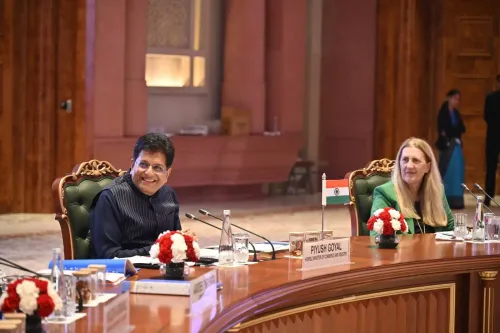
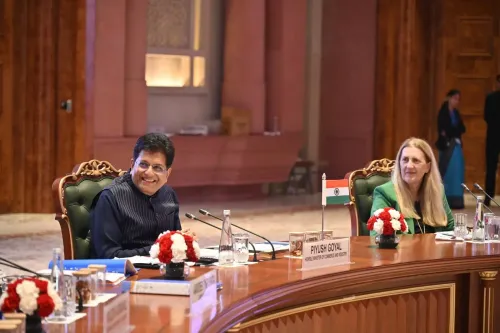
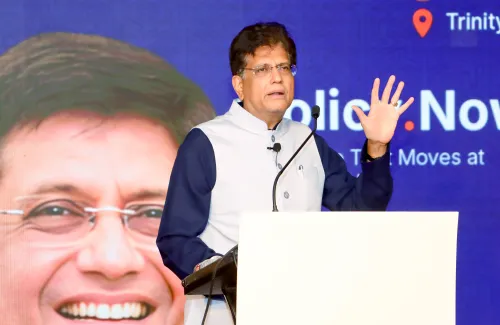
India-EFTA TEPA completes first year: $100 bn investment, 2 million jobs by 2040
Synopsis
One year in, India's landmark TEPA with Switzerland, Norway, Iceland and Liechtenstein carries a $100 billion investment pledge and a 2-million-jobs promise by 2040 — but ASSOCHAM's first-year review makes clear the hard work is just beginning. Green hydrogen, advanced manufacturing, and MSME integration are the make-or-break pieces.
Key Takeaways
The India–EFTA TEPA completed its first year on 16 October 2026 , with EFTA comprising Switzerland , Norway , Iceland , and Liechtenstein .
EFTA has committed to facilitating $100 billion in investment over 15 years , including $50 billion in the first decade.
The agreement is projected to create 1–2 million direct and indirect jobs in India by 2040 , according to ASSOCHAM .
EFTA has offered tariff concessions on 92.2% of its tariff lines, covering 99.6% of India's exports to the bloc.
Bilateral trade stands at $26.7 billion ; EFTA's global imports of $628 billion represent a major opportunity for Indian exporters.
Green hydrogen , advanced manufacturing, AI, and robotics identified as key sectors for the next phase of collaboration.
The India–EFTA Trade and Economic Partnership Agreement (TEPA) is on track to generate between 1 million and 2 million new direct and indirect jobs in India by 2040, while attracting high-quality foreign investment and strengthening industrial competitiveness, according to the Associated Chambers of Commerce and Industry of India (ASSOCHAM). The assessment, released on Friday, 16 October 2026, coincides with TEPA completing its first year in force.
The Investment Commitment at Stake
At the heart of TEPA is a pledge by the European Free Trade Association (EFTA) — comprising Switzerland, Norway, Iceland, and Liechtenstein — to facilitate $100 billion of investment in India over 15 years, including $50 billion within the first decade. ASSOCHAM stressed, however, that the commitment must be converted into tangible outcomes. 'The commitment must be converted into real projects, manufacturing facilities, clean-energy ventures and employment opportunities,' the industry chamber's statement noted, flagging advanced manufacturing and green hydrogen as the sectors expected to drive the next phase.
Market Access and Trade Figures
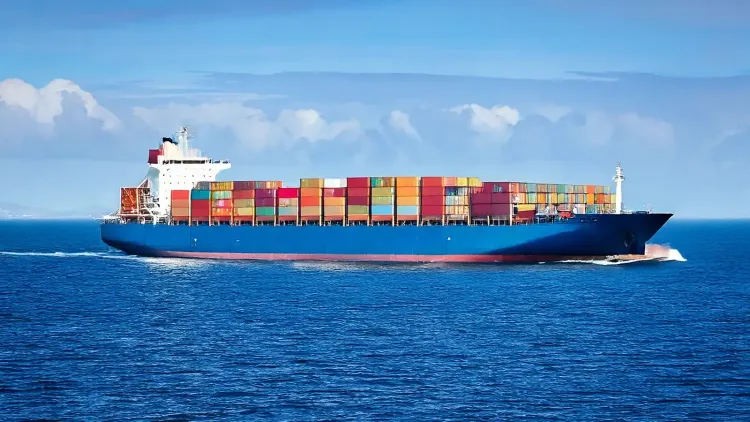
On the trade access front, EFTA has offered tariff concessions on 92.2 per cent of its tariff lines, covering 99.6 per cent of India's exports to the bloc. Bilateral trade between India and the EFTA nations has already reached $26.7 billion, establishing a strong commercial base. EFTA's total annual imports of roughly $628 billion from the world represent a significant untapped opportunity for Indian exporters. Sectors forecast to benefit include pharmaceuticals, textiles, engineering goods, chemicals, jewellery, processed foods, and marine products. India's own commitments under the agreement protect sensitive sectors such as dairy, soya, and coal.
What Industry Leaders Are Saying
'The next step is to translate TEPA's ambition of $100 billion in investment and one million direct jobs into viable projects and employment opportunities,' said Nirmal K. Minda, President, ASSOCHAM. He added that advanced manufacturing and green hydrogen hold great potential and that MSMEs must be an integral part of the emerging partnerships. Saurabh Sanyal, Secretary General, ASSOCHAM, pointed to India's already significant 8.9 per cent share of EFTA's organic chemicals imports as a proof of concept. 'This can be replicated in pharmaceuticals, machinery, electrical equipment, automobiles, medical devices and textiles,' Sanyal said.
Green Hydrogen and Technology Frontiers
India's target to produce at least 5 million tonnes of green hydrogen annually by 2030 aligns closely with the complementary strengths of EFTA members — Norway's maritime technology, Iceland's geothermal expertise, and Switzerland's electrolyser capabilities. Beyond energy, artificial intelligence, robotics, and advanced manufacturing are emerging as collaborative frontiers, with India's PLI schemes, Semicon India 2.0, and the IndiaAI Mission providing the domestic foundation for deeper EFTA partnerships in precision engineering and automation.
Regional Opportunities for States and MSMEs
The agreement is not limited to large corporates. States such as Maharashtra, Karnataka, Kerala, and those in the North East stand to gain from export opportunities in agro-products, seafood, coffee, and spices. MSMEs, start-ups, and farmers are also explicitly identified as stakeholders who can leverage TEPA's expanded market access, making the pact's potential reach considerably broader than most bilateral trade agreements India has signed.
As TEPA enters its second year, the central challenge is converting a well-structured framework into on-the-ground investment flows and verifiable job creation — a test that will define the agreement's long-term legacy.
Point of View
$26.7 billion in bilateral trade, and a $100 billion investment pledge — but ASSOCHAM's own language ('commitment must be converted') signals that delivery has not yet matched ambition. India has a pattern of signing landmark trade frameworks that plateau at the agreement stage; the real accountability test is whether EFTA investment flows show up in RBI data, not just in joint statements. The green hydrogen alignment with Norway and Iceland is the one genuinely differentiated opportunity, because it maps to verifiable production targets India has already set for 2030. If that thread is pulled, TEPA could become India's most consequential bilateral pact of the decade — but only if the Centre builds the project-matching infrastructure to turn pledges into plant inaugurations.
NationPress
16 Oct 2026
Frequently Asked Questions
What is the India-EFTA TEPA and which countries are involved?
The India–EFTA Trade and Economic Partnership Agreement (TEPA) is a trade and investment pact between India and the four European Free Trade Association (EFTA) member states — Switzerland, Norway, Iceland, and Liechtenstein. It entered into force one year before October 2026 and includes a landmark $100 billion investment commitment from EFTA to India over 15 years.
How many jobs is the India-EFTA TEPA expected to create?
TEPA is projected to generate between 1 million and 2 million direct and indirect jobs in India by 2040, according to ASSOCHAM's first-anniversary assessment. The industry body has called on both sides to convert this ambition into viable projects, particularly in advanced manufacturing and green hydrogen.
What tariff benefits does India get under TEPA?
EFTA has offered tariff concessions on 92.2 per cent of its tariff lines under TEPA, covering 99.6 per cent of India's current exports to the bloc. This opens significant market access for Indian sectors including pharmaceuticals, textiles, engineering goods, chemicals, jewellery, processed foods, and marine products.
Which Indian sectors stand to benefit most from the EFTA agreement?
Pharmaceuticals, textiles, engineering goods, chemicals, jewellery, processed foods, and marine products are forecast to benefit directly from expanded EFTA market access. Green hydrogen, advanced manufacturing, AI, and robotics are identified as the next-phase collaboration areas, while states like Maharashtra, Karnataka, Kerala, and North-Eastern states can gain from agro-product and seafood exports.
What is the current status of India-EFTA bilateral trade?
Bilateral trade between India and EFTA nations has reached $26.7 billion, providing a strong base for future expansion. EFTA's total annual global imports of approximately $628 billion represent a major untapped opportunity, with India already holding an 8.9 per cent share of EFTA's organic chemicals imports — a model ASSOCHAM says can be replicated across multiple sectors.