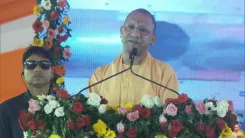
CM Sawant Backs ECI's Special Intensive Voter Roll Revision
Synopsis
Goa CM Pramod Sawant publicly backed the Election Commission of India's Special Intensive Revision of electoral rolls on October 4, 2026, citing its constitutional grounding in Article 324 and the RP Act 1950, Supreme Court validation, and the need to fix 20-plus years of roll drift from migration, deaths, and illegal immigration.
Key Takeaways
Goa CM Pramod Sawant defended the ECI's Special Intensive Revision (SIR) of electoral rolls on October 4, 2026 .
The SIR is authorised by Article 324 of the Constitution and Section 21(3) of the Representation of the People Act, 1950 .
The Supreme Court of India has upheld the SIR mechanism; reasons must be recorded, making it judicially reviewable.
Sawant cites 20-plus years of electoral roll drift caused by urbanisation, migration, unreported deaths, unregistered youth voters, and illegal immigrants.
The stated goal is achieving 'one person, one vote' by eliminating duplicate and deceased entries from the rolls.
Sawant positions the exercise as a constitutional protection of every legitimate voter's ballot weight, not a restriction on voting.
When a democracy's voter list quietly accumulates two decades of drift — ghost entries, migrant gaps, unregistered youth — the correction isn't controversy. It's constitutional duty. Goa Chief Minister Pramod Sawant stepped into a national debate on Sunday, October 4, 2026, with a point-by-point defence of the Election Commission of India's (ECI) Special Intensive Revision (SIR) of electoral rolls, arguing that the process is not only lawful but overdue.
What the SIR Actually Is — and Why the Law Backs It
CM Sawant's post cuts straight to the legal architecture. The SIR draws authority from Article 324 of the Constitution — which vests superintendence of elections in the ECI — and Section 21(3) of the Representation of the People Act, 1950, which explicitly permits a special revision of rolls for 'any constituency.' Crucially, the ECI is required to record its reasons, making the exercise judicially reviewable. The Supreme Court of India has upheld this mechanism, giving the revision both constitutional and judicial sanction.
The argument against opacity holds here: the recorded-reasons requirement means no arbitrary exclusion can hide behind administrative process. Every deletion is, in principle, challengeable in court.
Twenty Years of Electoral Roll Drift
The 'why now' question is really a 'why not sooner' question. Sawant lists the structural forces that have silently distorted voter rolls over more than 20 years: rapid urbanisation shifting populations between constituencies, large-scale internal migration leaving voters registered in home states they no longer inhabit, unreported deaths keeping deceased individuals on active lists, and an entire cohort of young first-time voters who never made it onto the rolls at all. There is also the sharper political charge embedded in his post — the reference to 'illegal immigrants' as a source of roll contamination, a claim that has driven significant political heat nationally.
The cumulative effect, Sawant argues, is a list that fails the foundational democratic promise: 'one person, one vote.' Duplicate entries dilute genuine mandates. Dead voters on rolls are potential vectors for impersonation. The SIR is the correction mechanism.
The Cleaner Roll Argument and Its Stakes
Sawant frames the SIR not as a restriction on voting but as a protection of it. A voter struck off due to death or duplication is not disenfranchised — a genuine voter whose ballot is diluted by a fraudulent entry is. The political logic is simple: clean rolls protect the weight of every legitimate vote cast.
The post lands a pointed kicker — 'the democracy the world admires' — positioning India's electoral machinery as an international benchmark, and the SIR as its maintenance, not its subversion.
The ECI's Special Intensive Revision is now a national conversation. Whether the implementation matches the constitutional promise will be the real verdict.
Point of View
He attempts to shift the debate from political motive to administrative necessity. The 'illegal immigrants' reference, however, is the contested pivot — it injects the most politically charged rationale into what is otherwise a dry procedural defence, and that line will draw the sharpest opposition scrutiny. The post reflects a broader ruling-party pattern of pre-empting judicial and civil-society challenges by anchoring controversial administrative actions in existing legal frameworks before those challenges crystallise.
NationPress
4 Oct 2026
Frequently Asked Questions
What is the Election Commission's Special Intensive Revision of electoral rolls?
The Special Intensive Revision (SIR) is a targeted, comprehensive exercise by the Election Commission of India to update voter rolls — removing dead or duplicate entries and adding eligible new voters — authorised under Article 324 of the Constitution and Section 21(3) of the Representation of the People Act, 1950.
Is the ECI's Special Intensive Revision legally valid?
Yes. The SIR is grounded in Article 324 of the Constitution and Section 21(3) of the RP Act, 1950. The Election Commission must record its reasons, making the process open to judicial review, and the Supreme Court of India has upheld the mechanism.
Why is the ECI conducting a Special Intensive Revision now?
The ECI has cited more than 20 years of electoral roll drift caused by large-scale urbanisation, internal migration, unreported deaths of registered voters, young voters not added to rolls, and concerns about entries linked to illegal immigrants — all of which compromise the integrity of the 'one person, one vote' principle.
What did Goa CM Pramod Sawant say about the voter roll revision?
CM Pramod Sawant posted on October 4, 2026, that the SIR is constitutionally and legally backed, Supreme Court-validated, and necessary to fix decades of roll inaccuracies — calling a clean voter list essential for ensuring every genuine vote counts fully.
Can voters challenge deletions made during the Special Intensive Revision?
Yes. Because the ECI is required to record its reasons for the revision, any deletion can in principle be challenged before courts, including the Supreme Court, which has already reviewed and upheld the SIR framework.