CM Yogi grants university status to Bhadohi's Kashi Naresh PG College
Synopsis
UP Chief Minister Yogi Adityanath has granted university status to Kashi Naresh PG College in Bhadohi, expanding the higher-education footprint in eastern Uttar Pradesh and enabling the institution to award its own degrees and run independent academic programmes.
Key Takeaways
Kashi Naresh Post-Graduate College in Bhadohi has been officially recognised as a university by the Uttar Pradesh government.
The announcement was made by Chief Minister Yogi Adityanath on October 4, 2026 .
University status allows the institution to award independent degrees, affiliate other colleges, and access research funding.
The upgrade benefits students from Bhadohi 's carpet-belt region who have limited access to higher education in larger cities.
The move aligns with the National Education Policy 2020 push to consolidate India's higher-education ecosystem into autonomous, multidisciplinary universities.
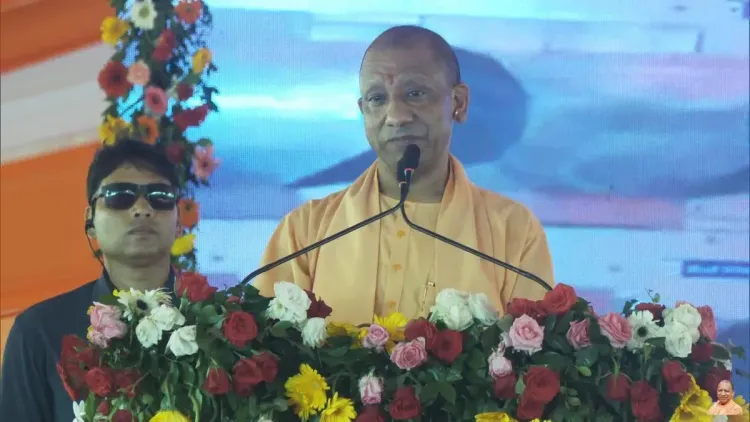
A college that has served the students of eastern Uttar Pradesh for decades just crossed a defining threshold. Uttar Pradesh Chief Minister Yogi Adityanath announced on Sunday, October 4, 2026, that Kashi Naresh Post-Graduate College in Bhadohi has been granted recognition as a full university.
Posting on X, CM Yogi wrote: 'भदोही के काशी नरेश पीजी कॉलेज को विश्वविद्यालय के रूप में मान्यता दे दी है' — ('Kashi Naresh PG College in Bhadohi has been granted recognition as a university'). The announcement marks a significant upgrade in the higher-education landscape of the Bhadohi district, long associated with its world-famous carpet-weaving industry but historically underserved in terms of higher-education infrastructure.
Bhadohi's long wait for a university of its own
Bhadohi, a district carved out of Varanasi division in eastern Uttar Pradesh, is home to a dense population of artisans, traders, and first-generation learners. Kashi Naresh PG College has historically been one of the primary destinations for undergraduate and postgraduate students in the district who cannot afford to relocate to larger cities like Varanasi or Allahabad. University recognition transforms the institution's legal and academic standing — it can now award its own degrees, establish affiliated colleges, launch new departments, and attract research funding independently of a parent university.
What university status changes for students and faculty
The upgrade is more than a ceremonial title. As a degree-granting university, Kashi Naresh can design its own curricula, conduct independent examinations, and establish postgraduate and doctoral programmes without routing everything through a distant affiliating body. For the thousands of students from Bhadohi's carpet-belt villages and small towns, this means greater academic autonomy closer to home. Faculty hiring, infrastructure grants, and research chairs — all become accessible at an institutional level that a PG college cannot unlock.
The move also fits within the broader push under the National Education Policy 2020, which envisions a consolidation of India's higher-education ecosystem into larger, multidisciplinary universities rather than a fragmented network of affiliated colleges.
For a district whose identity has long been woven — quite literally — around craft and commerce, the emergence of a full-fledged university signals an ambition to weave knowledge infrastructure into that same fabric. The loom may stay, but now the library can grow beside it.
Point of View
A constituency where artisan-class families are increasingly seeking credentials alongside craft. The move also dovetails with NEP 2020's structural logic of replacing the sprawling affiliating-college model with autonomous degree-granting institutions, giving the Yogi government a reform rationale beyond the electoral one. Watch for whether new faculty positions, departmental expansions, or research tie-ups follow — those will determine whether this recognition becomes a genuine academic upgrade or remains, for now, a well-timed announcement.
NationPress
4 Oct 2026
Frequently Asked Questions
Which college in Bhadohi has been granted university status?
Kashi Naresh Post-Graduate College in Bhadohi, Uttar Pradesh, has been granted recognition as a university by the state government.
Who announced the university status for Kashi Naresh PG College?
Uttar Pradesh Chief Minister Yogi Adityanath announced the recognition on October 4, 2026, via a post on X.
What does university status mean for Kashi Naresh College?
It means the institution can now award its own degrees, conduct independent examinations, establish new departments and doctoral programmes, affiliate other colleges, and access research funding without relying on a parent affiliating university.
Where is Bhadohi district located in Uttar Pradesh?
Bhadohi is a district in eastern Uttar Pradesh, part of the Varanasi division, and is internationally known for its carpet-weaving industry.
How does this upgrade connect to the National Education Policy 2020?
NEP 2020 encourages converting affiliated colleges into autonomous, multidisciplinary degree-granting universities; recognising Kashi Naresh College as a university aligns with that structural reform framework.