CM Yogi Highlights Jobs Created by UP's Schools, Hospitals
Synopsis
Uttar Pradesh Chief Minister Yogi Adityanath has underscored the employment-generation role of state-built hospitals, Sainik schools, ITIs, and nursing colleges, framing infrastructure investment as a direct source of livelihoods for thousands across the state.
Key Takeaways
CM Yogi Adityanath posted on 29 May 2026 highlighting that hospitals, Sainik schools, public schools, pharmacy colleges, nursing colleges, and ITIs generate employment alongside their primary functions.
Uttar Pradesh has added dozens of new ITIs since 2017 , aligned with the National Skill Development Mission .
New Sainik Schools affiliated with the Ministry of Defence have been sanctioned in Uttar Pradesh during the current government's tenure.
The National Education Policy 2020 provided a framework for expanding pharmacy and nursing colleges to meet both educational and employment goals.
The post reflects a broader BJP -governed state narrative linking capital expenditure on public institutions to measurable job creation.
Analysts will watch upcoming state budget allocations and any fresh Ministry of Defence MoUs for Sainik Schools as indicators of next steps.
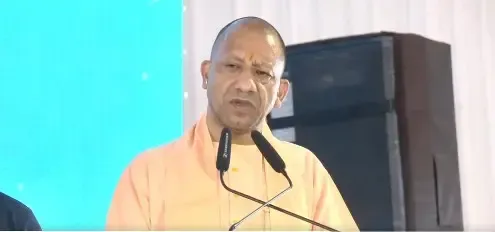
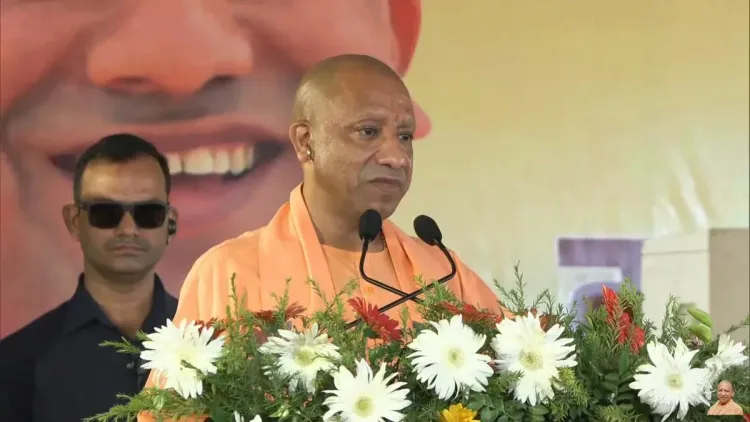
Uttar Pradesh Chief Minister Yogi Adityanath on Friday, 29 May 2026, highlighted the employment-generation dimension of the state's expanding institutional infrastructure, pointing to hospitals, Sainik schools, public schools, pharmacy colleges, nursing colleges, and ITIs as sources of livelihoods beyond their primary educational and health mandates.
Posting on X, the Chief Minister wrote: 'हॉस्पिटल, सैनिक स्कूल, पब्लिक स्कूल, फार्मेसी कॉलेज, नर्सिंग कॉलेज, आईटीआई' — 'Hospitals, Sainik schools, public schools, pharmacy colleges, nursing colleges, ITIs — these are not merely institutions; a great many people have also found employment through them.'
Context
The remark reframes public capital expenditure on education and health as a dual-purpose investment: service delivery and direct job creation. Uttar Pradesh, India's most populous state, has seen a significant expansion of government-run colleges, vocational institutes, and medical facilities since 2017, when Yogi Adityanath first assumed office. Teaching faculty, administrative staff, and support personnel across these institutions collectively represent a substantial share of government employment in the state.
Policy Backdrop
The post aligns with the framework laid out by the National Skill Development Mission (2015) and the National Education Policy 2020, both of which encouraged states to scale up Industrial Training Institutes, nursing colleges, and pharmacy colleges to close skill gaps and expand employment. Uttar Pradesh has added dozens of new ITIs since 2017, targeting an increase in skilled workforce capacity across districts. Sainik Schools, affiliated with the Ministry of Defence and designed to prepare cadets for the National Defence Academy, have also seen fresh sanctions in the state during this period.
Pharmacy and nursing colleges occupy a particular strategic importance: their graduates feed directly into the state's expanding public health infrastructure, while their establishment itself creates openings for educators, lab technicians, and administrative staff at the local level.
Stakeholders and Impact
The primary beneficiaries of this institutional expansion are youth and job seekers in Uttar Pradesh, particularly in semi-urban and rural districts where a new ITI or nursing college may represent one of the few sources of formal employment. For families in these areas, a government institution arriving in their district carries a double benefit: access to training or healthcare, and the prospect of a salaried position. The Chief Minister's framing makes this implicit compact explicit, presenting infrastructure spending as a jobs policy in its own right.
Similar messaging has accompanied announcements about new medical colleges and polytechnics across other BJP-governed states, suggesting a coordinated political narrative around capital expenditure and employment generation ahead of budget cycles.
What's Next
Observers will watch the Uttar Pradesh state budget documents for the coming fiscal year to track fresh allocations for ITIs, nursing colleges, and any new Ministry of Defence MoUs for additional Sainik Schools. If the Chief Minister follows this post with specific institution counts or employment figures, it would sharpen a narrative that currently rests on qualitative framing. The broader question is whether this messaging precedes a formal announcement — a new institutional launch, a budget line, or a scheme expansion — or serves as a standalone reminder of the government's infrastructure record.
Point of View
The Chief Minister keeps the claim broad and difficult to contest while reinforcing a record-of-delivery narrative ahead of potential budget announcements. This approach mirrors a wider pattern among BJP-governed states of tying capital expenditure to job-creation optics, blurring the line between public service expansion and electoral positioning. The absence of specific numbers, however, leaves the claim open to scrutiny from opposition parties who may demand district-wise employment data to validate it.
NationPress
13 Oct 2026
Frequently Asked Questions
What did CM Yogi Adityanath say about employment in UP institutions?
CM Yogi Adityanath stated that hospitals, Sainik schools, public schools, pharmacy colleges, nursing colleges, and ITIs in Uttar Pradesh are not merely educational or health institutions — they have also provided employment to a large number of people.
How many ITIs has Uttar Pradesh added since 2017?
Uttar Pradesh has added dozens of new Industrial Training Institutes since 2017 as part of the state's push to expand skilled workforce capacity, though a precise current count was not specified in the Chief Minister's post.
What are Sainik Schools and why are they being expanded in UP?
Sainik Schools are residential institutions affiliated with India's Ministry of Defence that prepare cadets for the National Defence Academy. Several new Sainik Schools have been sanctioned in Uttar Pradesh to widen access to defence-oriented education.
How does UP's nursing and pharmacy college expansion create jobs?
When a new nursing or pharmacy college is established, it requires teaching faculty, lab technicians, and administrative staff, creating formal employment in the local area even before graduates enter the workforce.
What policy framework supports UP's ITI and college expansion?
The National Skill Development Mission (2015) and the National Education Policy 2020 both provided frameworks encouraging states to scale up ITIs, nursing colleges, and pharmacy colleges to address skill gaps and expand employment opportunities.