CM Yogi Leads UP's District-Level Health and Infrastructure Push
Synopsis
The Chief Minister's Office of Uttar Pradesh says every district in the state is advancing through health service strengthening, infrastructure expansion, and welfare scheme delivery under CM Yogi Adityanath's leadership, reaffirming the government's district-first development model.
Key Takeaways
The Chief Minister's Office of Uttar Pradesh posted on 7 July 2026 highlighting district-level progress under CM Yogi Adityanath .
The post asserts that all 75 districts of Uttar Pradesh are simultaneously strengthening health services and expanding basic infrastructure.
Effective implementation of welfare policies is cited alongside physical infrastructure as a core pillar of the state's progress narrative.
CM Yogi Adityanath has led the state's health and infrastructure expansion drive since taking office in March 2017 , including additions to medical college seats and district hospital construction.
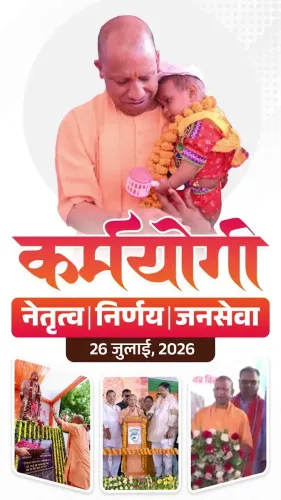
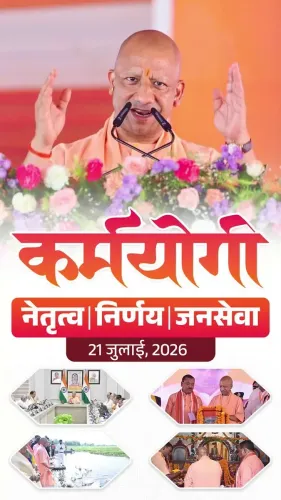
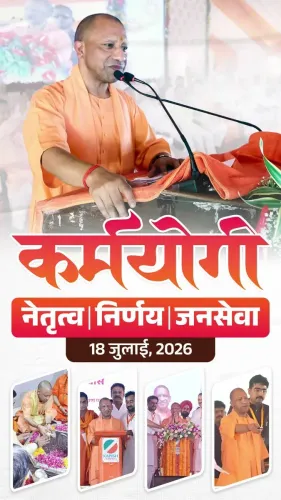
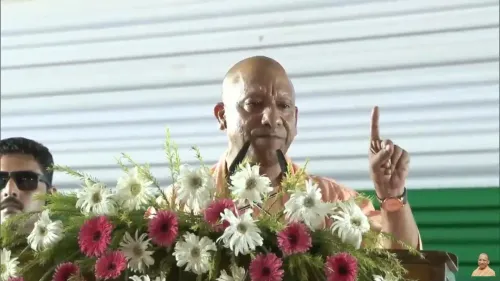
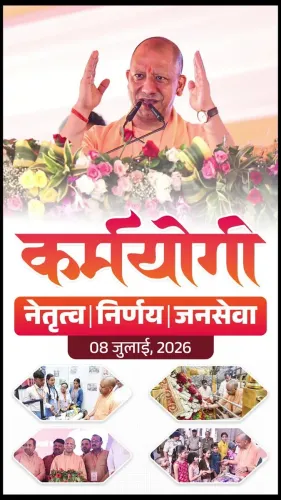
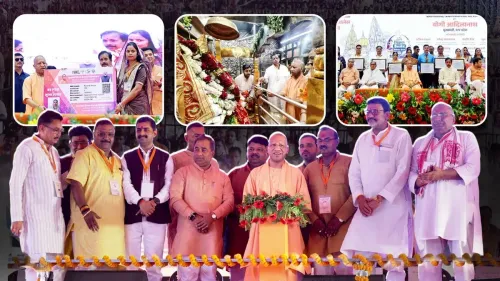
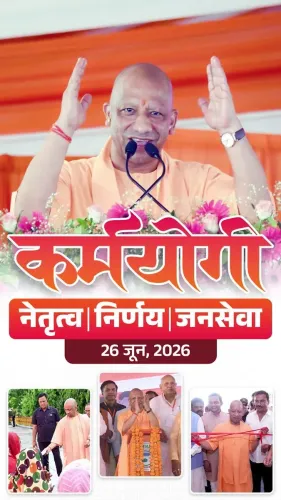
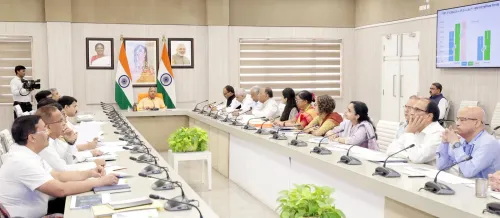
The communication was accompanied by a video, indicating the government is visually documenting on-ground progress across districts.
District-wise rollout updates and the next state budget's health allocations will be key indicators of continued momentum.
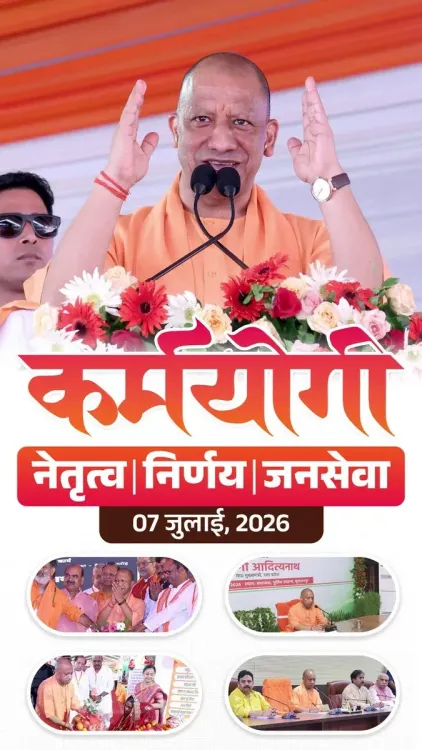
The Chief Minister's Office of Uttar Pradesh on Tuesday, 7 July 2026, highlighted that every district in the state is writing a new chapter of progress under the leadership of Chief Minister Yogi Adityanath, with health services being strengthened, basic infrastructure expanded, and welfare schemes effectively implemented across the board.
The post, shared from the official CMO handle, stated in Hindi: 'प्रदेश का प्रत्येक जनपद स्वास्थ्य सेवाओं के सुदृढ़ीकरण, आधारभूत अवसंरचना के विस्तार और जनकल्याणकारी नीतियों के प्रभावी क्रियान्वयन के साथ प्रगति एवं समृद्धि के नए अध्याय लिख रहा है' [Every district of the state is writing new chapters of progress and prosperity through the strengthening of health services, expansion of basic infrastructure, and effective implementation of welfare policies].
Context
Uttar Pradesh, India's most populous state, has historically faced significant challenges in delivering equitable public health services across its 75 districts. The state's vast geography and population density have made uniform service delivery a longstanding administrative priority. The CMO's post frames the current moment as a turning point, presenting district-level development as a coordinated, simultaneous effort rather than piecemeal improvement. The communication was accompanied by a video, suggesting the government is amplifying visual documentation of on-ground progress — a pattern consistent with the state administration's outreach strategy in the run-up to policy reviews and budget cycles.Policy Backdrop
Since Chief Minister Yogi Adityanath assumed office in March 2017, the Uttar Pradesh government has pursued a broad expansion of health infrastructure, including the addition of medical college seats and the construction and upgrading of district hospitals. This push has been framed as part of a wider effort to improve human-development indicators at the grassroots level. The state's approach has centred on applying a uniform administrative push across all districts simultaneously, rather than concentrating resources in urban centres. Welfare scheme delivery at the local level — covering health, roads, sanitation, and housing — has been presented as an integrated model of governance. The CMO's latest post reinforces this narrative, describing the expansion of 'health services' and 'basic infrastructure' as twin pillars of the state's development agenda.Stakeholders and Impact
The primary beneficiaries of this push are residents of Uttar Pradesh's districts, particularly those in rural and semi-urban areas who have historically had limited access to quality public health facilities. Improved district hospitals and health centres directly affect millions of citizens who rely on government services for primary and secondary care. Public health workers, local administrators, and elected representatives at the district level are also key stakeholders, as the effective implementation of welfare schemes depends heavily on last-mile delivery capacity. The state government's emphasis on 'effective implementation' signals an acknowledgement that policy design alone is insufficient without robust ground-level execution.What's Next
Attention will now turn to district-wise updates on the status of new health facilities and infrastructure projects. The next state budget's allocations for health and basic infrastructure will be a key indicator of whether the momentum described in the CMO's communication translates into sustained financial commitment. Independent assessments of health outcomes across Uttar Pradesh's districts will offer a clearer picture of the on-ground impact of the state's multi-year development drive.Point of View
State-wide branding exercise that frames district-level development as a unified, leadership-driven achievement rather than a collection of individual projects. By invoking every district simultaneously, the communication seeks to counter perceptions of uneven development — a persistent critique of large-state governance in Uttar Pradesh. The emphasis on 'effective implementation' is notable: it signals that the government is aware delivery gaps exist and is positioning itself as having closed them. This fits a broader arc in which the Yogi administration has consistently used digital communication to consolidate its governance narrative ahead of policy and budget cycles.
NationPress
6 Oct 2026
Frequently Asked Questions
What has the UP government done to improve health services under CM Yogi?
Since 2017, the Uttar Pradesh government under CM Yogi Adityanath has expanded medical college seats, constructed and upgraded district hospitals, and pushed for uniform health service delivery across all 75 districts as part of a broader infrastructure and welfare drive.
What did the UP Chief Minister's Office post on 7 July 2026?
The CMO of Uttar Pradesh posted that every district in the state is writing new chapters of progress through the strengthening of health services, expansion of basic infrastructure, and effective implementation of welfare policies under CM Yogi Adityanath's leadership.
How many districts does Uttar Pradesh have?
Uttar Pradesh has 75 districts, making it India's most populous state and one of the most administratively complex to govern uniformly.
What is the UP government's approach to district-level development?
The Uttar Pradesh government has pursued a simultaneous, uniform push across all districts, integrating health service expansion, physical infrastructure upgrades, and welfare scheme delivery as part of a single administrative strategy since 2017.
What should we watch for next in UP's health and infrastructure push?
Key indicators to watch include district-wise updates on new health facility completions and the allocations for health and infrastructure in the next Uttar Pradesh state budget.