ECI reiterates no documents needed with additional declaration form in SIR process
Synopsis
The Election Commission has pushed back hard against criticism of its Special Intensive Revision process, invoking unanimous internal approval, a Supreme Court verdict, and a no-documents-required safeguard — while also denying that its ECINet platform is centralising control away from Electoral Registration Officers. With the SIR now live in 19 states and UTs, the credibility of these assurances will be tested on the ground.
Key Takeaways
The ECI reiterated on 24 September 2026 that no supporting documents are needed when the additional Declaration Form (Annexure D) is submitted with Form 6 or Form 8 .
The provision was first introduced in the Bihar SIR order of 24 June 2025 with unanimous Commission approval , and later extended to 12 and then 19 states and UTs .
The Supreme Court upheld the ECI's power to mandate the declaration form in ADR vs.
ECI (writ petition 640/2025) on 27 May 2026 .
ECI sources denied reports that Election Commissioners Sukhbir Singh Sandhu and Vivek Joshi raised internal red flags over centralisation via the ECINet platform.
ECINet reportedly faced 68 lakh hacking attempts on the day of the most recent state assembly elections.
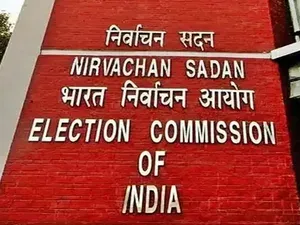
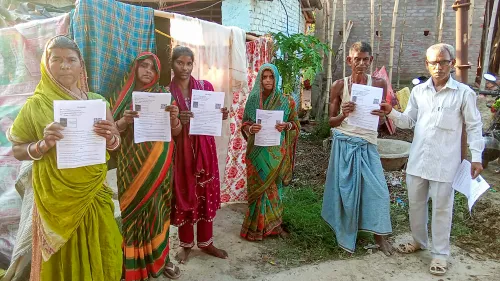
The Election Commission of India (ECI) on Thursday, 24 September 2026, reiterated that voters submitting an additional declaration form alongside Form 6 or Form 8 during the Special Intensive Revision (SIR) of electoral rolls are not required to furnish any other supporting documents. The clarification came amid a public row over the SIR guidelines and the ECI's roll-update procedures.
What the ECI Said
The poll panel stressed that the provision was cleared with the 'unanimous approval' of the Commission and was first introduced in the Bihar SIR order dated 24 June 2025. The order had directed that any new elector application or registration involving a shift from outside Bihar must include Form 6 or Form 8 along with an additional Declaration Form (Annexure D).
A subsequent order on 27 October 2025 extended the same provision to 12 states and Union Territories, again with unanimous Commission approval. The SIR was further expanded to 19 states and Union Territories through an order dated 14 May, with identical provisions and, according to the ECI, the same unanimous backing.
Supreme Court Backing
The ECI underlined that the Supreme Court upheld its authority to mandate the declaration form in the ADR vs. ECI writ petition 640/2025, decided on 27 May 2026. The apex court's order, as quoted by the Commission, stated: 'Any new voter was required to submit Form 6 along with a Declaration Form in Annexure D of the Impugned Order.'
The court further held that the SIR exercise 'neither stands in direct conflict with the RP Act and the 1960 Rules, nor does it detract from the constitutional imperative of free and fair elections,' describing it as an exercise traceable to Section 21(3) of the Representation of the People Act, 1950 read with Article 324 of the Constitution.
ECINet Platform Controversy
Separately, ECI sources addressed media reports alleging that Election Commissioners Sukhbir Singh Sandhu and Vivek Joshi had raised internal concerns about the 'gradual centralisation' of the electoral roll database and warned that the online platform ECINet was restricting the statutory powers of Electoral Registration Officers (EROs).
Sources clarified that ECINet is a 'decentralised platform' designed in accordance with the RP Act 1950, the RP Act 1951, and standing ECI instructions. They emphasised that BLOs, AEROs, EROs, DEOs, and CEOs can each perform their statutory functions on the platform using unique credentials, and that no other officer — including any ECI official — can perform statutory functions on their behalf.
Cybersecurity Context
The ECI also noted the scale of cyber threats facing its digital infrastructure. On the day of the most recent state legislative assembly elections, ECINet reportedly repelled as many as 68 lakh malicious attempts to breach the platform, according to the poll body. The Commission said it manages ECINet's cybersecurity to guard against such threats.
Wider Significance
This comes amid heightened scrutiny of the SIR process, with critics questioning whether the revision exercise could inadvertently disenfranchise voters — particularly migrants and the urban poor — who may struggle to access or complete the required forms. The ECI's repeated emphasis on 'ease of voters' and the no-document-required clause appears designed to counter those concerns directly. With the SIR now active across 19 states and Union Territories, how smoothly the declaration form process is implemented at the ground level will determine whether the Commission's assurances translate into practice.
Point of View
But it doesn't resolve the ground-level concern: whether Booth Level Officers in Bihar's most remote constituencies are actually communicating the no-document clause to first-time voters. The ECINet dispute matters separately — if two sitting Election Commissioners genuinely flagged centralisation risks, that is an institutional signal that deserves public scrutiny rather than a one-line denial from anonymous sources.
NationPress
24 Sept 2026
Frequently Asked Questions
What is the Special Intensive Revision (SIR) of electoral rolls?
The SIR is a structured exercise by the Election Commission of India to update and clean up voter rolls, conducted under Section 21(3) of the Representation of the People Act, 1950. It involves fresh registration, deletion of duplicate or ineligible entries, and address corrections across states and Union Territories.
Do voters need to submit documents along with the additional declaration form?
No. The ECI has clarified that anyone who submits the additional Declaration Form (Annexure D) along with Form 6 or Form 8 is not required to provide any other supporting document. The Commission says this provision has been uniformly applied across all states and UTs covered by the SIR.
Has the Supreme Court upheld the ECI's SIR process?
Yes. The Supreme Court upheld the ECI's authority to mandate the declaration form in the ADR vs. ECI writ petition 640/2025, decided on 27 May 2026. The court held that the SIR exercise does not conflict with the Representation of the People Act and is traceable to Section 21(3) read with Article 324 of the Constitution.
What is ECINet and why is it controversial?
ECINet is the ECI's online portal for managing electoral roll functions. A media report alleged that Election Commissioners Sukhbir Singh Sandhu and Vivek Joshi raised internal concerns that the platform was gradually centralising the electoral roll database and restricting EROs' statutory powers. ECI sources denied this, describing ECINet as a decentralised platform where all authorised officers retain individual login credentials and statutory powers.
How many states are currently covered under the SIR?
As of the most recent order dated 14 May, the SIR is active in 19 states and Union Territories. It was first launched in Bihar (June 2025), then extended to 12 states and UTs (October 2025), and subsequently expanded further — all with unanimous Commission approval, according to the ECI.