ECI clarifies parent SIR detail rule for new voters is not new
Synopsis
The Election Commission has pushed back on criticism of its parent-detail requirement for new voter registrations, clarifying the rule dates to Bihar's 2024 SIR exercise — not a fresh imposition. With 47 lakh names already deleted in Bihar's first phase alone, the scale of the nationwide rollout makes this one of the most consequential electoral-roll exercises in recent memory.
Key Takeaways
The Election Commission of India (ECI) clarified on 12 July that requiring new voter applicants to declare parents' SIR status is not a new rule .
The provision was first introduced in Bihar in June 2024 during that state's pioneering Special Intensive Revision (SIR) exercise.
Applicants filing Form 6 must declare whether their own name or a parent's or grandparent's name appeared in previous SIR rolls.
Bihar's first SIR phase saw approximately 47 lakh names deleted — nearly 6 per cent of the state's electorate.
The ECI says applicants unable to provide immediate documents will receive notices and correction opportunities .
The nationwide SIR rollout is ongoing; voters can check details on the ECI portal or contact local Booth Level Officers .
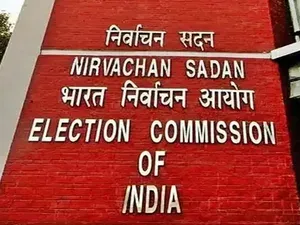
The Election Commission of India (ECI) on Sunday, 12 July pushed back against claims that requiring new voter applicants to furnish details of their parents' status in previous Special Intensive Revision (SIR) electoral rolls is a fresh imposition. According to ECI sources, the provision has been in place since June 2024, when it was first introduced during the Bihar SIR exercise, and is now being extended to other states and Union Territories.
What the Requirement Actually Entails
Under the provision, applicants filing Form 6 — the standard form for inclusion in electoral rolls — must declare whether their own name or the name of a parent, grandparent, or guardian appeared in the previous SIR electoral rolls. This applies both to fresh applicants and to existing voters who were inadvertently missed in earlier SIR exercises.
ECI officials clarified that the rule is being rolled out through administrative instructions as the nationwide Special Intensive Revision expands beyond Bihar. The Commission maintains that linking new voters to legacy electoral data reduces the documentation burden on genuine applicants while simultaneously strengthening verification.
Bihar: The Pilot That Set the Template
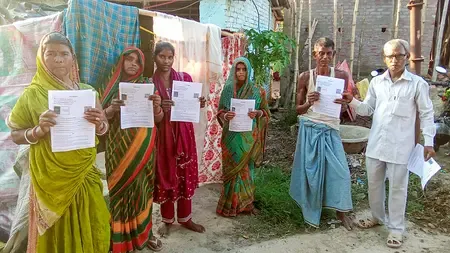
Bihar served as the testbed for the current SIR framework. The state's SIR exercise, which began in 2025, involved door-to-door enumeration by Booth Level Officers (BLOs) using pre-filled forms. The drive was aimed at purging electoral rolls of deceased, relocated, duplicate, or otherwise ineligible entries.
In the first phase alone, approximately 47 lakh names were deleted from Bihar's electoral rolls — representing close to 6 per cent of the state's total electorate. ECI sources describe the Bihar exercise as a pioneering model that is now being replicated nationally.
Why the ECI Defends the Process
The Commission has consistently maintained that the SIR process is transparent, constitutional, and backed by judicial precedents. Officials have also clarified that applicants who cannot immediately produce supporting documents will be issued notices and given opportunities to submit corrections — a safeguard against inadvertent exclusions.
Notably, the family-linkage approach is designed to ease the verification load rather than complicate it. By anchoring new registrations to existing electoral data, the ECI argues it can process genuine inclusions faster while filtering out ineligible entries more reliably.
Nationwide Rollout and What Comes Next
The Special Intensive Revision is currently underway in phases across multiple states and Union Territories. The ECI has urged all eligible citizens to participate actively in the enumeration drive to ensure no genuine voter is excluded.
Officials say this expanded verification mechanism is expected to produce cleaner, more accurate voter lists ahead of upcoming elections. Voters can verify their details on the ECI portal or reach out to their local Booth Level Officer for assistance.
With the SIR process set to continue in several states, the accuracy of India's electoral rolls — and the credibility of the democratic process they underpin — will remain under close public and judicial scrutiny.
Point of View
But the burden of proof in a country with large migrant and semi-literate populations will inevitably fall hardest on those least equipped to navigate bureaucratic redressal. The real test of this exercise is not whether it cleans rolls — it will — but whether it does so without silently disenfranchising genuine voters.
NationPress
11 Oct 2026
Frequently Asked Questions
What is the parent SIR detail requirement for new voters?
It is a rule under which applicants filing Form 6 to be added to electoral rolls must declare whether their own name or a parent's or grandparent's name appeared in the previous Special Intensive Revision (SIR) electoral rolls. The ECI says this helps verify genuine voters through family linkages and reduces the need for extensive documentation.
Is this requirement new?
No. According to ECI sources, the provision was first introduced in Bihar in June 2024 during that state's Special Intensive Revision exercise. It is now being extended to other states and Union Territories through administrative instructions as the nationwide SIR continues.
What is the Special Intensive Revision (SIR)?
The Special Intensive Revision is an ECI-led exercise to clean up electoral rolls by removing deceased, relocated, duplicate, or ineligible voter entries while protecting the rights of genuine voters. It involves door-to-door enumeration by Booth Level Officers using pre-filled forms.
How many names were deleted in Bihar under SIR?
In the first phase of Bihar's SIR exercise alone, approximately 47 lakh names were deleted from the state's electoral rolls, representing close to 6 per cent of Bihar's total electorate.
What happens if a new applicant cannot provide the required documents immediately?
ECI officials have clarified that applicants unable to produce supporting documents right away will be issued notices and given opportunities to submit corrections, ensuring genuine voters are not inadvertently excluded from the rolls.