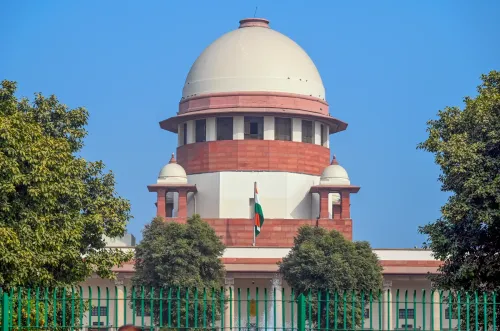
Supreme Court upholds ECI's Special Intensive Revision of electoral rolls
Synopsis
The Supreme Court has given the Election Commission of India a sweeping green light to overhaul voter rolls nationwide — but with a crucial safeguard: anyone deleted on citizenship grounds must get a fresh hearing before the next state election. The ruling resolves a major constitutional standoff over whether the ECI overstepped, and sets the terms for how India's democracy cleans its electoral house.
Key Takeaways
The Supreme Court on 27 May upheld the ECI's Special Intensive Revision (SIR) of electoral rolls as constitutionally valid.
The Bench of CJI Surya Kant and Justice Joymalya Bagchi ruled the SIR is empowered under Article 324 of the Constitution and Section 21(3) of the RPA, 1950 .
The court found that more than four decades had passed since the last intensive revision, justifying the exercise.
The ECI may conduct a limited citizenship inquiry for electoral purposes, but cannot make a final citizenship determination.
Names deleted on citizenship grounds must be referred to the competent authority under the Citizenship Act, 1955 within four weeks ; names must be restored if citizenship is confirmed.
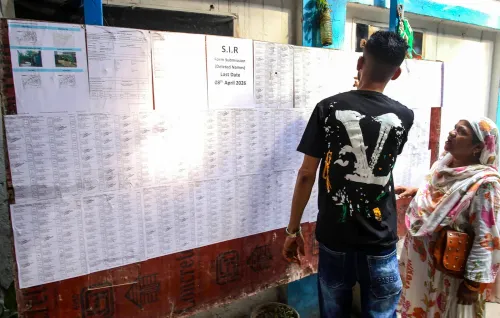
The SIR was initiated in Bihar and extended to states including West Bengal , Kerala , and Tamil Nadu .
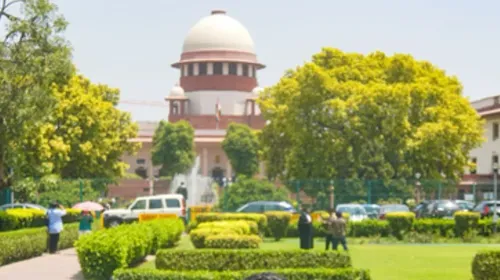
The Supreme Court of India on Wednesday, 27 May upheld the Election Commission of India's (ECI) decision to conduct a Special Intensive Revision (SIR) of electoral rolls, ruling that the exercise falls squarely within the constitutional and statutory powers of the poll body and serves the fundamental goal of free and fair elections.
The Verdict and Its Legal Basis
A Bench comprising Chief Justice of India (CJI) Surya Kant and Justice Joymalya Bagchi held that the SIR exercise did not violate the Representation of the People Act (RPA), 1950 or the rules framed thereunder. The court ruled that the ECI was empowered to undertake such a revision under Article 324 of the Constitution read with Section 21(3) of the RPA.
The Bench framed three principal issues: whether the ECI had the power to conduct the exercise, whether it served a legitimate purpose and satisfied proportionality, and whether the procedure adopted violated the statutory framework governing electoral rolls. All three were answered in favour of the poll body.
Why the Court Found the SIR Justified
The court noted that more than four decades had passed since the last intensive revision of electoral rolls, and that large-scale additions and deletions, rapid urbanisation, and migration had created the possibility of duplication and inaccuracies. 'We are unable to conclude that the impugned exercise is a process resorted to solely for administrative convenience. On the contrary, we hold that the electoral SIR advances the constitutional imperative of free and fair elections,' the judgment stated.
The Bench observed that the SIR 'breathes life into the constitutional mandate under Article 324 within the precise statutory contours provided by Section 21(3)' of the RPA, 1950. It further held that 'free and fair elections do not rest merely upon the mechanics of polling. They fundamentally depend upon the integrity, accuracy and credibility of the electoral rolls, which form the foundation of the democratic process.'
On Proportionality and Procedural Safeguards
The Supreme Court held that the SIR satisfied constitutional requirements of proportionality. 'We are therefore satisfied that the impugned exercise meets the requirements of proportionality. The measures adopted bear a reasonable nexus to the objectives sought to be achieved, are not manifestly excessive and are accompanied by sufficient procedural safeguards to prevent arbitrary exclusion,' the CJI Kant-led Bench observed.
The court also rejected the contention that the deletion framework had undermined safeguards, holding that requirements of notice and hearing under Rule 21A of the Registration of Electors Rules, 1960, were preserved 'in substance'. The documentation framework prescribed by the ECI — including the classification of documents and the inclusion of Aadhaar pursuant to interim orders passed in September 2025 — was upheld as neither arbitrary nor irrational.
Citizenship Inquiry: Scope and Limits Defined
In a significant clarification, the court held that the ECI is empowered to undertake a limited inquiry into citizenship while preparing or revising electoral rolls, given the statutory requirement under Section 16 of the RPA. However, it drew a firm boundary: such an inquiry is confined solely to electoral purposes and cannot amount to a final determination of citizenship.
'It does not amount to a declaration that the individual is not a citizen of India. It merely reflects the Commission's inability to be satisfied, for electoral purposes, that the statutory conditions stand fulfilled,' the judgment clarified.
The court directed that cases where names had been deleted on grounds of doubtful citizenship must be referred by the ECI within four weeks to the competent authority under the Citizenship Act, 1955 for adjudication. That authority must conclude proceedings before the next Vidhan Sabha or local body elections, whichever is earlier, after issuing notice and affording a hearing. If the authority finds the deleted individuals to be citizens, their names shall be restored to the electoral rolls.
Background and What Comes Next
The judgment came on a batch of petitions challenging the SIR exercise, which was initiated by the ECI beginning with Bihar and subsequently extended to several states and Union Territories including West Bengal, Kerala, and Tamil Nadu. Petitioners had argued that the exercise exceeded the ECI's powers under Article 326 of the Constitution and risked disenfranchising genuine voters — particularly marginalised and migrant populations unable to furnish documentary proof of ancestral linkage to earlier electoral rolls.
The CJI Surya Kant-led Bench had reserved judgment on 29 January after extensive hearings. With the ruling now delivered, the ECI is expected to proceed with the SIR across remaining states, subject to the court's directions on citizenship referrals and the restoration mechanism for deleted voters.
Point of View
But the citizenship-referral safeguard is where the real accountability lies. The court has essentially said the ECI can clean the rolls but cannot be the final arbiter of who is Indian — a distinction that matters enormously in states like West Bengal and Tamil Nadu where migrant and minority voter populations are large. The four-week referral deadline and the pre-election restoration directive are the teeth of this judgment; whether they are enforced in practice will determine whether the SIR is remembered as a democratic housekeeping exercise or as a vehicle for voter suppression. That the last intensive revision was over four decades ago is a genuine governance failure — but urgency cannot override due process, and the court has been careful to say it does not.
NationPress
11 Oct 2026
Frequently Asked Questions
What is the Special Intensive Revision (SIR) of electoral rolls?
The Special Intensive Revision (SIR) is an exercise initiated by the Election Commission of India to comprehensively review and update electoral rolls, removing inaccuracies, duplications, and ineligible entries. The ECI began the exercise in Bihar and extended it to several states and Union Territories including West Bengal, Kerala, and Tamil Nadu.
Why did the Supreme Court uphold the SIR?
The Supreme Court held that the SIR was within the ECI's constitutional powers under Article 324 and Section 21(3) of the Representation of the People Act, 1950. The court found that over four decades had passed since the last intensive revision and that urbanisation, migration, and duplication had compromised the accuracy of electoral rolls.
Can the ECI delete voter names on citizenship grounds?
The Supreme Court ruled that the ECI may conduct a limited citizenship inquiry for electoral purposes under Section 16 of the RPA, but cannot make a final determination of citizenship. Any name deleted on citizenship grounds must be referred to the competent authority under the Citizenship Act, 1955, and restored if that authority confirms citizenship.
Who challenged the SIR and on what grounds?
A batch of petitioners challenged the SIR, arguing it exceeded the ECI's powers under Article 326 of the Constitution and risked disenfranchising genuine voters — especially marginalised and migrant populations unable to produce documentary proof of ancestral linkage to earlier electoral rolls.
What happens next after the Supreme Court verdict?
The ECI must refer cases of names deleted on citizenship grounds to the competent authority under the Citizenship Act, 1955, within four weeks. That authority must conclude proceedings before the next Vidhan Sabha or local body elections, whichever comes first, and restore names where citizenship is confirmed.