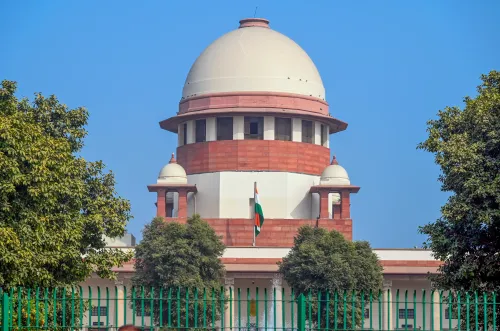
Supreme Court upholds ECI's SIR exercise, orders citizenship referrals within 4 weeks
Synopsis
The Supreme Court has drawn a landmark constitutional line: the ECI can scrutinise citizenship for electoral purposes, but cannot make it final. Every deletion on citizenship grounds must now go before the competent authority under the Citizenship Act — a safeguard that could affect thousands of voters, particularly in states where the SIR exercise has been most aggressive.
Key Takeaways
The Supreme Court on 27 May upheld the ECI's Special Intensive Revision (SIR) exercise as constitutionally valid.
Persons deleted from the 2003 electoral roll on citizenship grounds must be referred to the competent authority under the Citizenship Act, 1955 , within four weeks .
The competent authority must adjudicate, with notice and hearing, preferably before the next Parliamentary, Assembly, or local body elections .
The Court held that ECI's citizenship inquiry is limited to electoral consequences and does not constitute a formal citizenship determination.
Deletions on other grounds — absent, dead, shifted, duplicated — are not affected; those individuals may seek judicial review .
The ruling is based on Articles 324, 325, 326 of the Constitution and Section 16 of the Representation of the People Act, 1950 .
The Supreme Court of India on Wednesday, 27 May upheld the validity of the Election Commission of India's (ECI) Special Intensive Revision (SIR) exercise, while simultaneously directing that all persons whose names were deleted from the 2003 electoral roll on grounds of doubtful citizenship must be referred within four weeks to the competent authority under the Citizenship Act, 1955, for formal adjudication. The ruling draws a careful constitutional line between electoral administration and citizenship determination.
What the Court Ruled on ECI's Powers
A Bench comprising Chief Justice of India (CJI) Surya Kant and Justice Joymalya Bagchi held that the ECI is empowered to conduct a limited inquiry into citizenship solely for the purpose of determining electoral eligibility. The Court was emphatic, however, that this falls short of a full citizenship adjudication. 'Such an inquiry does not amount to a determination of citizenship in the strict sense, and any action taken pursuant thereto is confined to electoral consequences alone,' the Bench stated.
Crucially, the judgment clarified that exclusion from an electoral roll does not strip an individual of citizenship rights, nor does it foreclose a formal determination by the competent authority. 'It merely reflects the Commission's inability to be satisfied, for electoral purposes, that the statutory conditions are met,' the Bench noted.
Mandatory Referral and Adjudication Process
The apex court made it mandatory for the ECI to refer all cases of deletion on citizenship grounds to the Central government's competent authority. The competent authority must decide such cases — after issuing notice and providing an opportunity of hearing — preferably before the next Parliamentary, Assembly, or local body elections. 'In the event the competent authority holds that such deleted individuals are citizens, they shall be included in the electoral roll,' the Bench directed.
The Court underscored that the ECI's determination on electoral eligibility 'cannot assume finality on the question of citizenship,' and any deletion remains subject to the outcome of the citizenship adjudication.
Constitutional and Statutory Basis
Rejecting petitioners' arguments that the ECI had encroached on powers reserved exclusively for the Union government under the Citizenship Act, the Supreme Court held that the poll body's authority flows from Articles 324, 325, and 326 of the Constitution, read with Section 16 of the Representation of the People Act, 1950, which explicitly disqualifies non-citizens from electoral registration. Maintaining accurate rolls, the Court held, necessarily involves verifying eligibility conditions including citizenship.
The Bench also upheld the ECI's document classification framework, ruling it was based on 'intelligible criteria' and could not be termed arbitrary. The SIR exercise, it concluded, satisfies the test of proportionality and carries a 'rational nexus' to its stated objective.
Safeguards for Affected Individuals
The Court emphasised that citizenship is 'not a matter of mere formal classification' but the juridical foundation of an individual's relationship with the state, with implications for dignity, identity, and constitutional status. 'Any process that touches upon this domain must, therefore, be approached with a high degree of procedural fairness and institutional restraint,' the judgment stated.
Persons whose names were erroneously deleted on grounds such as being absent, dead, shifted, or duplicated — unrelated to citizenship — retain the right to seek judicial review, the Court reiterated.
Background and Petitions
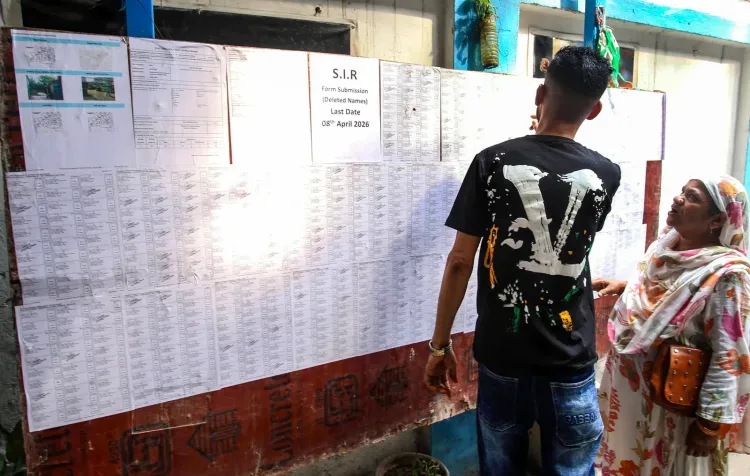
The judgment disposed of a batch of petitions challenging the SIR exercise, which the ECI had initiated beginning with Bihar before extending it to several other states. Petitioners had argued the process risked excluding genuine voters, particularly among marginalised and migrant communities. The ECI defended the exercise as a measure to prevent duplication and preserve the integrity of electoral rolls. The Supreme Court, while validating the exercise, held that inclusion in the electoral roll carries a presumption of validity that is rebuttable — and does not bar a special revision.
With the four-week referral clock now running, the ruling is set to shape how electoral and citizenship authorities coordinate ahead of future elections.
Point of View
But its implementation burden is immense. Referring potentially thousands of citizenship-doubtful cases to a Central government authority — and resolving them before the next election cycle — is an administrative challenge the ruling does not fully reckon with. More significantly, the Court's insistence that electoral deletion does not equal citizenship deprivation is constitutionally sound, but in practice, a deleted voter faces real exclusion regardless of the legal distinction. The four-week referral mandate is a safeguard on paper; its teeth depend entirely on whether the competent authority is adequately resourced and insulated from political pressure. The SIR exercise began in Bihar and expanded — that geography is not incidental, and the Court's silence on the pattern of targeting deserves scrutiny.
NationPress
11 Oct 2026
Frequently Asked Questions
What is the Supreme Court's ruling on the ECI's Special Intensive Revision exercise?
The Supreme Court upheld the ECI's Special Intensive Revision (SIR) exercise as constitutionally valid on 27 May, ruling it does not violate the statutory framework or the mandate of free and fair elections. The Court held the exercise satisfies the test of proportionality and is backed by sufficient procedural safeguards.
What happens to voters deleted from the electoral roll on citizenship grounds?
The Supreme Court has directed that all such persons must be referred within four weeks to the competent authority under the Citizenship Act, 1955, for formal adjudication. If that authority finds them to be citizens, their names must be restored to the electoral roll.
Can the ECI determine citizenship?
No. The Court ruled that the ECI can conduct a limited inquiry into citizenship only for electoral eligibility purposes — it cannot make a binding determination of citizenship. Any deletion is confined to electoral consequences and does not strip an individual of citizenship rights or foreclose a formal ruling by the competent authority.
Who is affected by this ruling?
The ruling primarily affects individuals whose names were deleted from the 2003 electoral roll on grounds of doubtful citizenship, particularly in states where the SIR exercise was conducted. Marginalised and migrant communities had been flagged by petitioners as especially vulnerable to erroneous exclusion.
What is the legal basis for the ECI's power to scrutinise citizenship?
The Court grounded the ECI's authority in Articles 324, 325, and 326 of the Constitution, read with Section 16 of the Representation of the People Act, 1950, which explicitly bars non-citizens from being registered as electors. Maintaining accurate rolls, the Court held, necessarily involves verifying eligibility conditions including citizenship.