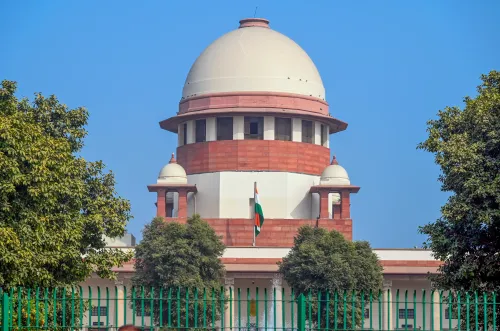
Supreme Court upholds ECI's SIR process; BJP says Congress, Rahul Gandhi stand exposed

Synopsis
The Supreme Court has declared the ECI's Special Intensive Revision of electoral rolls fully constitutional — ending a legal challenge that the BJP is now using as a political weapon against Rahul Gandhi and Congress, alleging they sided with 'illegal infiltrators' over Indian voters. The ruling, grounded in Article 324, also signals a broad judicial endorsement of ECI's autonomous revision powers after four decades of inaction on electoral roll accuracy.
Key Takeaways
The Supreme Court on 27 May upheld the ECI's Special Intensive Revision (SIR) of electoral rolls as constitutionally and statutorily valid.
The Bench of CJI Surya Kant and Justice Joymalya Bagchi held the SIR did not violate the Representation of the People Act, 1950 .
The court cited four decades without an intensive revision and risks of duplication due to migration and urbanisation as key justifications.
The SIR began in Bihar and was extended to West Bengal , Kerala , Tamil Nadu , and other states and UTs.
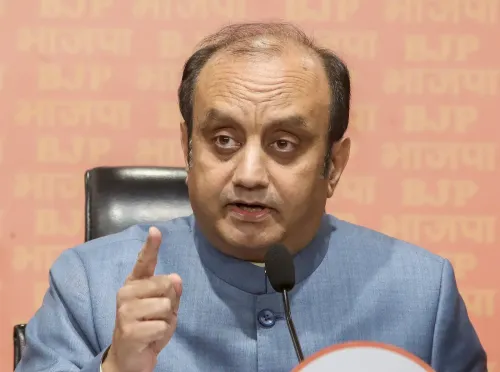
BJP spokesperson Pradeep Bhandhari claimed the verdict 'exposed' Rahul Gandhi and Congress for opposing the process.
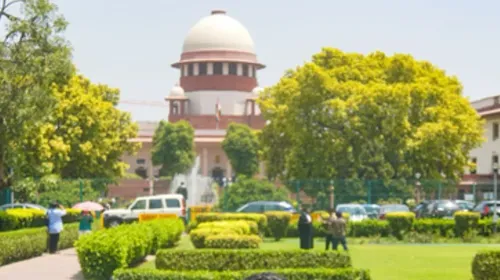
The Supreme Court of India on Wednesday, 27 May upheld the Election Commission of India's (ECI) authority to conduct the Special Intensive Revision (SIR) of electoral rolls, ruling that the exercise was constitutionally and statutorily valid. The verdict prompted the Bharatiya Janata Party (BJP) to claim that Lok Sabha Leader of Opposition Rahul Gandhi and the Indian National Congress stood 'exposed' for opposing the process.
What the Supreme Court Ruled
A Bench comprising Chief Justice of India (CJI) Surya Kant and Justice Joymalya Bagchi held that the SIR exercise did not violate the Representation of the People Act (RPA), 1950 or rules framed under it. The court affirmed that the ECI was empowered to undertake such a revision under Article 324 of the Constitution read with Section 21(3) of the RPA.
The Bench observed that the SIR exercise 'breathes life into the constitutional mandate under Article 324 within the precise statutory contours provided by Section 21(3)' of the RPA, 1950. It further held that the objective of the SIR bore a direct nexus to the constitutional goal of free and fair elections.
'Free and fair elections do not rest merely upon the mechanics of polling. They fundamentally depend upon the integrity, accuracy and credibility of the electoral rolls, which form the foundation of the democratic process,' the CJI Kant-led Bench stated.
Why the ECI Initiated the SIR
The apex court noted the ECI's recorded reasoning: more than four decades had elapsed since the last intensive revision of electoral rolls. Large-scale additions and deletions, rapid urbanisation, and migration had created the possibility of duplication and inaccuracies. The court found this justification sufficient to uphold the exercise as a legitimate safeguard for electoral integrity.
The SIR was initiated beginning with Bihar and subsequently extended to several states and Union Territories, including West Bengal, Kerala, and Tamil Nadu. The judgment came on a batch of petitions challenging the exercise.
BJP's Political Response
BJP national spokesperson Pradeep Bhandhari reacted sharply to the verdict, saying, 'Rahul Gandhi and Congress party stands exposed! Supreme Court declare SIR Process Legal and Constitutional!'
Bhandhari further alleged, 'It's clear Rahul Gandhi and Congress opposed all through because they stood with illegal infiltrators not with Indian voters. This was in true sense an ‘Anti National Act’! Will Rahul Gandhi apologise today for defaming Indian Democracy!' The Congress had been among the parties challenging the SIR exercise in court.
What This Means Going Forward
The ruling effectively clears the path for the ECI to continue and expand the SIR exercise across states without fresh legal challenge on constitutional grounds. Notably, the judgment reinforces the ECI's broad powers under Article 324, which critics had argued were being stretched beyond statutory limits — a position the Supreme Court has now firmly rejected.
With the SIR now judicially validated, attention will shift to implementation: how states conduct the revision, the grievance redressal mechanism for voters whose names may be affected, and whether the exercise concludes before the next round of state elections.
Point of View
It is a strong affirmation of autonomous power under Article 324 — a power that had been contested in court by parties who feared the revision could disenfranchise legitimate voters. The BJP's immediate pivot to calling Congress 'anti-national' for challenging the exercise, however, conflates a legitimate constitutional question with disloyalty — a framing the court itself did not adopt. The real accountability question is operational: whether the SIR, now judicially cleared, will be implemented with sufficient safeguards so that genuine voters — particularly migrants and the urban poor — are not inadvertently struck off rolls. That test is still ahead.
NationPress
19 Sept 2026
Frequently Asked Questions
What is the Special Intensive Revision (SIR) of electoral rolls?
The SIR is a comprehensive exercise by the Election Commission of India to review, update, and correct electoral rolls — removing duplicates and inaccuracies caused by migration, urbanisation, and decades of incremental updates. The Supreme Court has now confirmed it is within the ECI's constitutional powers under Article 324 and Section 21(3) of the Representation of the People Act, 1950.
Why did the Supreme Court uphold the SIR?
The court held that the ECI had not exceeded its powers and that the SIR directly served the constitutional goal of free and fair elections. It noted that more than four decades had passed since the last intensive revision and that large-scale migration and urbanisation had created significant risks of duplication in the rolls.
Which states are covered under the SIR exercise?
The SIR began with Bihar and was subsequently extended to several states and Union Territories including West Bengal, Kerala, and Tamil Nadu. The Supreme Court's ruling clears the way for the exercise to continue across these jurisdictions.
Why did Congress and Rahul Gandhi oppose the SIR?
Congress was among the parties that challenged the SIR in court, raising concerns about its legality and potential impact on voters. The Supreme Court has now rejected those legal challenges, ruling the exercise constitutional. The BJP has used the verdict to allege that Congress opposed the process to protect 'illegal infiltrators,' a charge Congress has not publicly addressed in response to the ruling.
What happens next after the Supreme Court's verdict on SIR?
With the legal challenge dismissed, the ECI can proceed with the SIR across all designated states and Union Territories. Focus will now shift to implementation — how the revision is conducted, the timeline relative to upcoming state elections, and the grievance mechanism available to voters whose names may be affected.