BJP slams criticism of SC's SIR ruling as 'reckless, corrosive to institutional faith'

Synopsis
The BJP's Amit Malviya has drawn a sharp line in the sand: criticise the Supreme Court's SIR ruling if you must, but imputing abdication of duty to the highest constitutional court crosses into institutional sabotage. With Yogendra Yadav — a petitioner who lost — publicly attacking the verdict, the BJP's counter-offensive reframes the debate from electoral rolls to the limits of democratic dissent.
Key Takeaways
The Supreme Court upheld the Election Commission of India's authority to conduct the Special Intensive Revision (SIR) of electoral rolls on 27 May 2025 .
BJP IT cell chief Amit Malviya called post-verdict criticism 'reckless, irresponsible and corrosive to institutional faith' in a post on X .
Malviya's remarks were directed at political activist and petitioner Yogendra Yadav , who had publicly criticised the ruling.
The BJP argued that while critiquing a judgment's reasoning is permissible, imputing abdication of duty to the apex court crosses constitutional boundaries.
Petitioners retain the option of filing a review petition before the Supreme Court.
The Bharatiya Janata Party (BJP) on Wednesday, 27 May launched a sharp defence of the Supreme Court after critics questioned its ruling upholding the Election Commission of India's (ECI) Special Intensive Revision (SIR) of electoral rolls, calling such attacks 'reckless, irresponsible and corrosive to institutional faith.' The pushback came hours after the apex court affirmed that the SIR exercise fell squarely within the constitutional and statutory powers of the poll body.
What the Supreme Court Ruled
The Supreme Court upheld the ECI's authority to conduct the Special Intensive Revision of electoral rolls, ruling that the exercise was designed to preserve the integrity of the electoral process. The court arrived at its decision after hearing detailed submissions from all parties involved in the matter, including petitioners who had challenged the revision drive.
What the BJP Said
BJP IT cell chief Amit Malviya responded directly to the criticism in a post on X, defending the apex court and drawing a firm line between permissible democratic critique and what he described as institutional subversion. 'It is deeply unfortunate that a litigant before the Supreme Court has chosen to respond to an unfavourable verdict by imputing motives to the highest constitutional court of the land. One may disagree with a judgment, critique its reasoning, or seek a review through lawful means — that is part of democratic discourse. But to suggest that the Court has ‘abdicated’ its responsibility or consciously enabled disenfranchisement is reckless, irresponsible, and corrosive to institutional faith,' Malviya said.
He further argued that dismissing the verdict as predetermined on ideological grounds amounted to contempt for constitutional process itself. 'The Supreme Court has upheld the constitutionality of SIR after hearing extensive arguments from all sides. To dismiss the verdict as predetermined merely because it does not align with one’s political or ideological position betrays contempt not just for the Court, but for constitutional process itself,' he added.
The Target: Yogendra Yadav's Remarks
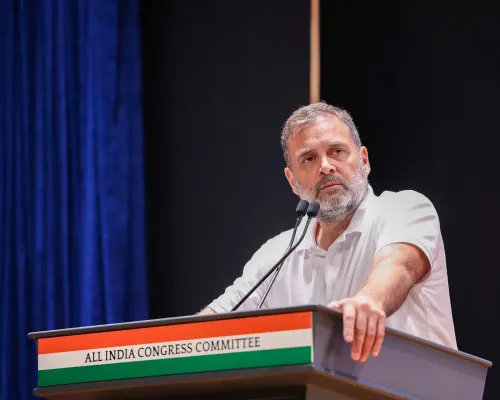
Malviya's remarks were directed at Yogendra Yadav, a political activist and one of the litigants who had challenged the SIR exercise before the Supreme Court. Yadav had publicly criticised the court's verdict following the ruling. Malviya accused Yadav of casting himself as 'the lone guardian of democracy and morality,' and questioned the credibility of that posture. 'This sanctimony would perhaps be easier to take seriously if it came from someone with a record of intellectual honesty and institutional respect,' he said, alleging that Yadav had 'repeatedly thrived on disruption, distortion and political theatrics.'
Broader Argument on Institutional Integrity
Malviya also articulated a wider principle: that the right to critique institutions does not extend to systematically undermining public trust whenever outcomes prove inconvenient to particular political or ideological interests. 'India's democracy is far stronger than the cynicism of self-appointed crusaders who believe that every institution is legitimate only when it agrees with them,' he said.
This comes amid a broader pattern of post-verdict political battles in India, where judicial outcomes on electoral and constitutional matters have increasingly become flashpoints between ruling and opposition camps. The SIR dispute is the latest in a series of cases where the Supreme Court's role as arbiter of electoral disputes has drawn scrutiny from multiple sides.
What Happens Next
With the Supreme Court having upheld the SIR exercise, the ECI is expected to proceed with the revision of electoral rolls. Petitioners retain the option of filing a review petition before the court. Political observers will watch whether the post-verdict rhetoric escalates further, particularly as the dispute touches on voter eligibility — a deeply sensitive issue ahead of any forthcoming electoral cycle.
Point of View
Which is a deliberate rhetorical move. The line between robust critique of a judicial decision and 'corrosive' institutional undermining is genuinely contested in a democracy, and the BJP's framing conveniently sidesteps that tension. The real question the SIR dispute raises — whether intensive electoral roll revisions disproportionately affect certain voter groups — remains unanswered in the public record, and the loudness of the political response on both sides risks drowning it out.
NationPress
11 Oct 2026
Frequently Asked Questions
What is the Supreme Court's ruling on the Special Intensive Revision (SIR) of electoral rolls?
The Supreme Court upheld the Election Commission of India's authority to conduct the Special Intensive Revision of electoral rolls, ruling that the exercise falls within the ECI's constitutional and statutory powers and is aimed at preserving electoral integrity. The court reached its decision after hearing detailed arguments from all parties, including petitioners who had challenged the move.
Why did the BJP criticise remarks about the SIR verdict?
The BJP's IT cell chief Amit Malviya said that questioning the Supreme Court's intent — specifically suggesting it had 'abdicated' its responsibility — crossed the line from democratic critique into institutional subversion. He argued that litigants unhappy with a verdict may seek review through lawful means but must not impute motives to the apex court.
Who is Yogendra Yadav and what did he say about the ruling?
Yogendra Yadav is a political activist and one of the litigants who challenged the SIR exercise before the Supreme Court. After the court upheld the ECI's decision, Yadav publicly criticised the verdict, prompting the BJP's sharp response accusing him of undermining constitutional institutions.
What is the Special Intensive Revision (SIR) of electoral rolls?
The Special Intensive Revision is an exercise conducted by the Election Commission of India to review and update voter rolls, intended to ensure the accuracy and integrity of the electoral register. Its constitutional validity was challenged before the Supreme Court, which has now upheld it.
What options do petitioners have after the Supreme Court's SIR ruling?
Petitioners who are dissatisfied with the Supreme Court's ruling may file a review petition before the court, which is the standard lawful remedy available after an adverse verdict. The BJP's Malviya explicitly acknowledged this as a legitimate democratic recourse.