Why Did the SC Dismiss the Plea Against ECI's Electoral Roll Revision in Assam?
Synopsis
The Supreme Court of India has dismissed a plea against the Election Commission's decision for a limited electoral roll revision in Assam, asserting that the revision process is complete. This ruling highlights concerns over the perceived unequal treatment of Assam compared to other states, as advocates argue for a more rigorous revision approach.
Key Takeaways
The Supreme Court dismissed a plea challenging the ECI's decision.
The revision process in Assam is considered complete.
Concerns about unequal treatment of Assam were highlighted.
The petition argued for a more thorough electoral revision.
Contextual differences in Assam's demographic challenges were noted.
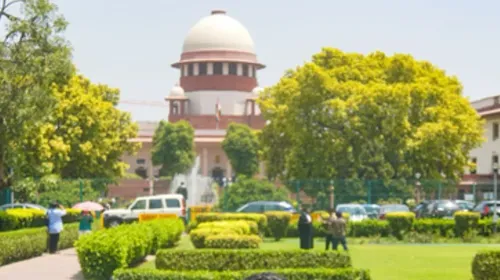
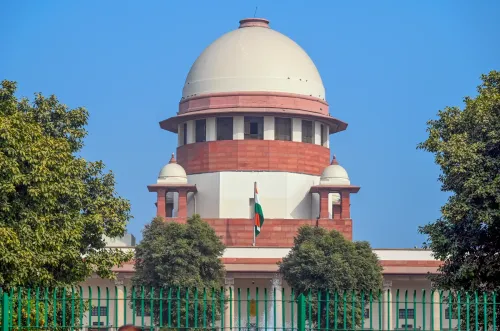
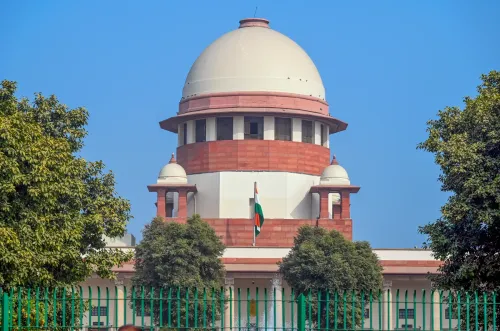
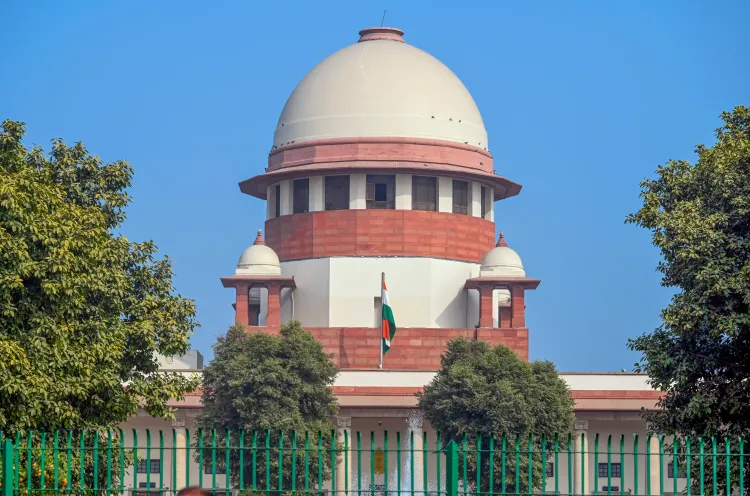
New Delhi, Feb 19 (NationPress) The Supreme Court on Thursday declined to entertain a plea disputing the Election Commission of India’s (ECI) choice to carry out only a "Special Revision" of the electoral rolls in Assam, rather than a more thorough "Special Intensive Revision" (SIR) in anticipation of the 2026 Assembly elections.
A Bench comprising Chief Justice of India (CJI) Surya Kant and Justices Joymalya Bagchi and Vipul M. Pancholi dismissed the writ petition as infructuous after confirming the poll body’s statement that the revision exercise in Assam had already been finalized.
Senior advocate Dama Seshadri Naidu, representing the ECI, informed the Supreme Court that the final electoral rolls for Assam were published on February 10, 2026.
“Given the completion of the revision process, the current petition has become infructuous,” Naidu remarked.
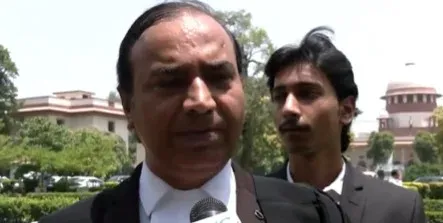
The petition, initiated by senior advocate and former President of the Gauhati High Court Bar Association, Mrinal Kumar Choudhury, contended that Assam had been "singled out" for a less comprehensive revision process, even though the ECI had previously indicated to the Supreme Court that SIR would be implemented nationwide.
During the proceedings, the CJI Kant-led Bench noted that Assam’s context is distinct compared to other states.
“It (SIR) cannot be executed in Assam due to its past legislative and judicial context. The matter of who qualifies as a foreigner must be addressed. The Election Commission cannot categorize someone as a foreigner unless a tribunal substantiates such a decision,” the Bench observed.
Significantly, the Supreme Court had previously issued a notice and sought the ECI’s input following senior advocate Vijay Hansaria's claims that the ECI’s stance was “arbitrary and discriminatory”.
“Assam has been singled out. No documentation is needed in Assam. No proofs are required,” Hansaria asserted, stating that under the Special Revision framework, voters are not obligated to provide proof of citizenship, age, or residency, in contrast to an SIR where supporting documents must accompany enumeration forms.
The petitioner referenced the ECI’s own directives and sworn affidavits, including a June 24, 2025 directive asserting that the “Special Intensive Revision” would be executed nationwide to uphold the integrity of electoral rolls.
Furthermore, the petition highlighted that in its latest affidavit submitted to the Supreme Court on July 21, the ECI reaffirmed its intention to implement SIR across the country.
However, on November 17, 2025, the commission issued a distinct order indicating that Assam would only undergo a "Special Revision", wherein Block Level Officers merely validate details of existing voters during house-to-house visits without necessitating document submissions or cross-verification with the last intensive revision conducted in 2005.
“No justification has been provided by the ECI for carrying out merely a Special Revision in Assam, while a Special Intensive Revision is being executed in Bihar and twelve other states,” the petition emphasized, adding that Assam’s demographic profile and history of infiltration necessitate a more intensive revision constitutionally.
Point of View
The Supreme Court's dismissal reflects a critical balance between legal procedure and regional sensitivities. The decision underscores the importance of equitable electoral practices across states, particularly in areas with unique demographic challenges like Assam. Ensuring fair representation is vital for a robust democracy.
NationPress
19 Sept 2026
Frequently Asked Questions
What was the Supreme Court's ruling regarding the ECI's decision?
The Supreme Court dismissed a plea challenging the Election Commission's decision to conduct only a 'Special Revision' of electoral rolls in Assam, stating that the revision process is already complete.
Why was the plea deemed infructuous?
The plea was considered infructuous because the Election Commission confirmed that the final electoral rolls for Assam were published, making the petition irrelevant.
What are the implications of the 'Special Revision' versus 'Special Intensive Revision'?
The 'Special Revision' process requires less documentation from voters compared to the 'Special Intensive Revision', which necessitates proof of citizenship, age, and residence.
Who filed the plea against the ECI's decision?
The plea was filed by senior advocate Mrinal Kumar Choudhury, a former President of the Gauhati High Court Bar Association.
What concerns were raised about the ECI's approach?
Concerns were raised that Assam was being treated unfairly with a less rigorous revision process, while other states were undergoing more comprehensive reviews.